OPEC Agrees First Output Cut Since 2008, Details Unclear: Report
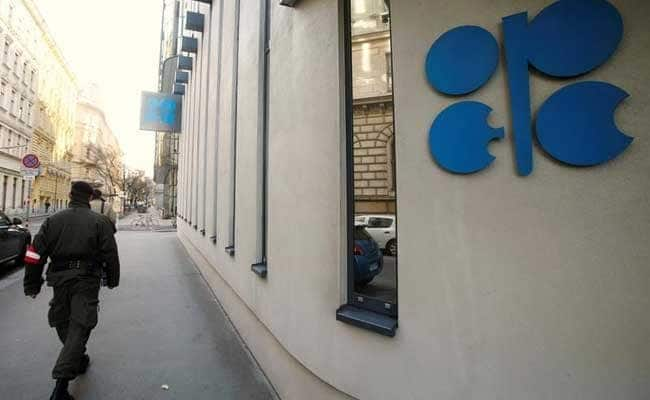
Vienna: OPEC has agreed its first limit on oil output since 2008, an OPEC source told Reuters after Saudi Arabia said it was prepared to accept "a big hit" on production and agree to arch-rival Iran freezing output at pre-sanctions levels.
Brent crude futures jumped 8 percent to more than $50 a barrel on hopes Riyadh had finally reached a compromise with Iran after insisting in recent weeks that Tehran fully participate in any cut.
The source said the Organization of the Petroleum Exporting Countries had on Wednesday agreed a deal in line with an accord the group reached in Algiers in September.
OPEC member Algeria was proposing to set a new production ceiling at 32.5 million barrels per day, down from current levels of 33.6 million.
The source gave no further details as two other OPEC sources said debates were continuing on the size of each member country's cut.
Before the meeting, Saudi Energy Minister Khalid al-Falih said OPEC was indeed focusing on reducing output to a ceiling of 32.5 million bpd and hoped Russia and other non-OPEC producers would contribute a cut of another 0.6 million bpd.
"It will mean that we (Saudi) take a big cut and a big hit from our current production and from our forecast for 2017. So we will not do it unless we make sure that there is consensus and an agreement to meet all of the principles," Falih said.
But he added that even if OPEC failed to reach a deal, the market would slowly recover: "We believe that non-OPEC growth has reversed and also most of the OPEC growth we've seen is already behind us," he told reporters.
"If we can't come to an agreement, then the other scenario of rolling over and waiting for the market to recover on its own is not a bad outcome."
Clashes between Saudi Arabia and Iran have dominated many previous OPEC meetings.
On Tuesday, Iran wrote to OPEC saying it wanted Saudi Arabia to cut production by as much as 1 million bpd, more than Riyadh was willing to offer, OPEC sources who saw the letter told Reuters.
But the tone changed on Wednesday. "I'm optimistic," Iranian Oil Minister Bijan Zanganeh said before the meeting, adding there had been no request for Iran to cut output. He also said Russia was ready to reduce production.
"Moscow have agreed to reduce their production and cut after our decision," Zanganeh said.
BIGGER DEAL
The 14-country OPEC, which accounts for a third of global oil production, made a preliminary agreement in Algiers in September to cap output to prop up oil prices, which have halved since mid-2014.
OPEC said it would exempt Iran, Libya and Nigeria from cuts as their output has been crimped by unrest and sanctions.
The September deal was seen as a victory for Iran. Tehran has long argued it wants to raise production to regain market share lost under Western sanctions, when Saudi Arabia increased output.
In recent weeks, Riyadh changed its stance and offered to cut its output by 0.5 million bpd, according to OPEC sources, while suggesting Iran limit production at around 3.8 million bpd - in line with or slightly above the country's current output.
Tehran has sent mixed signals, saying it wanted to produce as much as 4.2 million bpd. Iran's letter to OPEC suggested Saudi Arabia should cut output to 9.5 million bpd.
Sources said that out of additional non-OPEC cuts of 0.6 million bpd, OPEC expected Russia to cut by 0.4 million. A Russian ministry source said the figure was "a bit excessive".
OPEC member Iraq has also been pressing for higher output limits, saying it needs more money to fight the militant group Islamic State.
Iran and Iraq together produce over 8 million bpd, only slightly behind long-time leader Saudi with 10.5 million bpd.
The argument between Iraq and Saudi Arabia mainly focuses on whether Baghdad should use its own output estimates to limit production or rely on lower figures from OPEC's experts.
(Except for the headline, this story has not been edited by NDTV staff and is published from a syndicated feed.)

-
Where You Live Shapes How You Get To Work | The Reason Why

Two-wheelers are the most popular way to get to work in India, accounting for nearly 43% of workplace commutes.
-
High US Salaries, No Green Card Certainty: The Financial Calculation Facing Indian H-1B Families
The suspension of PERM processing at eight technology employers does not cancel existing H-1B visas. What it does is force a question many Indian families have been avoiding: is the US salary worth tying your career and family plans to one employer?
-
Unhedged Position: Can India See An Indonesia-Style Time Correction?
The Nifty is trading below levels it first clocked in 2024. Is there, then, as I have suggested in the headline, potential that the current time correction drags on painfully for the next three-five, even ten years?
-
Navigating Friction And Energy Realities: An Analysis Of Marco Rubio's October Visit To India
Occurring at a critical juncture marked by stalled trade negotiations and escalating geopolitical pressures over global energy supplies, the visit offers a profound window into modern US-India relations.
-
India Exports Capital. Why Not Export Trusteeship?
The big question, then, is whether India can build an institution that global borrowers, investors, banks, and lawyers can trust, even without an Indian connection.
-
France's Economy & Politics Are In Crisis | The Reason Why
Let's look at how the French economy and politics evolved under Nicolas Sarkozy, Franois Hollande and Emmanuel Macron.
-
You May Inherit The Business. You Must Earn Its Credibility.
Succession tests the founder's ability to share authority as much as it tests the next generation's readiness to assume it.
-
Signing Deals Is One Thing; Making Them Work Is Another | The Week In Whys
Sometimes, things don't turn out as planned. Indian companies have lost some bids to rivals, some projects won't produce until 2030.
-
FOMC Wall, PERM Suspension, Hospital Stocks | Talking Points This Week
A PERM suspension would directly affect green-card sponsorship rather than H-1B visas, so the near-term earnings impact could remain relatively limited. The key question is whether this marks a new phase in US scrutiny of Indian IT.
-
Everything, Everywhere, All At Once: Dalal Street's Week To Forget | Joining The Dots
Visa curbs, a Starlink spat and cancer drug caps: what connects this week's shocks for Indian markets









