Only 4% of Indian Company Directors are Women: Report
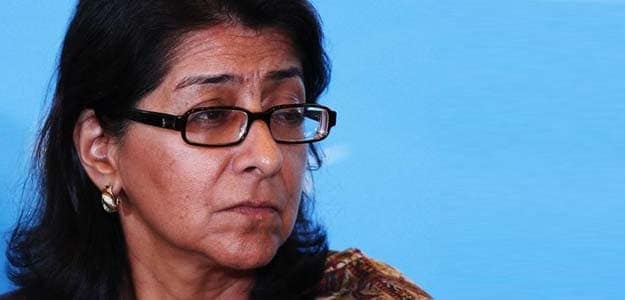
Only four percent of the directors of publicly listed Indian companies are women, but a landmark law passed last year means companies must act quickly to put more women on their boards, a report said.
The report "Women on Boards", by Biz Divas, a national network of professional women, and law firm Khaitan and Co, said that men hold 8,640 boardroom positions and women 350 in the country's 1,470 listed firms.
"There are many reasons for the scarce representation of women in senior leadership positions," the report, released late on Wednesday, said.
"Archaic cultural stereotypes on the roles of men and women in society are largely to blame, while widespread illiteracy and socio-economic problems further worsen the problem."
The Companies Act, 2013 , passed by parliament in August last year, makes it mandatory for public and private firms with an annual turnover of at least Rs 300 crore ($50 million) to have at least one female director by Oct. 1, 2014.
Experts say the law recognises that having women in a company's boardroom correlates with better performance and sustainability.
Big Business, Few Women
India has two companies in the Fortune 500, Reliance Industries and Indian Oil, but only one of their total of 30 directors is a woman, the report noted.
The scarcity of women in the boardroom is not unique to India - nearly one-fifth of the world's 200 largest companies have no women directors, the report said.
Some western countries such as France, Italy and Norway have made it compulsory for larger firms to have women on their boards. As a result, in Norway women's representation on company boards surged to 41 per cent in 2013 from 7 per cent in 2003.
But the largest economies - the United States, China and Japan - have no quotas for women and have had the lowest increase in female directors, suggesting that companies do not bring in more women directors unless they are forced to.
India is the first developing nation to make women directors mandatory, the report said, noting that Indian companies of the relevant size needed to find 966 women directors by October 1.
"An equal opportunity workforce is critical in this day and age, whether it is in a science laboratory or the corporate boardroom," the report said.
"India may well be a good success story for the other developing countries, if the country is able to demonstrate an actual change in women's representation on boards..."
Copyright: Thomson Reuters 2014

-
Ten Things I Learnt This Samvat

Patience can be a trap. Cheap stocks can stay cheap. Leverage can wipe you out. What did Samvat 2082 teach us? Niraj Shah writes on 10 lessons from the year gone by.
-
Talking Points This Week: Tech Nerves, FII Buying, And A Faraway Banking Shock
The global markets are not shining this Diwali. The exception in the large markets is, India.
-
Midterm Rally Lasted A Day. The Hard Reality Of A Divided US May Last Two Years | Opinion
Between a contested AI boom, a debt ceiling that arrives in 2027 and a president with every incentive to act alone, the next two years may prove more volatile than the first day's rally suggests.
-
Blue Wave Will Derail the AI Trade but Won't Dismantle the AI Era | Unhedged Position
The Democrats' sweep of the US Congress will see politics collide with economic forces both over the long and short term.
-
It's Time To Take The GST Council's Bet On Trust Global
Payment records can prove India's services exports, and clear, proportionate rules can bring foreign digital sellers into the tax net.
-
Opinion | India at 38: From Innovation Overperformer to Innovation Powerhouse
India now has 453 VC-backed deep science startups, 18 of them late-stage, after 117 percent growth since 2020. Laurus Labs, at USD 9.3 billion, is the most valuable deep science company in any middle-income economy outside China.
-
Navigating Energy Crossroads: S Jaishankar's Call For Diversified Supply Chains At G20 Ministerial Meeting
As geopolitical fault lines continue to test maritime trade routes and commodity flows, Jaishankar's message remains pertinent: true economic resilience requires open markets, protected transit lines, and a genuine commitment to multilateral cooperation rather than coercion.
-
Indians Are Travelling, But Not Every Journey Is A Holiday | The Week In Whys
Pilgrims, patients and working women are the real travellers, and the system hasn't quite caught up with them.
-
Getting To Work Costs Women More | The Reason Why
It is not just about women paying more than men. It is about women paying much more in cities than in villages.









