ONGC's Kirshna Godavari Gas Field To Touch Peak In July
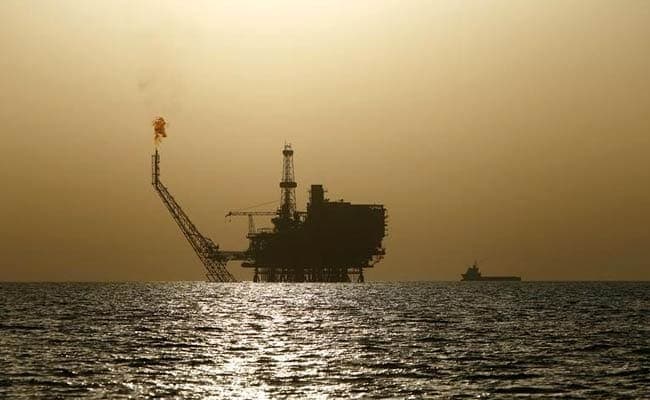
New Delhi: State-owned Oil and Natural Gas Corp expects to scale peak output of about 5 million standard cubic meters per day from its Vashishta gas field in KG basin by July this year.
Vashishta and S1 gas fields, located in the Krishna- Godavari (KG) Offshore Basin off the east coast of India, began operations in September last year. "We are producing 1.1 million standard cubic meters per day from the fields currently and hope to reach about 5 mmscmd by July," a senior company official said.
The fields were developed under a greenfield deepwater development project at an investment of $ 751.65 million. The Vashishta field is estimated to produce 9.56 billion cubic metres (bcm) over a period of nine years with peak production reaching 3.55 million metric standard cubic metres a day (mmscmd) during the first five years. The S1 field is expected to deliver 6.22 bcm over a period of eight years with a peak production of 2.2 mmscmd for the first five years.
As part of the Vashishta and S1 field development, ONGC is drilling four wells and shipping the gas from them through a sub-sea pipeline to an onshore terminal at Odalarevu in Andhra Pradesh, he said.
The Vashishta field lies in water depths varying between 500 meters and 700 meters and about between 31-35 km from the Amalapuram coast. The S1 field is located in water depths of between 250 meters and 600 meters, and approximately between 26k-29 km from the Amalapuram coast. While the Vashishta field is a free gas field with estimated reserves of 12.92 bcm, the S1 field lies to the east of G-1 field and is a free gas field with estimated reserves of 10.37 bcm.
The official said Vashishta is the first field in the country to get the premium price of gas. In March last year, the government had allowed higher price for new gas production from difficulties areas like deep sea, ultra deepwater and high pressure, high temperature areas.
When ONGC started production the premium price was $ 6.61 per million British thermal unit as against a cap price of $3.06 per mmBut for regular fields.
"We got $6.61 per mmBtu for about a month," he said. The premium price for period between October 2016 and March 2017 was cut to $5.3 per mmBtu based on benchmark rates in gas surplus economies. The rate for regular gas price also declined to $2.50 per mmBtu.
The official said the gas was sold to state gas utility GAIL. "We have pricing and marketing freedom and we will auction the incremental production. Whosoever pays us the best price, subject to the government prescribed ceiling, will get the gas," he added.
(This story has not been edited by NDTV staff and is auto-generated from a syndicated feed.)

-
Blue Wave Will Derail the AI Trade but Won't Dismantle the AI Era | Unhedged Position

The Democrats' sweep of the US Congress will see politics collide with economic forces both over the long and short term.
-
It's Time To Take The GST Council's Bet On Trust Global
Payment records can prove India's services exports, and clear, proportionate rules can bring foreign digital sellers into the tax net.
-
Opinion | India at 38: From Innovation Overperformer to Innovation Powerhouse
India now has 453 VC-backed deep science startups, 18 of them late-stage, after 117 percent growth since 2020. Laurus Labs, at USD 9.3 billion, is the most valuable deep science company in any middle-income economy outside China.
-
Navigating Energy Crossroads: S Jaishankar's Call For Diversified Supply Chains At G20 Ministerial Meeting
As geopolitical fault lines continue to test maritime trade routes and commodity flows, Jaishankar's message remains pertinent: true economic resilience requires open markets, protected transit lines, and a genuine commitment to multilateral cooperation rather than coercion.
-
Indians Are Travelling, But Not Every Journey Is A Holiday | The Week In Whys
Pilgrims, patients and working women are the real travellers, and the system hasn't quite caught up with them.
-
Getting To Work Costs Women More | The Reason Why
It is not just about women paying more than men. It is about women paying much more in cities than in villages.
-
AI Bias In Investing Cannot Be Eliminated, But It Can Be Governed
Framing is a particularly important example as identical financial information presented in terms of gains rather than losses can lead an LLM to reach a different assessment.
-
Joining The Dots | Dark Skies, Steady Diya: Why Hope Holds This Diwali
With war, a weak rupee and foreign outflows weighing on sentiment, policymakers at the NDTV World Summit and market veterans at NDTV Profit Ignite: Diwali Edition offered the same advice: stay invested and filter out the noise.
-
The Curious Case of Equitas Small Finance Bank And A CEO Who Quit For Stock
PN Vasudevan believes persistent investor concerns over a perceived conflict of interest had become a governance overhang on Equitas Small Finance Bank's stock, even as the lender improved profitability and asset quality.










