One Week, Many Reforms: PM Modi Burnishes Economic Credentials
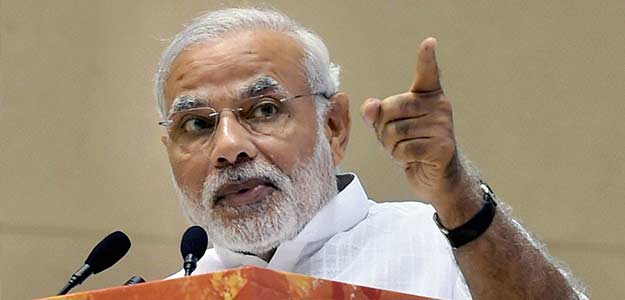
Prime Minister Narendra Modi has unleashed a slew of reforms in the past week, scrapping fuel subsidies, simplifying labour rules and pledging to open coal mining to private players in a bid to kickstart the economy.
The reforms are seen as some of the most significant since Mr Modi and his BJP swept the national election in May.
But analysts say the reforms so far represent the low-hanging fruit. They point out that because the government and its allies are still in a minority in the Upper House or Rajya Sabha, they will find it tough to push through more politically sensitive changes that are key to getting growth back on track.
In a week, Mr Modi has reduced paperwork and inspections of factories to ease the burden of manufacturing in India, which is currently at an unenviable 134th on a World Bank ease-of-doing business chart.
Over the weekend, his government released diesel pricing from state control, ending one of India's costliest subsidies. It also cleared a delayed increase in domestic gas prices, hiking by one-third the amount the government pays natural gas producers to encourage exploration which will in turn make India less dependent on imports.
Economists have long argued India's potential will only be unleashed when it curbs subsidies, relaxes suffocating regulation and rigid labour laws and eases complex rules governing industrial land acquisition.
On Monday the government announced measures to pave the way for private companies to sell coal, which will eventually help break the monopoly of one of the world's biggest mining giants, Coal India, which is state-run.
The government is also readying to sell a five-percent stake in state-run heavyweight Oil and Natural Gas Corp. in the hope of raising $3 billion or Rs 18,300 Crores, which would help trim this year's fiscal deficit.
The stock market has already reached near record heights as the PM tries to jumpstart growth that fell below five percent last year -- half the rate of just a few years ago.
The government plans in the next parliamentary session to scrap nearly 300 outdated laws, many of which were enacted under British colonial rule and contribute to a notoriously cumbersome legal system.
The reforms enacted so far, economists say, will reduce red tape and help draw foreign investors.
Mr Modi has already appealed to the world to "make in India" as the country seeks jobs for its army of young people.
However, the big-bang reforms, such as amending the industrial disputes act to make it easier to lay off workers, are untouched.
Economists say they expect more progress on resolving labour issues and bringing in a national goods-and-services tax that will end the patchwork of levies making doing business in India costlier.
($1 = Rs 61)

-
Talking Points This Week: Tech Nerves, FII Buying, And A Faraway Banking Shock

The global markets are not shining this Diwali. The exception in the large markets is, India.
-
Midterm Rally Lasted A Day. The Hard Reality Of A Divided US May Last Two Years | Opinion
Between a contested AI boom, a debt ceiling that arrives in 2027 and a president with every incentive to act alone, the next two years may prove more volatile than the first day's rally suggests.
-
Blue Wave Will Derail the AI Trade but Won't Dismantle the AI Era | Unhedged Position
The Democrats' sweep of the US Congress will see politics collide with economic forces both over the long and short term.
-
It's Time To Take The GST Council's Bet On Trust Global
Payment records can prove India's services exports, and clear, proportionate rules can bring foreign digital sellers into the tax net.
-
Opinion | India at 38: From Innovation Overperformer to Innovation Powerhouse
India now has 453 VC-backed deep science startups, 18 of them late-stage, after 117 percent growth since 2020. Laurus Labs, at USD 9.3 billion, is the most valuable deep science company in any middle-income economy outside China.
-
Navigating Energy Crossroads: S Jaishankar's Call For Diversified Supply Chains At G20 Ministerial Meeting
As geopolitical fault lines continue to test maritime trade routes and commodity flows, Jaishankar's message remains pertinent: true economic resilience requires open markets, protected transit lines, and a genuine commitment to multilateral cooperation rather than coercion.
-
Indians Are Travelling, But Not Every Journey Is A Holiday | The Week In Whys
Pilgrims, patients and working women are the real travellers, and the system hasn't quite caught up with them.
-
Getting To Work Costs Women More | The Reason Why
It is not just about women paying more than men. It is about women paying much more in cities than in villages.
-
AI Bias In Investing Cannot Be Eliminated, But It Can Be Governed
Framing is a particularly important example as identical financial information presented in terms of gains rather than losses can lead an LLM to reach a different assessment.









