Ola Wants Government To Stop ‘Capital Dumping’ By Rivals
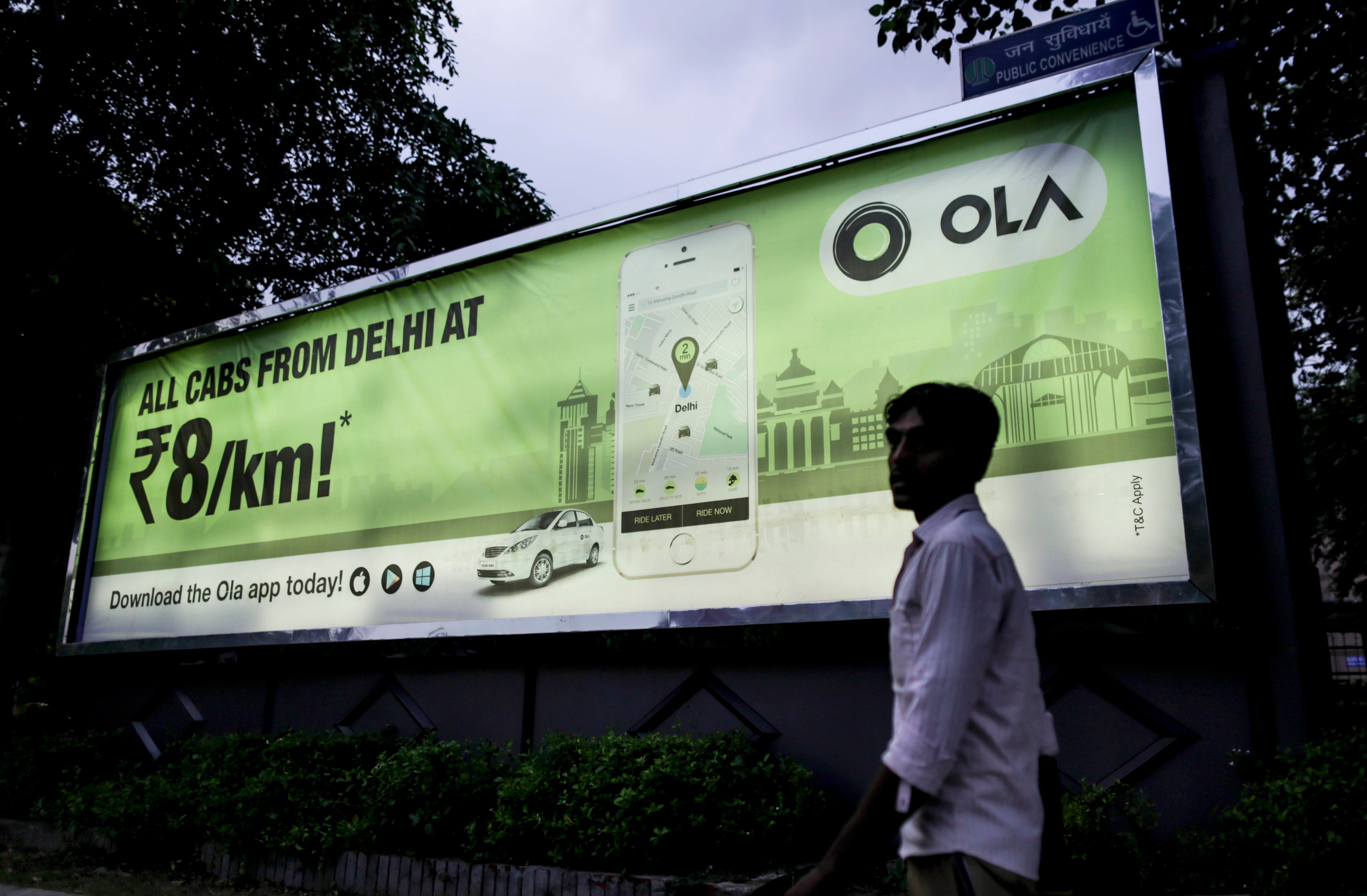
Though heavily funded by foreign investors like Japanese SoftBank Group, leading cab aggregator Ola has said government should bring in regulations to stop "capital dumping" which is distorting the market.
"There is an urgent need for adequate regulation to curb predatory pricing and capital dumping in the ecosystem in the interest of co-existence of all players in the ecosystem," Ola's Chief Operating Officer Pranay Jivrajka told PTI over phone from Bengaluru.
While he did not name the company's deep-pocketed arch-rival Uber, he said foreign capital should not be used only to offer disruptive pricing. The comments are interesting as Ola has secured foreign capital worth over $1.2 billion from investors like SoftBank, DST Global, Accel Partners and Sequoia Capital, among other players. It is scouting for another round of funding from the Japanese company and others.
Ola's previous fund-raising of $500 million last November was also from SoftBank. Media reports said Ola, the third most valuable startup in the country, is looking at raising around $ 600 million in this round.
Asked about this, Jivrajka said the company is adequately capitalised now and that as a policy, it does not comment on market speculation. He evaded a direct answer when pointed out that his own company is almost fully funded by foreign capital, saying capital should not be used just to offer disruptive pricing.
"Capital should be used for sustainability," he added.
On predatory pricing, he said Ola's prices on an average are 20 percent higher than Uber's and in almost all cities where the American firm is not present, the Bengaluru-based startup's operations are profitable.
Broadly welcoming the recently released Maharashtra City Taxi Rules of 2016, Jivrajka said the policy is forward-looking, comprehensive and inclusive in nature.
We made three recommendations to Maharashtra. The most important is the need for a review of the proposed high licence/permit fee of Rs 2.61 lakh for vehicles of 1,400-cc and above as this is bound to fall heavy on drivers as they never factored in this while taking their loan and will add over 30 percent capital burden for them.Pranay Jivrajka, Chief Operating Officer, Ola Cabs
He said this high cost of permit is not there in any other state. Karnataka, Delhi, Kerala and Chandigrah have come out with regulations for cab aggregators but none of them have such high permit fees, he added.Jivrajka said this high entry cost will be deterrent to entrepreneurs and would eventually make rides costlier for customers.
Also Read: Will Uber And Ola Cost More If Maharashtra Government Has Its Way?
Ola also wants a review of the rule that makes it mandatory for an operator/aggregator to have 50 percent fleet with above 1,400-cc engines.
"Fleet composition should be best left to the choice of drivers which is done according to the demand from consumers," Jivrajka said, adding Mumbai does not need so many premium taxis.
Ola is present in 102 cities and claims over 4,50,000 drivers on its platform with cabs, auto-rickshaws, taxis and bike taxis (in Gurugram).
Uber too had sought review of these norms while welcoming the rest of policy proposals. According to Uber, the proposed stipulation that more that 50 percent of the vehicles on ride-sharing platforms should be over 1,400cc would result in disappearance of economical and fuel efficient vehicles from the platform.
"It also takes away the freedom and flexibility of drivers to have the vehicle of their choice, forcing them to buy more expensive cars which will in turn increase fares," Uber had said, adding that capping pricing prevents market forces from determining lower fares when possible.

-
Navigating Friction And Energy Realities: An Analysis Of Marco Rubio's October Visit To India

Occurring at a critical juncture marked by stalled trade negotiations and escalating geopolitical pressures over global energy supplies, the visit offers a profound window into modern US-India relations.
-
India Exports Capital. Why Not Export Trusteeship?
The big question, then, is whether India can build an institution that global borrowers, investors, banks, and lawyers can trust, even without an Indian connection.
-
France's Economy & Politics Are In Crisis | The Reason Why
Let's look at how the French economy and politics evolved under Nicolas Sarkozy, Franois Hollande and Emmanuel Macron.
-
You May Inherit The Business. You Must Earn Its Credibility.
Succession tests the founder's ability to share authority as much as it tests the next generation's readiness to assume it.
-
Signing Deals Is One Thing; Making Them Work Is Another | The Week In Whys
Sometimes, things don't turn out as planned. Indian companies have lost some bids to rivals, some projects won't produce until 2030.
-
FOMC Wall, PERM Suspension, Hospital Stocks | Talking Points This Week
A PERM suspension would directly affect green-card sponsorship rather than H-1B visas, so the near-term earnings impact could remain relatively limited. The key question is whether this marks a new phase in US scrutiny of Indian IT.
-
Everything, Everywhere, All At Once: Dalal Street's Week To Forget | Joining The Dots
Visa curbs, a Starlink spat and cancer drug caps: what connects this week's shocks for Indian markets
-
India Is Going Abroad For Critical Minerals. But It May Take Years To Pay Off | The Reason Why
Although India's steps are in the right direction, they remain modest compared with India's growing dependence.
-
When Everyone Has AI, What Gives You An Edge?
India's young workforce is entering an uncertain world of work where powerful AI tools are becoming widely accessible. The advantage will belong to those who combine deep expertise with digital fluency, and the distinctly human capabilities that technology cannot manufacture.
-
Wrong Labels, High Pesticide Residues Holding Back Agri Exports | The Reason Why
India needs stronger domestic food-safety and labelling standards, with best practices becoming part of everyday business for farmers, traders and food companies.










