Ola Electric Mobility Set To Power Gig, S1 Z Scooters With In-House Cells From April
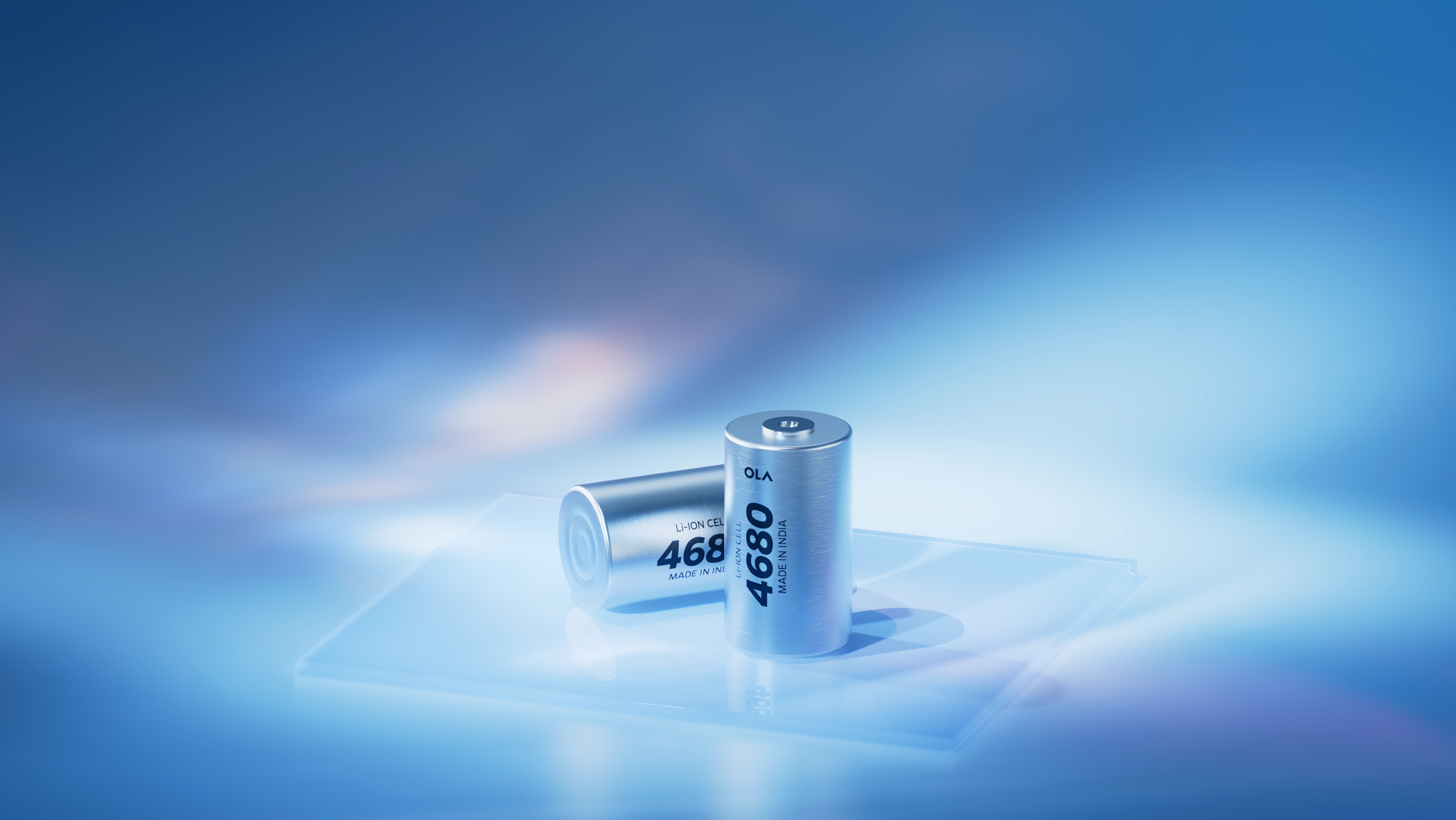
In less than six months, Ola Electric Mobility Ltd. will become the first Indian EV maker to power its scooters with cells manufactured in-house.
India's largest electric two-wheeler maker will power its Ola Gig and Ola S1 Z scooters with the 4680 Bharat Cell, which is currently under production at the company's Gigafactory in Krishnagiri, Tamil Nadu.
"The @OlaElectric Gig and S1 Z will be the first products with 4680 Bharat cell!! Coming April 2025," Ola Electric founder Bhavish Aggarwal posted on X.
The @OlaElectric Gig and S1 Z will be the first products with our 4680 Bharat cell!! Coming April 2025 🙂🔋 pic.twitter.com/9reDMHykTv
December 4, 2024On Nov. 26, the Bengaluru-based automaker launched four low-cost scooters — Ola Gig, Ola Gig+, Ola S1 Z and the Ola S1 Z+ — at an introductory ex-showroom price of Rs 39,999 onwards. These models feature removable batteries which, when drained, can be swapped for a fully charged one at a battery-swapping terminal. Ola Electric is targeting gig economy workers in cities, and students and working professionals in rural and semi-urban India, with its latest offerings.
Ola Electric wants to become self-reliant on cells from 2025, Aggarwal had told NDTV Profit in an interview on June 28 ahead of its initial public offering in August.
"The trial production (of the 4680 Bharat Cell) commenced a few weeks ago. We are going through a series of checks over the next six-to-nine months to get ready for commercial production," Aggarwal had said then. "So, early next year…is when our own cells will come into our own vehicles."
The portable battery that powers Ola Electric's Gig and S1 Z scooters. (Photo: Company)
India does not make any EV battery cells at the moment. They are imported largely from China and South Korea. They make up roughly a third of the cost of an electric vehicle in India.
There is a production-linked incentive scheme for manufacturing advanced chemistry cells in India, but only Ola Electric — a beneficiary of 20 GWh — has made some headway towards commercial production. The company plans to invest $100 million in the first phase to build a 5 GWh production capacity, enough to power 1.2 million Ola Electric scooters.
The ability to develop and manufacture in-house cells brings with it cost as well as competitive advantage. "The biggest and costliest component in EVs is the battery, and that's where we started focusing on building our own cell four years ago," Aggarwal had said during the interview.
"So, over the past four years, we built a lab to prove our technology. The next step was the gigafactory… which will eventually become a 20 GWh facility," he had said. "When we complete Phase 1, through all of next year, we will have enough capacity to serve ourselves by that time, as well as potentially sell to other automakers."
Shares of Ola Electric were trading 0.09% lower at Rs 98.45 apiece on the National Stock Exchange, compared to a 0.08% advance in the benchmark Nifty at 3:25 p.m.


-
Where You Live Shapes How You Get To Work | The Reason Why

Two-wheelers are the most popular way to get to work in India, accounting for nearly 43% of workplace commutes.
-
High US Salaries, No Green Card Certainty: The Financial Calculation Facing Indian H-1B Families
The suspension of PERM processing at eight technology employers does not cancel existing H-1B visas. What it does is force a question many Indian families have been avoiding: is the US salary worth tying your career and family plans to one employer?
-
Unhedged Position: Can India See An Indonesia-Style Time Correction?
The Nifty is trading below levels it first clocked in 2024. Is there, then, as I have suggested in the headline, potential that the current time correction drags on painfully for the next three-five, even ten years?
-
Navigating Friction And Energy Realities: An Analysis Of Marco Rubio's October Visit To India
Occurring at a critical juncture marked by stalled trade negotiations and escalating geopolitical pressures over global energy supplies, the visit offers a profound window into modern US-India relations.
-
India Exports Capital. Why Not Export Trusteeship?
The big question, then, is whether India can build an institution that global borrowers, investors, banks, and lawyers can trust, even without an Indian connection.
-
France's Economy & Politics Are In Crisis | The Reason Why
Let's look at how the French economy and politics evolved under Nicolas Sarkozy, Franois Hollande and Emmanuel Macron.
-
You May Inherit The Business. You Must Earn Its Credibility.
Succession tests the founder's ability to share authority as much as it tests the next generation's readiness to assume it.
-
Signing Deals Is One Thing; Making Them Work Is Another | The Week In Whys
Sometimes, things don't turn out as planned. Indian companies have lost some bids to rivals, some projects won't produce until 2030.
-
FOMC Wall, PERM Suspension, Hospital Stocks | Talking Points This Week
A PERM suspension would directly affect green-card sponsorship rather than H-1B visas, so the near-term earnings impact could remain relatively limited. The key question is whether this marks a new phase in US scrutiny of Indian IT.
-
Everything, Everywhere, All At Once: Dalal Street's Week To Forget | Joining The Dots
Visa curbs, a Starlink spat and cancer drug caps: what connects this week's shocks for Indian markets









