OK Google, Get Me A Coke: Artificial Intelligence (AI) Giant Demos Soda-Fetching Robots

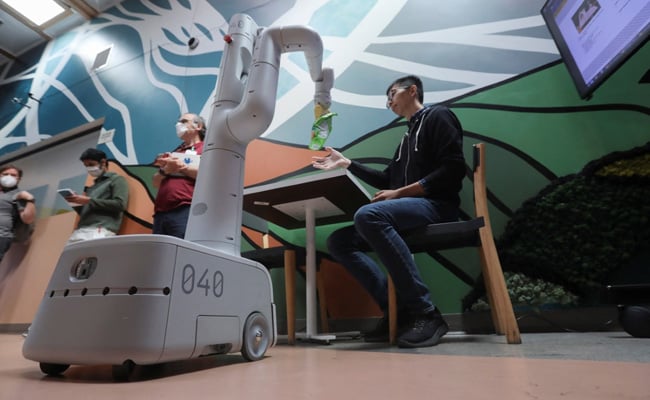
Alphabet Inc's Google is combining the eyes and arms of physical robots with the knowledge and conversation skills of virtual chatbots to help its employees fetch soda and chips from breakrooms with ease.
The mechanical waiters, shown in action to reporters last week, embody an artificial intelligence breakthrough that paves the way for multipurpose robots as easy to control as ones that perform single, structured tasks such as vacuuming or standing guard.
Google robots are not ready for sale. They perform only a few dozen simple actions, and the company has not yet embedded them with the "OK, Google" summoning feature familiar to consumers.
While Google says it is pursuing development responsibly, adoption could ultimately stall over concerns such as robots becoming surveillance machines, or being equipped with chat technology that can give offensive responses, as Meta Platforms Inc and others have experienced in recent years.
Microsoft Corp and Amazon.com Inc are pursuing comparable research on robots.
"It's going to take a while before we can really have a firm grasp on the direct commercial impact," said Vincent Vanhoucke, senior director for Google's robotics research.
When asked to help clean a spill, Google's robot recognizes that grabbing a sponge is a doable and more sensible response than apologizing for creating the mess.
The robots interpret naturally spoken commands, weigh possible actions against their capabilities and plan smaller steps to achieve the ask.
The chain is made possible by infusing the robots with language technology that draws understanding of the world from Wikipedia, social media and other webpages. Similar AI underlies chatbots or virtual assistants, but has not been applied to robots this expansively before, Google said.
It unveiled the effort in a research paper in April. Incorporating more sophisticated language AI since then boosted the robots' success on commands to 74% from 61%, according a company blog post on Tuesday.
Fellow Alphabet subsidiary Everyday Robots designs the robots, which for now will stay confined to grabbing snacks for employees.
(Except for the headline, this story has not been edited by NDTV staff and is published from a syndicated feed.)

-
Ten Things I Learnt This Samvat

Patience can be a trap. Cheap stocks can stay cheap. Leverage can wipe you out. What did Samvat 2082 teach us? Niraj Shah writes on 10 lessons from the year gone by.
-
Talking Points This Week: Tech Nerves, FII Buying, And A Faraway Banking Shock
The global markets are not shining this Diwali. The exception in the large markets is, India.
-
Midterm Rally Lasted A Day. The Hard Reality Of A Divided US May Last Two Years | Opinion
Between a contested AI boom, a debt ceiling that arrives in 2027 and a president with every incentive to act alone, the next two years may prove more volatile than the first day's rally suggests.
-
Blue Wave Will Derail the AI Trade but Won't Dismantle the AI Era | Unhedged Position
The Democrats' sweep of the US Congress will see politics collide with economic forces both over the long and short term.
-
It's Time To Take The GST Council's Bet On Trust Global
Payment records can prove India's services exports, and clear, proportionate rules can bring foreign digital sellers into the tax net.
-
Opinion | India at 38: From Innovation Overperformer to Innovation Powerhouse
India now has 453 VC-backed deep science startups, 18 of them late-stage, after 117 percent growth since 2020. Laurus Labs, at USD 9.3 billion, is the most valuable deep science company in any middle-income economy outside China.
-
Navigating Energy Crossroads: S Jaishankar's Call For Diversified Supply Chains At G20 Ministerial Meeting
As geopolitical fault lines continue to test maritime trade routes and commodity flows, Jaishankar's message remains pertinent: true economic resilience requires open markets, protected transit lines, and a genuine commitment to multilateral cooperation rather than coercion.
-
Indians Are Travelling, But Not Every Journey Is A Holiday | The Week In Whys
Pilgrims, patients and working women are the real travellers, and the system hasn't quite caught up with them.
-
Getting To Work Costs Women More | The Reason Why
It is not just about women paying more than men. It is about women paying much more in cities than in villages.









