Oil Prices Steady In Quiet Holiday Season Trade
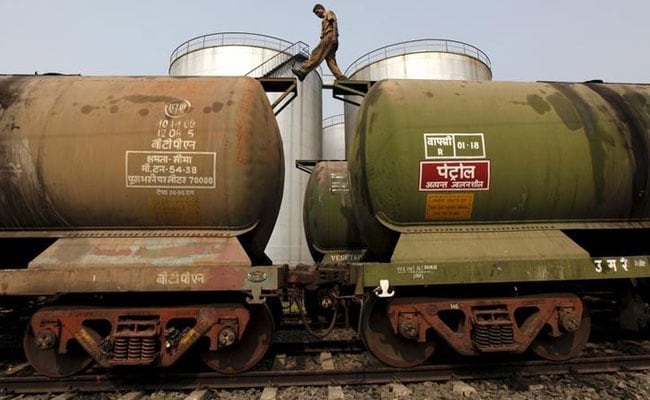
Tokyo: Oil prices were little changed on Tuesday in light pre-New Year holiday trading with markets adopting a wait-and-see stance less than a week before the first output cut deal agreed between OPEC and non-OPEC members in 15 years is scheduled to kick in.
London Brent crude for February delivery was down 1 cents at $55.15 a barrel by 0335 GMT (9:35 p.m. in India) after settling up 11 cents on Friday. Oil markets were closed on Monday after Christmas at the weekend.
NYMEX crude for February delivery was up 10 cents at $53.12 a barrel, after closing at a 17-month high on Friday.
January 1 will bring the official start of the deal agreed by the Organization of Petroleum Exporting Countries and non-OPEC members to lower production by almost 1.8 million barrels per day (bpd). The accord is designed to bolster oil prices, squeezed for more than two years by a global supply glut.
"OPEC's output cuts are nearing, but because there's hardly any news on producers, the market is stuck in the doldrums," said Tomomichi Akuta, senior economist at Mitsubishi UFJ Research and Consulting in Tokyo.
While major OPEC members led by Saudi Arabia, will cut production, Libya and Nigeria - exempt because armed conflict has curbed their output - have been increasing production recently, Akuta said.
Libya has boosted production by about 22,000 barrels per day after major western pipelines were reopened and it could add 270,000 bpd within three months, the National Oil Corporation said.
"That raises concerns that despite the coordinated output cuts, the market may not tighten as much," Akuta said.
The US Department of Energy expects to begin sales of roughly 8 million barrels of sweet crude from the country's emergency oil reserve in early to mid-January, according to a notice seen by Reuters on Friday.
Meanwhile Russia's oil exports would rise by almost 5 per cent this year to 253.5 million tonnes and a "slight" increase was expected next year, Deputy Energy Minister Kirill Molodtsov said on Monday. Russia is among the non-OPEC countries who signed up to the production cut deal agreed with OPEC.
In China, end-November crude oil stocks fell 1.55 per cent from the previous month to 29.89 million tonnes as domestic output shrank and winter demand grew, data from the official Xinhua news agency showed.
Hedge funds boosted bullish bets on US crude oil for a third week in a row to a near two-and-a-half-year high, data showed on Friday.

-
High US Salaries, No Green Card Certainty: The Financial Calculation Facing Indian H-1B Families

The suspension of PERM processing at eight technology employers does not cancel existing H-1B visas. What it does is force a question many Indian families have been avoiding: is the US salary worth tying your career and family plans to one employer?
-
Unhedged Position: Can India See An Indonesia-Style Time Correction?
The Nifty is trading below levels it first clocked in 2024. Is there, then, as I have suggested in the headline, potential that the current time correction drags on painfully for the next three-five, even ten years?
-
Navigating Friction And Energy Realities: An Analysis Of Marco Rubio's October Visit To India
Occurring at a critical juncture marked by stalled trade negotiations and escalating geopolitical pressures over global energy supplies, the visit offers a profound window into modern US-India relations.
-
India Exports Capital. Why Not Export Trusteeship?
The big question, then, is whether India can build an institution that global borrowers, investors, banks, and lawyers can trust, even without an Indian connection.
-
France's Economy & Politics Are In Crisis | The Reason Why
Let's look at how the French economy and politics evolved under Nicolas Sarkozy, Franois Hollande and Emmanuel Macron.
-
You May Inherit The Business. You Must Earn Its Credibility.
Succession tests the founder's ability to share authority as much as it tests the next generation's readiness to assume it.
-
Signing Deals Is One Thing; Making Them Work Is Another | The Week In Whys
Sometimes, things don't turn out as planned. Indian companies have lost some bids to rivals, some projects won't produce until 2030.
-
FOMC Wall, PERM Suspension, Hospital Stocks | Talking Points This Week
A PERM suspension would directly affect green-card sponsorship rather than H-1B visas, so the near-term earnings impact could remain relatively limited. The key question is whether this marks a new phase in US scrutiny of Indian IT.
-
Everything, Everywhere, All At Once: Dalal Street's Week To Forget | Joining The Dots
Visa curbs, a Starlink spat and cancer drug caps: what connects this week's shocks for Indian markets
-
India Is Going Abroad For Critical Minerals. But It May Take Years To Pay Off | The Reason Why
Although India's steps are in the right direction, they remain modest compared with India's growing dependence.









