Oil Prices Jump 6% After Biggest One-Day Fall Since 1991
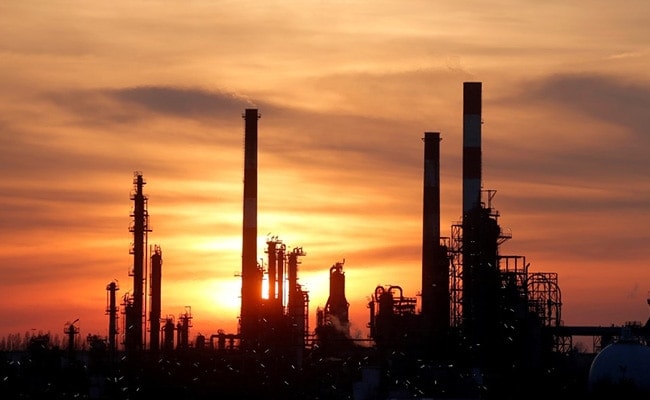
Oil prices jumped more than 6 per cent on Tuesday, clawing back some ground on hopes that a price war by top producers Saudi Arabia and Russia that sparked the biggest daily rout since the 1991 Gulf War will not be sustained.
U.S. shale producers also rushed to deepen spending cuts and could reduce future production after OPEC's decision to pump full bore into a global market hit by shrinking demand due to the coronavirus outbreak.
Brent crude futures rose $2.31, or 6.7 per cent to $36.67 a barrel and U.S. West Texas Intermediate (WTI) crude gained $1.79, or 5.8 per cent, to $32.92 a barrel following declines of nearly 25 per cent on Monday.
Both benchmarks dropped to their lowest since February 2016 in the previous session and recorded their biggest one-day percentage declines since January 17, 1991, when oil prices fell at the outset of the U.S. Gulf War.
Trading volumes in the front-month for both contracts hit record highs in the previous session, after a three-year pact between Saudi Arabia and Russia and other major oil producers to limit supply fell apart on Friday.
"When you look at the leverage the industry is in, at prices of around $30, it's not profitable," said Jonathan Barratt, chief investment officer Probis Group.
"Saudis and other Middle Eastern producers have their budgetary constraints, Russia is starved for cash and the breakeven for .. shale has to be around $50 a barrel. So the dynamics of all those put together will mean they will come to an agreement somewhere."
But analysts do not expect oil prices to quickly regain the nearly 25 per cent slump from Friday's close as the coronavirus outbreak cuts demand.
"Oil prices rarely stay below the marginal cash cost of supply. But with the anticipated inventory build in (the first half) we struggle to find conviction in a snap back for oil," analysts from Bernstein Energy said in a note.
Energy stock prices have also fallen sharply, and shale producers began cutting spending in anticipation of lower revenues. Exxon shares lost more than 12 per cent, the largest one-day percentage loss since October 15, 2008, the height of the financial crisis. Chevron's shares fell more than 15 per cent, the biggest loss since the October 1987 "Black Monday" market crash.
Saudi Arabia plans to boost its crude output above 10 million barrels per day (bpd) in April from 9.7 million bpd in recent months, two sources told Reuters on Sunday. The kingdom slashed its export prices at the weekend to encourage refiners to buy more.
Russia, one of the world's top producers alongside Saudi Arabia and the United States, also said it could lift output and that it could cope with low oil prices for six to 10 years.
One the demand side, the International Energy Agency said oil demand was set to contract in 2020 for the first time since 2009. The agency cut its annual forecast and said that demand would contract by 90,000 bpd in 2020 from 2019.

-
High US Salaries, No Green Card Certainty: The Financial Calculation Facing Indian H-1B Families

The suspension of PERM processing at eight technology employers does not cancel existing H-1B visas. What it does is force a question many Indian families have been avoiding: is the US salary worth tying your career and family plans to one employer?
-
Unhedged Position: Can India See An Indonesia-Style Time Correction?
The Nifty is trading below levels it first clocked in 2024. Is there, then, as I have suggested in the headline, potential that the current time correction drags on painfully for the next three-five, even ten years?
-
Navigating Friction And Energy Realities: An Analysis Of Marco Rubio's October Visit To India
Occurring at a critical juncture marked by stalled trade negotiations and escalating geopolitical pressures over global energy supplies, the visit offers a profound window into modern US-India relations.
-
India Exports Capital. Why Not Export Trusteeship?
The big question, then, is whether India can build an institution that global borrowers, investors, banks, and lawyers can trust, even without an Indian connection.
-
France's Economy & Politics Are In Crisis | The Reason Why
Let's look at how the French economy and politics evolved under Nicolas Sarkozy, Franois Hollande and Emmanuel Macron.
-
You May Inherit The Business. You Must Earn Its Credibility.
Succession tests the founder's ability to share authority as much as it tests the next generation's readiness to assume it.
-
Signing Deals Is One Thing; Making Them Work Is Another | The Week In Whys
Sometimes, things don't turn out as planned. Indian companies have lost some bids to rivals, some projects won't produce until 2030.
-
FOMC Wall, PERM Suspension, Hospital Stocks | Talking Points This Week
A PERM suspension would directly affect green-card sponsorship rather than H-1B visas, so the near-term earnings impact could remain relatively limited. The key question is whether this marks a new phase in US scrutiny of Indian IT.
-
Everything, Everywhere, All At Once: Dalal Street's Week To Forget | Joining The Dots
Visa curbs, a Starlink spat and cancer drug caps: what connects this week's shocks for Indian markets
-
India Is Going Abroad For Critical Minerals. But It May Take Years To Pay Off | The Reason Why
Although India's steps are in the right direction, they remain modest compared with India's growing dependence.









