Oil Nears $100: Petrol, Diesel Price Hike Coming After Elections
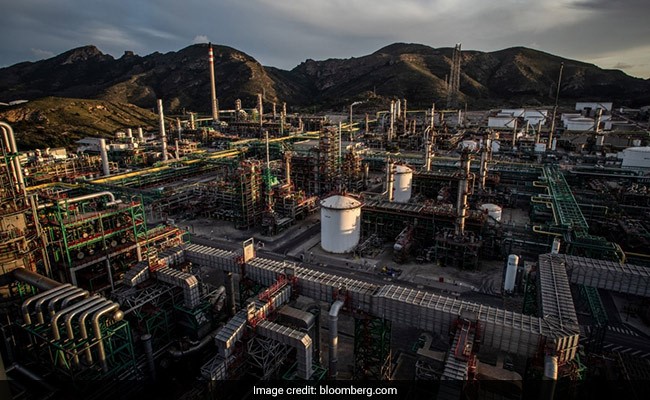
International oil prices surged on Tuesday close to $100 a barrel after Russian President Vladimir Putin sent troops into Ukraine. Still, petrol and diesel prices in India continue to be on freeze and are expected to rise once assembly elections in states like Uttar Pradesh end.Amid fears of supplies being disrupted because of Russian aggression, the futures contract price for Brent crude oil with April delivery on London's Intercontinental Exchange rose by 4.18 per cent to $99.38 per barrel on Tuesday morning, before paring some gains to settle just above $98.The last time Brent exceeded $99 per barrel was in September 2014.Russia makes up for a third of Europe's natural gas and about 10 per cent of global oil production. About one-third of Russian gas supplies to Europe usually travel through pipelines crossing Ukraine.But for India, Russian supplies account for a tiny percentage. While India imported 43,400 barrels per day of oil from Russia in 2021 (about 1 per cent of overall its imports), coal imports from Russia at 1.8 million tonnes in 2021 made up for 1.3 per cent of all coal imports. India buys 2.5 million tonnes of LNG a year from Gazprom of Russia.While supplies seem to be of little worry for India, it is the prices that are a cause of concern.Domestic fuel prices - which are directly linked to international oil prices - have not been revised for a record 110 days in a row.Rates are supposed to be revised daily, but state-owned fuel retailers Indian Oil Corporation, Bharat Petroleum Corporation and Hindustan Petroleum Corporation froze rates sooner did electioneering to elect a new government in Uttar Pradesh, Punjab, and three other states started.Industry officials said that retail pump rates are aligned to a price of $82-83 per barrel, and they would certainly go up once elections end next month.Petrol costs Rs 95.41 a litre in Delhi, and diesel is priced at Rs 86.67. This price is after accounting for the excise duty cut and a reduction in the VAT rate by the state government.Before these tax reductions, petrol price had touched an all-time high of Rs 110.04 a litre, and diesel came for Rs 98.42. These rates corresponded to Brent, soaring to a peak of $86.40 per barrel on October 26, 2021. Brent was USD 82.74 on November 5, 2021, before it started to fall and touched $68.87 a barrel in December.Prices, however, started to rise after that and have risen by 12 per cent in February alone, they said.Petrol and diesel prices have been in the past frozen before crucial elections.There was a 19-day price freeze on petrol and diesel ahead of Karnataka polls in May 2018, despite international fuel prices going up by nearly $5 per barrel. However, no sooner were the elections over, oil companies rapidly passed on to customers the desired increase — over 16-straight days post-May 14, 2018. After the hike, the price climbed by Rs 3.8 per litre and diesel by Rs 3.38 per litre.Similarly, they had stopped revising fuel prices for almost 14 days ahead of the assembly elections in Gujarat in December 2017.These companies had also imposed a freeze on petrol and diesel prices between January 16, 2017, and April 1, 2017, when assembly elections in five states — Punjab, Goa, Uttarakhand, Uttar Pradesh and Manipur — were held.Industry sources said they moderated the revision during the 2019 general elections by not passing on the desired increases in rates to consumers. The rates began to rise a day after the final phase of polling for the Lok Sabha elections ended.The current 110-day hiatus is the longest since daily fuel price revision was adopted in June 2017. Before this, there was an 82-day hiatus in rate revision between March 17, 2020, and June 6, 2020.The 82-day hiatus in rate revision in 2020 followed the government's excise duty on petrol and diesel by Rs 3 per litre each to mop up gains arising from falling international rates. On May 6, 2020, the government again raised excise duties by Rs 10 per litre on petrol and Rs 13 per litre on diesel.

-
Unhedged Position: Can India See An Indonesia-Style Time Correction?

The Nifty is trading below levels it first clocked in 2024. Is there, then, as I have suggested in the headline, potential that the current time correction drags on painfully for the next three-five, even ten years?
-
Navigating Friction And Energy Realities: An Analysis Of Marco Rubio's October Visit To India
Occurring at a critical juncture marked by stalled trade negotiations and escalating geopolitical pressures over global energy supplies, the visit offers a profound window into modern US-India relations.
-
India Exports Capital. Why Not Export Trusteeship?
The big question, then, is whether India can build an institution that global borrowers, investors, banks, and lawyers can trust, even without an Indian connection.
-
France's Economy & Politics Are In Crisis | The Reason Why
Let's look at how the French economy and politics evolved under Nicolas Sarkozy, Franois Hollande and Emmanuel Macron.
-
You May Inherit The Business. You Must Earn Its Credibility.
Succession tests the founder's ability to share authority as much as it tests the next generation's readiness to assume it.
-
Signing Deals Is One Thing; Making Them Work Is Another | The Week In Whys
Sometimes, things don't turn out as planned. Indian companies have lost some bids to rivals, some projects won't produce until 2030.
-
FOMC Wall, PERM Suspension, Hospital Stocks | Talking Points This Week
A PERM suspension would directly affect green-card sponsorship rather than H-1B visas, so the near-term earnings impact could remain relatively limited. The key question is whether this marks a new phase in US scrutiny of Indian IT.
-
Everything, Everywhere, All At Once: Dalal Street's Week To Forget | Joining The Dots
Visa curbs, a Starlink spat and cancer drug caps: what connects this week's shocks for Indian markets
-
India Is Going Abroad For Critical Minerals. But It May Take Years To Pay Off | The Reason Why
Although India's steps are in the right direction, they remain modest compared with India's growing dependence.
-
When Everyone Has AI, What Gives You An Edge?
India's young workforce is entering an uncertain world of work where powerful AI tools are becoming widely accessible. The advantage will belong to those who combine deep expertise with digital fluency, and the distinctly human capabilities that technology cannot manufacture.









