Oil Imports In September Fall To Lowest Level In Over 3 Years
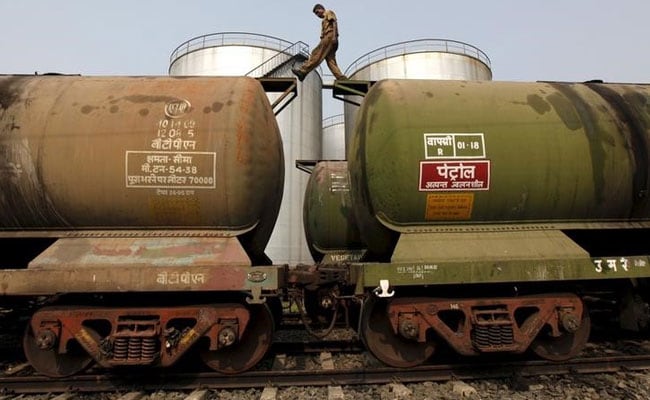
Country's oil imports fell to their lowest in more than three years in September to 3.82 million barrels per day (bpd), data obtained from industry and shipping sources showed, as some refiners cut purchases due to shutdowns for maintenance and fuel upgrades.
Last month, Saudi Arabia replaced Iraq as top oil supplier to India after a gap of about 13 months, the data showed.
September oil imports, which dropped below 4 million bpd for the first time since June 2016, were about 18.7 per cent lower than in August and down 8.4 per cent from a year ago, the data showed.
The fall in oil imports limited India's fiscal deficit for September, but it also potentially points to a general economic and industrial slowdown.
"Lower imports were largely due to refinery turnarounds as refiners have to supply Euro VI fuels in the country from an April 1 deadline. Heavy rains and slower industrial and construction work drain down the demand for refined fuels," said Ehsan Ul Haq, an analyst with Refinitiv.
Falling industrial demand dragged India's fuel demand to its lowest in more than two years in September.
"Due to weakening fuel demand there was an inventory build up of refined products so we had to cut crude processing and restrict imports," said an official at one of the refiners.
Indian refiners' crude processing declined about 7 per cent in September from a year ago, government data showed on Tuesday.
SAUDI OUTSHINES IRAQ
Saudi Arabia supplied about 830,500 bpd oil to India in September, compared with 821,000 bpd supplied by Iraq, the data obtained from sources showed. The sources declined to be identified.
India restricted imports from Iraq in September as it had imported record volumes of Basra oil in August.
"By reducing their official selling price (OSP) Saudi attracted more buyers compared to others, they continue to meet the demand even after outages due to attacks on its two fields," Haq said.
Saudi Arabia has cut its September OSP for its Arab Light grade for Asia by $0.75/barrel compared to a $0.40/barrel reduction in Iraq's Basra Light.
The United Arab Emirates emerged as India's third biggest supplier in September after a gap of seven months, knocking Nigeria into fourth place, a position held by Venezuela in August. The UAE was fifth biggest oil supplier in August.
Venezuela was in sixth place behind Angola as private refiner Nayara Energy did not ship oil from the Latin American country in September and instead discharged old cargoes, the data showed.
Lower imports by Nayara had also dented India's overall purchases in September, the data showed.
"Any sustained decline in India's oil imports and fuel demand might prompt global agencies to revise down their oil demand growth forecast," Haq said.
OPEC and the International Energy Agency (IEA) have trimmed their global oil demand growth forecast for 2019. The IEA expects 2019 global oil demand growth to be the weakest since 2016, following evidence of a slowdown in economies including Europe, India, Japan, Korea and the United States.
The IEA said India's oil consumption rose by 235,000 bpd on average during 2014-18, nearly a fifth of the global total. The growth could moderate to 170,000 bpd in 2019, the slowest since 2014, due to an economic slowdown, the IEA said.
Asia's third-largest economy expanded by just 5 per cent in the June quarter, its slowest pace since 2013. The country's central bank has also cut its growth forecast for 2019-20 to 6.1 per cent from prior projection of 6.9 per cent.

-
Ten Things I Learnt This Samvat

Patience can be a trap. Cheap stocks can stay cheap. Leverage can wipe you out. What did Samvat 2082 teach us? Niraj Shah writes on 10 lessons from the year gone by.
-
Talking Points This Week: Tech Nerves, FII Buying, And A Faraway Banking Shock
The global markets are not shining this Diwali. The exception in the large markets is, India.
-
Midterm Rally Lasted A Day. The Hard Reality Of A Divided US May Last Two Years | Opinion
Between a contested AI boom, a debt ceiling that arrives in 2027 and a president with every incentive to act alone, the next two years may prove more volatile than the first day's rally suggests.
-
Blue Wave Will Derail the AI Trade but Won't Dismantle the AI Era | Unhedged Position
The Democrats' sweep of the US Congress will see politics collide with economic forces both over the long and short term.
-
It's Time To Take The GST Council's Bet On Trust Global
Payment records can prove India's services exports, and clear, proportionate rules can bring foreign digital sellers into the tax net.
-
Opinion | India at 38: From Innovation Overperformer to Innovation Powerhouse
India now has 453 VC-backed deep science startups, 18 of them late-stage, after 117 percent growth since 2020. Laurus Labs, at USD 9.3 billion, is the most valuable deep science company in any middle-income economy outside China.
-
Navigating Energy Crossroads: S Jaishankar's Call For Diversified Supply Chains At G20 Ministerial Meeting
As geopolitical fault lines continue to test maritime trade routes and commodity flows, Jaishankar's message remains pertinent: true economic resilience requires open markets, protected transit lines, and a genuine commitment to multilateral cooperation rather than coercion.
-
Indians Are Travelling, But Not Every Journey Is A Holiday | The Week In Whys
Pilgrims, patients and working women are the real travellers, and the system hasn't quite caught up with them.
-
Getting To Work Costs Women More | The Reason Why
It is not just about women paying more than men. It is about women paying much more in cities than in villages.









