Oil Hits Three-Year High After OPEC+ Sticks To Output Plan
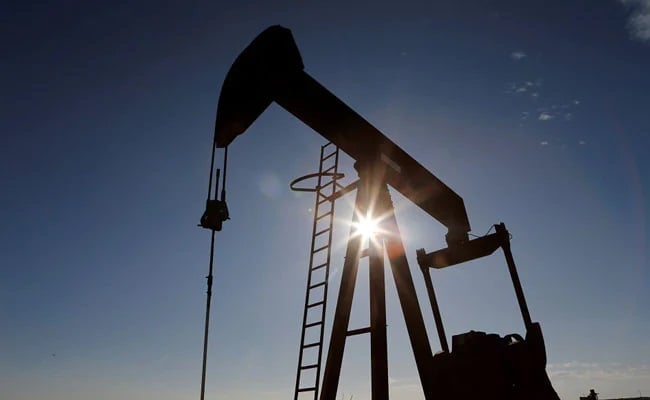
London: Brent crude oil futures hit a fresh three-year high on Tuesday, with U.S. benchmark crude close to 2014 peaks, after the OPEC+ group of producers decided to stick to its planned output rises rather pumping even more.
OPEC+ agreed in July to boost output by 400,000 barrels per day (bpd) each month until at least April 2022 to phase out 5.8 million bpd of existing production cuts.
Brent crude was up $1.07 or 1.3% at $82.33 a barrel by 1128 GMT, having rising 2.5% on Monday. U.S. West Texas Intermediate (WTI) oil rose 89 cents or 1.2% to $78.51, after gaining 2.3% the previous session.
Oil prices have already surged more than 50% this year, a rise that has added to inflationary pressures that crude-consuming nations such as the United States and India are concerned will derail recovery from the pandemic.
The OPEC+ Joint Technical Committee (JTC) said late last month it expected a 1.1 million bpd supply deficit this year which could rise to 1.4 million bpd next year.
Despite the pressure to ramp up output, OPEC+ was concerned that a fourth global wave of COVID-19 infections could hit the demand recovery, a source told Reuters a little before the vote.
Russian Deputy Prime Minister Alexander Novak said after the talks he believed the market is now balanced.
"The (price) move looks a bit outsized given the ministers just reaffirmed the decision announced in July but it shows how tight the market is, reinforcing our view of asymmetric price action with risks skewed to the upside at these inventory levels," Barclays said in a note.
Meanwhile U.S. crude oil and distillate inventories are likely to have fallen last week, according to a preliminary Reuters poll.
Five analysts surveyed by Reuters estimated on average that crude inventories declined by about 300,000 barrels in the week to October 1.
(This story has not been edited by NDTV staff and is auto-generated from a syndicated feed.)

-
High US Salaries, No Green Card Certainty: The Financial Calculation Facing Indian H-1B Families

The suspension of PERM processing at eight technology employers does not cancel existing H-1B visas. What it does is force a question many Indian families have been avoiding: is the US salary worth tying your career and family plans to one employer?
-
Unhedged Position: Can India See An Indonesia-Style Time Correction?
The Nifty is trading below levels it first clocked in 2024. Is there, then, as I have suggested in the headline, potential that the current time correction drags on painfully for the next three-five, even ten years?
-
Navigating Friction And Energy Realities: An Analysis Of Marco Rubio's October Visit To India
Occurring at a critical juncture marked by stalled trade negotiations and escalating geopolitical pressures over global energy supplies, the visit offers a profound window into modern US-India relations.
-
India Exports Capital. Why Not Export Trusteeship?
The big question, then, is whether India can build an institution that global borrowers, investors, banks, and lawyers can trust, even without an Indian connection.
-
France's Economy & Politics Are In Crisis | The Reason Why
Let's look at how the French economy and politics evolved under Nicolas Sarkozy, Franois Hollande and Emmanuel Macron.
-
You May Inherit The Business. You Must Earn Its Credibility.
Succession tests the founder's ability to share authority as much as it tests the next generation's readiness to assume it.
-
Signing Deals Is One Thing; Making Them Work Is Another | The Week In Whys
Sometimes, things don't turn out as planned. Indian companies have lost some bids to rivals, some projects won't produce until 2030.
-
FOMC Wall, PERM Suspension, Hospital Stocks | Talking Points This Week
A PERM suspension would directly affect green-card sponsorship rather than H-1B visas, so the near-term earnings impact could remain relatively limited. The key question is whether this marks a new phase in US scrutiny of Indian IT.
-
Everything, Everywhere, All At Once: Dalal Street's Week To Forget | Joining The Dots
Visa curbs, a Starlink spat and cancer drug caps: what connects this week's shocks for Indian markets
-
India Is Going Abroad For Critical Minerals. But It May Take Years To Pay Off | The Reason Why
Although India's steps are in the right direction, they remain modest compared with India's growing dependence.









