Oil Falls To 7-Month Low On Renewed Demand Fears, Rate Hike Expectations
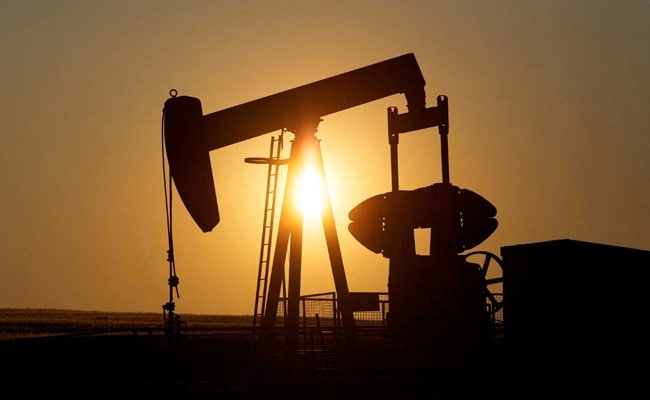
Oil prices fell more than $1 on Wednesday to their lowest since before Russia invaded Ukraine as COVID-19 curbs in top crude importer China and expectations of more interest rate hikes spurred worries of a global economic recession and lower fuel demand.
Brent crude futures fell $1.35, or 1.5%, to $91.48 a barrel by 0420 GMT after slipping 3% in the previous session. The contract hit a session low of $91.35, the lowest since Feb. 18.
US West Texas Intermediate crude futures shed $1.55, or 1.8%, to $85.33. The benchmark fell to a session low of $85.17, the lowest since Jan. 26.
Oil pared strong gains made on Monday after the Organization of the Petroleum Exporting Countries (OPEC) and their allies, a group known as OPEC+, decided to cut output by 100,000 barrels per day in October.
"Fading the OPEC+ production cut bounce wasn't that hard to do given a laundry list of global economic challenges," said Edward Moya, a senior market analyst at OANDA, in a note.
"Despite some better-than-expected US services data, global growth isn't looking good at all and that is trouble for crude prices."
A strong US dollar, aggressive rate hikes, a spike in bond yields, and a slowdown in China's growth are factors pressuring oil prices, said Tina Teng, an analyst at CMC Markets.
"In short, oil futures markets are pricing in 'stagflation' in the global economy," Teng added.
China's stringent zero-COVID policy has kept cities such as Chengdu, with 21.2 million people, under lockdown, curbing people movement and oil demand at the world's second-largest consumer.
The country's exports and imports lost momentum in August with growth significantly missing forecasts. Crude oil imports fell 9.4% in August from a year earlier, customs data showed on Wednesday, as outages at state-run refineries and lower operations at independent plants amid weak margins capped buying.
Investors are also watching for further interest rate hikes to curb inflation. The European Central Bank is widely expected to lift rates sharply when it meets on Thursday. After the ECB's meeting, a US Federal Reserve meeting will follow on Sept. 21.
The dollar hit a 24-year peak against the yen and reached new highs versus the Australian and New Zealand dollars on Wednesday after U.S. economic data reinforced the view that the Federal Reserve will continue aggressive policy tightening.
Lending some support to prices, however, were expectations of tighter oil inventories in the United States.
US crude stockpiles are expected to have fallen for a fourth consecutive week, declining by an estimated 733,000 barrels in the week to Sept. 2, a preliminary Reuters poll showed on Tuesday.
Crude inventories in the US Strategic Petroleum Reserve (SPR) fell 7.5 million barrels in the week to Sept. 2 to 442.5 million barrels, their lowest since November 1984, according to data from the Department of Energy.
Weekly US inventory reports from the American Petroleum Institute and Energy Information Administration will be released on Wednesday and Thursday respectively, a day later than usual, because of a public holiday on Monday.
(This story has not been edited by NDTV staff and is auto-generated from a syndicated feed.)

-
Unhedged Position: Can India See An Indonesia-Style Time Correction?

The Nifty is trading below levels it first clocked in 2024. Is there, then, as I have suggested in the headline, potential that the current time correction drags on painfully for the next three-five, even ten years?
-
Navigating Friction And Energy Realities: An Analysis Of Marco Rubio's October Visit To India
Occurring at a critical juncture marked by stalled trade negotiations and escalating geopolitical pressures over global energy supplies, the visit offers a profound window into modern US-India relations.
-
India Exports Capital. Why Not Export Trusteeship?
The big question, then, is whether India can build an institution that global borrowers, investors, banks, and lawyers can trust, even without an Indian connection.
-
France's Economy & Politics Are In Crisis | The Reason Why
Let's look at how the French economy and politics evolved under Nicolas Sarkozy, Franois Hollande and Emmanuel Macron.
-
You May Inherit The Business. You Must Earn Its Credibility.
Succession tests the founder's ability to share authority as much as it tests the next generation's readiness to assume it.
-
Signing Deals Is One Thing; Making Them Work Is Another | The Week In Whys
Sometimes, things don't turn out as planned. Indian companies have lost some bids to rivals, some projects won't produce until 2030.
-
FOMC Wall, PERM Suspension, Hospital Stocks | Talking Points This Week
A PERM suspension would directly affect green-card sponsorship rather than H-1B visas, so the near-term earnings impact could remain relatively limited. The key question is whether this marks a new phase in US scrutiny of Indian IT.
-
Everything, Everywhere, All At Once: Dalal Street's Week To Forget | Joining The Dots
Visa curbs, a Starlink spat and cancer drug caps: what connects this week's shocks for Indian markets
-
India Is Going Abroad For Critical Minerals. But It May Take Years To Pay Off | The Reason Why
Although India's steps are in the right direction, they remain modest compared with India's growing dependence.
-
When Everyone Has AI, What Gives You An Edge?
India's young workforce is entering an uncertain world of work where powerful AI tools are becoming widely accessible. The advantage will belong to those who combine deep expertise with digital fluency, and the distinctly human capabilities that technology cannot manufacture.









