Obama leads Forbes power list, Manmohan Singh at No. 19
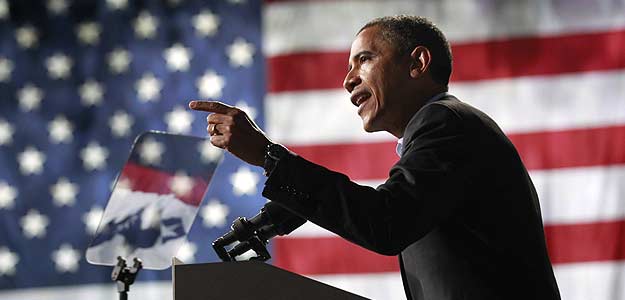
When it comes to power, politics trumps business, according to a new Forbes ranking on Wednesday that found heads of state occupying six of the top 10 spots among the world's most powerful people, led by President Barack Obama.
The annual list selected what Forbes said were the world's 71 most-powerful people from among the roughly 7.1 billion global populace, based on factors ranging from wealth to global influence.
Obama was joined in the top 10 by German Chancellor Angela Merkel, Russian President Vladimir Putin, King Abdullah bin Abdulaziz al Saud of Saudi Arabia and British Prime Minister David Cameron.
The list's highest-ranked businessman was Microsoft co-founder Bill Gates at No. 4. U.S. Federal Reserve Chairman Ben Bernanke and European Central Bank President Mario Draghi, both public officials, also made the top 10.
"This year's list reflects the changing of the guard in the world's two most powerful countries: the United States and China," Michael Noer, Forbes' executive editor, told Reuters in an email.
Noer noted that China's President Hu Jintao, last year's third most-powerful person, fell off the list as he is leaving power, and his successor, Xi Jinping, ranked ninth instead.
Both U.S. Treasury Secretary Timothy Geithner and Secretary of State Hillary Clinton, who have stated they will not be serving in Obama's second term, were not in this year's rankings.
While elected and appointed officials and business people made up the vast majority of Forbes' most powerful, Pope Benedict XVI placed fifth in the rankings.
Among the oddities was Joaquin Guzman Loera at No. 63.
Loera, far from a household name, is a billionaire nicknamed "El Chapo" who as head of Mexico's Sinaloa cartel is the world's most powerful drug trafficker, according to Forbes.
Age was also not a barrier, with two of the youngest and oldest of this year's most powerful -- 28-year-old Facebook CEO Mark Zuckerberg and 81-year-old News Corp CEO Rupert Murdoch -- back-to-back at numbers 25 and 26, respectively.
Forbes noted that Zuckerberg fell out of last year's top 10 after Facebook's IPO disappointed. A gainer, meanwhile, was Brazilian President Dilma Rousseff, who moved up four spots to No. 18 despite being only halfway into her first term of office.
To create the rankings, which Forbes readily concedes bore a measure of subjectivity, editors graded candidates on four criteria for power and averaged the four grades:
-- Power over many people
-- Control over financial and other valuable resources
-- Power in multiple spheres or arenas
-- Active use of power
Some measures, such as power over many people, favored leaders such as the Pope, while the world's richest man -- Mexican telecom magnate Carlos Slim Hula, worth a reported $72 billion -- placed 11th on the strength of his wealth.
Others, such as New York's billionaire Mayor Michael Bloomberg, scored high in all areas, placing him at No. 16.
Noer said that Elon Musk, one of the co-founders of Paypal and Tesla Motors, was "one of the more interesting newcomers" on the list due to his SpaceX company, a private space exploration venture.
"With NASA retiring the space shuttle fleet, private companies like SpaceX have been awarded huge contracts to do things like resupply the International Space Station. The commercialization of space is just beginning, but we expect it to be big business," Noer said.
Former President Bill Clinton placed 50th, with editors noting that by hitting the campaign trail for Obama, Clinton "cemented his status as a kingmaker", along with his nonpartisan Global Initiative raising more than $71 billion in commitments to fund charitable action worldwide.
Other high-ranking heads of state included French President Francois Hollande at No. 14, Indian Prime Minister Manmohan Singh at No. 19 and Iran's Grand Ayatollah Ali Hoseini-Khamenei at No. 21.
Among businessmen in the top 20 were Berkshire Hathaway CEO Warren Buffett at No. 15, Wal-Mart CEO Michael Duke at No. 17 and Google co-founders Larry Page and Sergey Brin at No. 20.
The entire list can be found at www.forbes.com/power as well as the December 24 issue of the magazine.
Copyright @ Thomson Reuters 2012

-
High US Salaries, No Green Card Certainty: The Financial Calculation Facing Indian H-1B Families

The suspension of PERM processing at eight technology employers does not cancel existing H-1B visas. What it does is force a question many Indian families have been avoiding: is the US salary worth tying your career and family plans to one employer?
-
Swiggy vs Eternal: Food Delivery's Two Rivals Are No Longer In The Same Race
Eternal is building a private AI assistant, dark.ai. Swiggy is still working out how to make Instamart pay, with an operating loss of Rs 895 crore in the July-September quarter while Blinkit stayed profitable.
-
Where You Live Shapes How You Get To Work | The Reason Why
Two-wheelers are the most popular way to get to work in India, accounting for nearly 43% of workplace commutes.
-
Unhedged Position: Can India See An Indonesia-Style Time Correction?
The Nifty is trading below levels it first clocked in 2024. Is there, then, as I have suggested in the headline, potential that the current time correction drags on painfully for the next three-five, even ten years?
-
Navigating Friction And Energy Realities: An Analysis Of Marco Rubio's October Visit To India
Occurring at a critical juncture marked by stalled trade negotiations and escalating geopolitical pressures over global energy supplies, the visit offers a profound window into modern US-India relations.
-
India Exports Capital. Why Not Export Trusteeship?
The big question, then, is whether India can build an institution that global borrowers, investors, banks, and lawyers can trust, even without an Indian connection.
-
France's Economy & Politics Are In Crisis | The Reason Why
Let's look at how the French economy and politics evolved under Nicolas Sarkozy, Franois Hollande and Emmanuel Macron.
-
You May Inherit The Business. You Must Earn Its Credibility.
Succession tests the founder's ability to share authority as much as it tests the next generation's readiness to assume it.
-
Signing Deals Is One Thing; Making Them Work Is Another | The Week In Whys
Sometimes, things don't turn out as planned. Indian companies have lost some bids to rivals, some projects won't produce until 2030.
-
FOMC Wall, PERM Suspension, Hospital Stocks | Talking Points This Week
A PERM suspension would directly affect green-card sponsorship rather than H-1B visas, so the near-term earnings impact could remain relatively limited. The key question is whether this marks a new phase in US scrutiny of Indian IT.









