Nvidia To Invest $1 Billion In Nokia In AI Networking Push

Nvidia Corp. plans to make a $1 billion equity investment in Nokia Oyj, as the AI sector's kingmaker bets on the Finnish company's pivot from mobile networking kit into artificial intelligence.
Nokia will issue about 166 million shares to Nvidia at $6.01 apiece, giving Nvidia a 2.9% stake, the companies said in a statement on Tuesday. Nvidia's chips will be used to accelerate Nokia's software for 5G and 6G networks and Nvidia will explore ways to use Nokia's data center technology in its AI infrastructure, they said.
Nokia, best known for selling mobile network parts, has been pushing into data centers — a business that's growing thanks to the growing demand for computing capacity from the artificial intelligence boom. The move has paid off, and helped Nokia beat Wall Street estimates last quarter. The Espoo, Finland-based company earlier this year bought Infinera Corp. for $2.3 billion to expand into networking products for AI data centers.
Nokia shares jumped as much as 17% in Helsinki after the statement, the biggest intraday gain since 2013.
The tie up could be a boost for the Nokia brand, which is still best known among consumers for the range of mobile phones it no longer makes. Chief Executive Officer Justin Hotard is leading a turnaround of the Nordic company, emphasizing its position as the only Western alternative to Huawei Technologies Co. for supplying the entire portfolio of communications kit, from 5G radios to fiber optic cables.
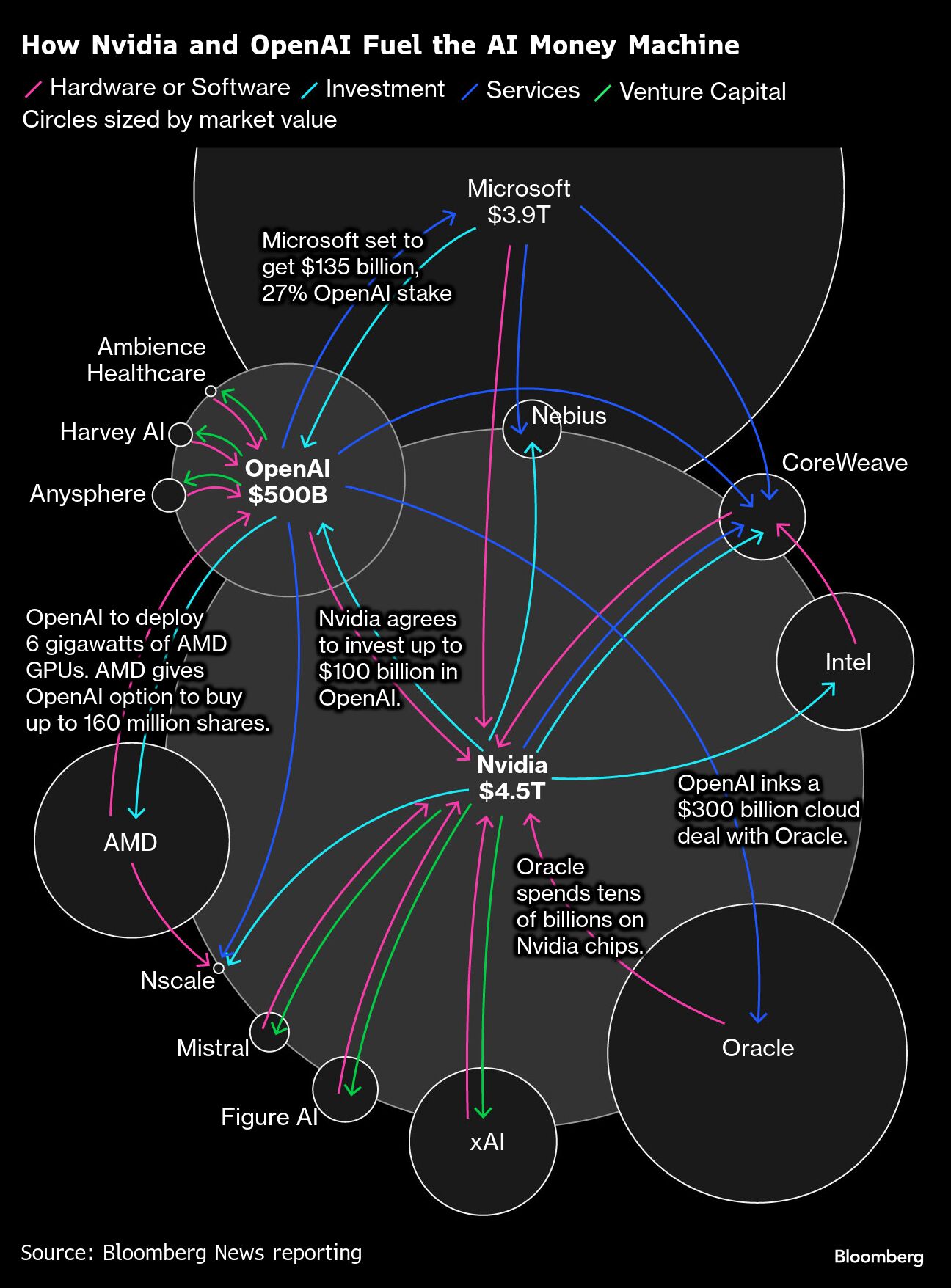
Nvidia has been on a spending spree in recent months. The company said it will invest as much as $100 billion into OpenAI and will fund autonomous vehicle companies Wayve and Oxa, fintech Revolut and AI companies like PolyAI. The company also will invest in a German data center alongside Deutsche Telekom AG, Bloomberg News reported earlier.
European policymakers and tech executives alike have been talking for months about the need for the bloc to develop its own AI ecosystem and catch up to rivals in the US and China. Nvidia CEO Jensen Huang and others have criticized Europe for being too slow to develop its own infrastructure and support companies that want to use AI while keeping their data within the region.

-
Ten Things I Learnt This Samvat

Patience can be a trap. Cheap stocks can stay cheap. Leverage can wipe you out. What did Samvat 2082 teach us? Niraj Shah writes on 10 lessons from the year gone by.
-
Talking Points This Week: Tech Nerves, FII Buying, And A Faraway Banking Shock
The global markets are not shining this Diwali. The exception in the large markets is, India.
-
Midterm Rally Lasted A Day. The Hard Reality Of A Divided US May Last Two Years | Opinion
Between a contested AI boom, a debt ceiling that arrives in 2027 and a president with every incentive to act alone, the next two years may prove more volatile than the first day's rally suggests.
-
Blue Wave Will Derail the AI Trade but Won't Dismantle the AI Era | Unhedged Position
The Democrats' sweep of the US Congress will see politics collide with economic forces both over the long and short term.
-
It's Time To Take The GST Council's Bet On Trust Global
Payment records can prove India's services exports, and clear, proportionate rules can bring foreign digital sellers into the tax net.
-
Opinion | India at 38: From Innovation Overperformer to Innovation Powerhouse
India now has 453 VC-backed deep science startups, 18 of them late-stage, after 117 percent growth since 2020. Laurus Labs, at USD 9.3 billion, is the most valuable deep science company in any middle-income economy outside China.
-
Navigating Energy Crossroads: S Jaishankar's Call For Diversified Supply Chains At G20 Ministerial Meeting
As geopolitical fault lines continue to test maritime trade routes and commodity flows, Jaishankar's message remains pertinent: true economic resilience requires open markets, protected transit lines, and a genuine commitment to multilateral cooperation rather than coercion.
-
Indians Are Travelling, But Not Every Journey Is A Holiday | The Week In Whys
Pilgrims, patients and working women are the real travellers, and the system hasn't quite caught up with them.
-
Getting To Work Costs Women More | The Reason Why
It is not just about women paying more than men. It is about women paying much more in cities than in villages.









