Bad Loans-Laden PSU Banks To Meet RBI's Minimum Capital Requirements, Says Government
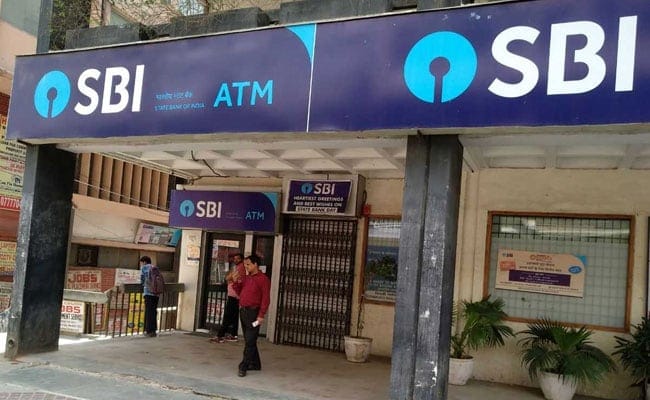
The Union government will ensure that all its state-run public sector banks meet their minimum capital requirements as mandated by the Reserve Bank of India (RBI), a top government official said on Wednesday. Most state banks, including State Bank of India (SBI) that posted a loss of over Rs 7,700 crore in its fourth quarter (Q4), have posted big losses in the quarter to March as bad loans surged after the central bank eliminated half a dozen loan restructuring schemes to hasten the clean-up of near-record levels of bad debt in February.
"When you do the cleaning part, a bit of dust, a bit of pain, is okay," Union financial services secretary Rajeev Kumar told reporters, adding that he expected financials of state-run banks to improve going forward.
The central government will not allow the banks to default under any circumstances, Kumar said even though he maintained that the amount of capitalisation sanctioned by government for banks was sufficient.
On Tuesday, State Bank of India (SBI) reported a loss of Rs. 7,718 crore ($1.1 billion) - its biggest ever - in the January-March quarter, as the country's biggest lender set aside more provisions for bad loans after a change in banking regulation.. The loss for the three months to March 31 was deeper than what the market had expected. Analysts on average had expected SBI to report a loss of Rs. 1,285 crore, according to Thomson Reuters data. In the December quarter, SBI had posted a loss of Rs. 2,416 crore.
"Last year was a year of despair. This year is a year of hope, and next year will be a year of happiness," said Chairman Rajnish Kumar after the results.
Even the second largest public sector bank Punjab National Bank (PNB) reported on Tuesday a Rs 13,417 crore ($1.98 billion) fourth-quarter net loss, the worst ever by a domestic lender, after its bad-loan provisions soared due to a massive fraud.
The loss of PNB was attributed to the provisions made on account of massive losses amounting to Rs 13,500 crore it incurred on account of fake letters of undertakings (LoUs) issued to other banks allegedly by Nirav Modi and his firms. Most of the LoUs were not honoured.
The flicker of hope lies in the insolvency and bankruptcy code (IBC) that allows the banks to recover dues from the bankrupt entities by selling them to other companies which are willing to take the assets along with the loans due to the lenders.
The recent success story is of Bhushan Steel that was acquired by Tata Steel's subsidiary Bamnipal Steel, thus saving the lenders of their dues.
The move was lauded by Union finance minister Piyush Goyal who called it a "historic breakthrough" in resolving legacy issues of banks. Piyush Goyal said, "Liquidation value of Bhushan Steel was Rs. 14,541 crore but creditors received almost 4 times the amount (Rs. 36,400). This was possible due to the robust and transparent Insolvency & Bankruptcy Code brought by this Government." (With Reuters inputs)

-
High US Salaries, No Green Card Certainty: The Financial Calculation Facing Indian H-1B Families

The suspension of PERM processing at eight technology employers does not cancel existing H-1B visas. What it does is force a question many Indian families have been avoiding: is the US salary worth tying your career and family plans to one employer?
-
Unhedged Position: Can India See An Indonesia-Style Time Correction?
The Nifty is trading below levels it first clocked in 2024. Is there, then, as I have suggested in the headline, potential that the current time correction drags on painfully for the next three-five, even ten years?
-
Navigating Friction And Energy Realities: An Analysis Of Marco Rubio's October Visit To India
Occurring at a critical juncture marked by stalled trade negotiations and escalating geopolitical pressures over global energy supplies, the visit offers a profound window into modern US-India relations.
-
India Exports Capital. Why Not Export Trusteeship?
The big question, then, is whether India can build an institution that global borrowers, investors, banks, and lawyers can trust, even without an Indian connection.
-
France's Economy & Politics Are In Crisis | The Reason Why
Let's look at how the French economy and politics evolved under Nicolas Sarkozy, Franois Hollande and Emmanuel Macron.
-
You May Inherit The Business. You Must Earn Its Credibility.
Succession tests the founder's ability to share authority as much as it tests the next generation's readiness to assume it.
-
Signing Deals Is One Thing; Making Them Work Is Another | The Week In Whys
Sometimes, things don't turn out as planned. Indian companies have lost some bids to rivals, some projects won't produce until 2030.
-
FOMC Wall, PERM Suspension, Hospital Stocks | Talking Points This Week
A PERM suspension would directly affect green-card sponsorship rather than H-1B visas, so the near-term earnings impact could remain relatively limited. The key question is whether this marks a new phase in US scrutiny of Indian IT.
-
Everything, Everywhere, All At Once: Dalal Street's Week To Forget | Joining The Dots
Visa curbs, a Starlink spat and cancer drug caps: what connects this week's shocks for Indian markets
-
India Is Going Abroad For Critical Minerals. But It May Take Years To Pay Off | The Reason Why
Although India's steps are in the right direction, they remain modest compared with India's growing dependence.









