No Respite For Banks As Bad Loans Hit Record Rs 9.5 Lakh Crore At June-End
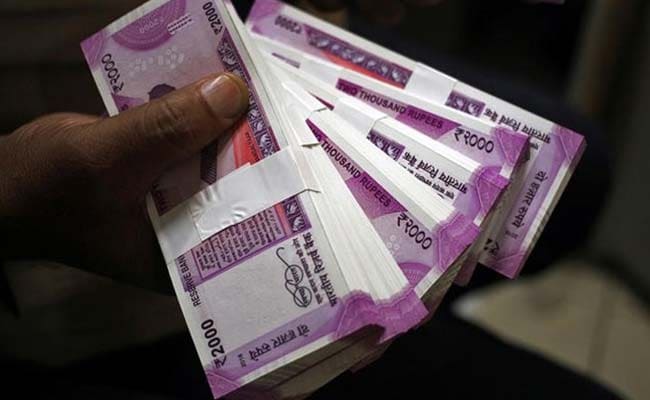
Mumbai: Indian banks' sour loans hit a record Rs 9.5 lakh crore ($145.56 billion) at the end of June, unpublished data shows, suggesting Asia's third-largest economy is no nearer to bringing its bad debt problems under control. A review of Reserve Bank of India (RBI) data obtained through right-to-information requests shows banks' total stressed loans - including non-performing and restructured or rolled over loans - rose 4.5 per cent in the six months to end-June. In the previous six months they had risen 5.8 per cent.
While banks remain the main source of funding for India's companies, the stubborn bad debt problem has eaten into bank profits and choked off new lending, especially to smaller firms, at a time when an economy that depends on them is stalling.
The economy grew at its slowest pace in three years in April-June - a concern for the government of Prime Minister Narendra Modi, who faces elections in 2019 and has pledged to create millions of new jobs before then.
Banks are having to take higher provisions to account for more defaulters being pushed into bankruptcy. And margins are likely to be squeezed further by proposed new rules to encourage commercial banks to pass on central bank interest rate cuts.
To be sure, the bulk of India's sour loans are in the state banks and stem from lending to large conglomerates, especially in steel and infrastructure. But analysts say the rise in bad loans among small firms, and even retail borrowing, is worrying and will do little to encourage new loans to help fuel growth.
"On the corporate side, we think it's a recognition cycle which is nearing an end," said Alka Anbarasu, senior analyst at Moody's Investor Service, referring to more bad loans being recognised as such, as banks come under pressure from the RBI and other regulators. "But it's really those data points beyond corporate that are causing some worry."
Ms Anbarasu forecast weak quarters ahead for banks before profitability picks up, and several senior bankers from public sector lenders - which account for more than two-thirds of Indian banking assets - agreed the months ahead would be strained.
Stressed loans as a percentage of total loans reached 12.6 per cent at end-June, according to the RBI data, the highest level in at least 15 years.
Higher provisions, weaker loans
Part of the issue for banks and the government is a strict provisioning regime: the RBI wants banks to provide for at least 50 per cent of the secured loans to companies taken to bankruptcy proceedings, and 100 per cent for the unsecured part.
A dozen of the biggest such cases account for nearly Rs 1.78 lakh crore, or a quarter of total non-performing assets.
For those companies, banks will need to provide Rs 18,000 crore on top of existing provisions, according to July estimates from India Ratings and Research, the local affiliate of Fitch Ratings.
More than 20 other sizeable companies are at risk of being taken to bankruptcy court.
Bankers say these and other pressures - including rising government bond yields that forced banks to post mark-to-market losses - have added to the squeeze, and hit new loans.
According to RBI data, new loans grew at just about 5 per cent in the year to March, the lowest growth rate in more than six decades. Several banks have already cut back their loan books to conserve capital.
"What are they (RBI) thinking while they're taking these steps all at the same time?" said a treasurer at a state-run bank, who didn't want to be named due to the sensitivity of the issue. "Do they want banks to wind up their businesses, or do they want to save the banks?"
Treasury income accounted for 22.7 per cent of banks' operating profits in the last financial year, doubling its share from a year earlier, India Ratings estimates.
"The almost zero treasury income will hit provisioning ability and, in turn, make it more difficult for weaker banks to give loans as capital becomes more scarce," said Soumyajit Niyogi, an associate director at the rating agency.
A senior policymaker, who requested anonymity as the discussions are not public, said the government would have to help to sufficiently capitalise the banks.
Fitch Ratings estimates Indian banks will need $65 billion of additional capital by March 2019 to meet Basel III global banking rules. Moody's expects the top 11 state lenders alone will need nearly $15 billion. The government has just $3 billion left in its budget for bank recapitalisation.
"We think capitalisation is the biggest challenge for the banks at the moment, given that earnings will remain subdued and will not support any capital generation," said Moody's Anbarasu.
($1 = Rs 65.2650)

-
Opinion | India at 38: From Innovation Overperformer to Innovation Powerhouse

India now has 453 VC-backed deep science startups, 18 of them late-stage, after 117 percent growth since 2020. Laurus Labs, at USD 9.3 billion, is the most valuable deep science company in any middle-income economy outside China.
-
Navigating Energy Crossroads: S Jaishankar's Call For Diversified Supply Chains At G20 Ministerial Meeting
As geopolitical fault lines continue to test maritime trade routes and commodity flows, Jaishankar's message remains pertinent: true economic resilience requires open markets, protected transit lines, and a genuine commitment to multilateral cooperation rather than coercion.
-
Indians Are Travelling, But Not Every Journey Is A Holiday | The Week In Whys
Pilgrims, patients and working women are the real travellers, and the system hasn't quite caught up with them.
-
Getting To Work Costs Women More | The Reason Why
It is not just about women paying more than men. It is about women paying much more in cities than in villages.
-
AI Bias In Investing Cannot Be Eliminated, But It Can Be Governed
Framing is a particularly important example as identical financial information presented in terms of gains rather than losses can lead an LLM to reach a different assessment.
-
Joining The Dots | Dark Skies, Steady Diya: Why Hope Holds This Diwali
With war, a weak rupee and foreign outflows weighing on sentiment, policymakers at the NDTV World Summit and market veterans at NDTV Profit Ignite: Diwali Edition offered the same advice: stay invested and filter out the noise.
-
The Curious Case of Equitas Small Finance Bank And A CEO Who Quit For Stock
PN Vasudevan believes persistent investor concerns over a perceived conflict of interest had become a governance overhang on Equitas Small Finance Bank's stock, even as the lender improved profitability and asset quality.
-
Talking Points This Week: AI Cash Burn, A Tiger Comeback And An India That Still Finds Its Own Path
India is not immune to higher oil or tighter global liquidity, yet its earnings base is broader, its domestic policy levers are still available.
-
Foreign Investors Own Half Of HDFC Bank and ICICI Bank. An LTCG Cut Could Matter Most Here
Foreign portfolio investors have US$115 billion parked in HDFC Bank, ICICI Bank. If the government cuts long-term capital gains tax, Jefferies says returning foreign money could land here first.










