No New Projects Without Completion Of Land Acquisition: Railways
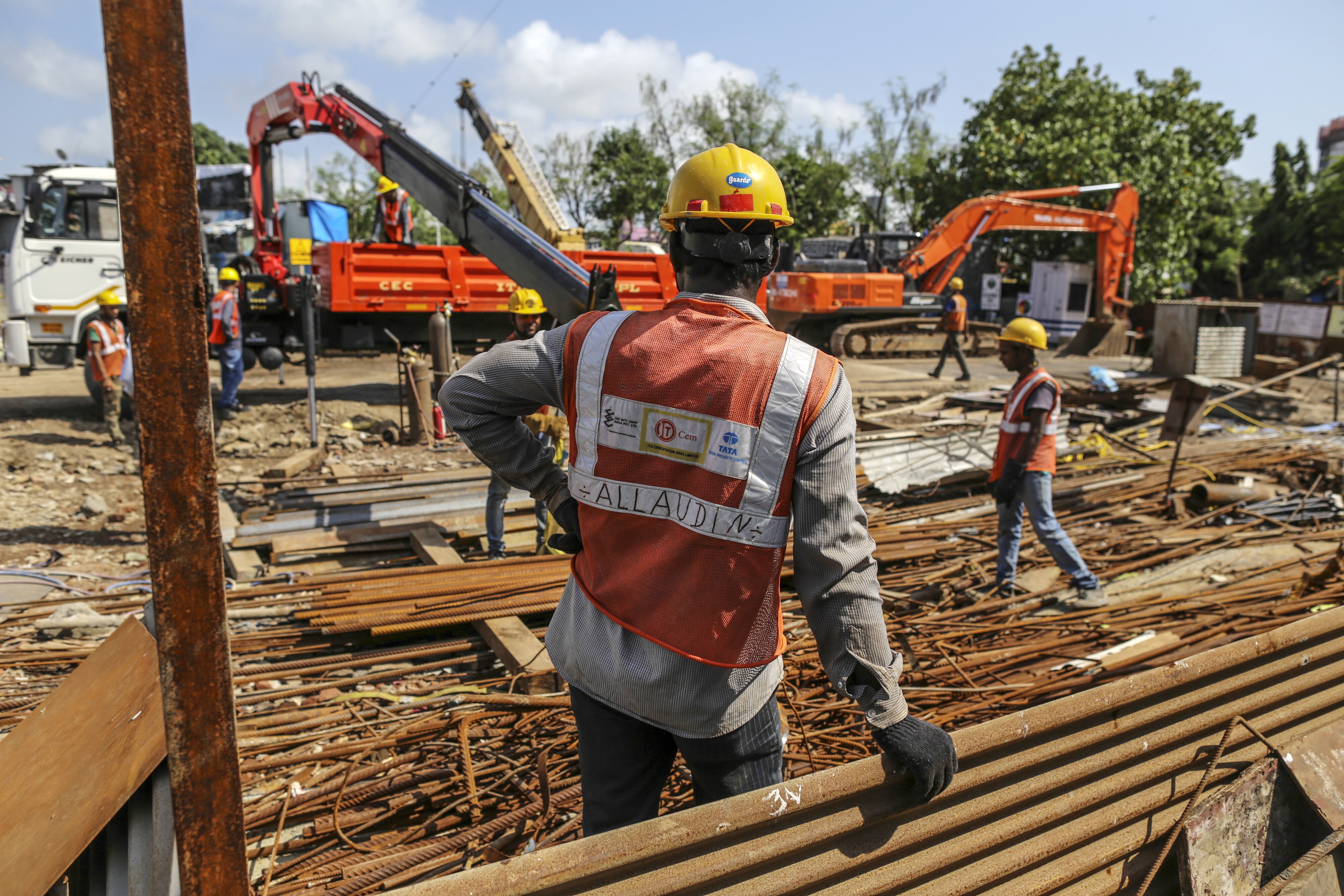
For the first time, no new rail lines will be built without completion of land acquisition to ensure that work does not get stuck midway because of non- availability of land, Railways has said.
Under a new policy, the national transporter has virtually forbidden the issuance of tenders or start of work on any new project without land in hand or a written assurance from the state government guaranteeing land to the railways within a specific time frame.
“The (Railway) Board has decided that issue of tenders or commencement of physical work for new line projects shall be taken up only after completion of land acquisition,” the new policy says.
Currently, only 70 per cent of the land needed to be acquired to start a project, which often led to stoppages and delays because of non-availably of land or earmarked land being caught in litigation.
Officials said that the existing policy did not define that the acquired line needed to be linear, so problems arose when projects would start having issues when part work begins and the next section of land was not available.
“This new policy also puts the onus on state governments to ensure that land is made available to the Railways if they want a new railway line. We end up losing on investments if land is not available,” said an official.
An official gave the examples of the new line between Tindivanam and Nagari in Andhra Pradesh (179.2 km) sanctioned in 2006, and the 36-km-long route from Morappur to Dharmapuri, sanctioned at a cost of Rs 134 crore which have seen very poor progress primarily because of non-availability of land.
Officials said that there is cost escalation of around 10-15 per cent, every year due to such delays.
However, the policy makes certain concessions for the general managers and given them some discretionary powers. The policy says that the GMs may invite tenders if they are reasonably certain of the possibility of land acquisition in a reasonable time frame.
"A written assurance from the state government in this regard can be considered by the GM.
"Large projects can be divided into phases by GMs, however, after ensuring that each phase on completion yields commercial returns for railways," the policy stated.
This means that the GMs have the discretion of starting a project if a stretch of land is available in a commercially viable section of the entire project so that railway does not lose out on revenue.
The policy also said that projects where local support or state support is not forthcoming resulting in poor or no progress as well as old projects that have not made any headway to projects that are unlikely to give any tangible benefits to the railways would need to be continuously reviewed.
The board has said that this new policy shall be followed in case of new projects or old projects where tenders have not yet been finalised.
Also Read: Asia's Oldest Railway Opens Door to Private Steel Producers

-
Talking Points This Week: Tech Nerves, FII Buying, And A Faraway Banking Shock

The global markets are not shining this Diwali. The exception in the large markets is, India.
-
Midterm Rally Lasted A Day. The Hard Reality Of A Divided US May Last Two Years | Opinion
Between a contested AI boom, a debt ceiling that arrives in 2027 and a president with every incentive to act alone, the next two years may prove more volatile than the first day's rally suggests.
-
Blue Wave Will Derail the AI Trade but Won't Dismantle the AI Era | Unhedged Position
The Democrats' sweep of the US Congress will see politics collide with economic forces both over the long and short term.
-
It's Time To Take The GST Council's Bet On Trust Global
Payment records can prove India's services exports, and clear, proportionate rules can bring foreign digital sellers into the tax net.
-
Opinion | India at 38: From Innovation Overperformer to Innovation Powerhouse
India now has 453 VC-backed deep science startups, 18 of them late-stage, after 117 percent growth since 2020. Laurus Labs, at USD 9.3 billion, is the most valuable deep science company in any middle-income economy outside China.
-
Navigating Energy Crossroads: S Jaishankar's Call For Diversified Supply Chains At G20 Ministerial Meeting
As geopolitical fault lines continue to test maritime trade routes and commodity flows, Jaishankar's message remains pertinent: true economic resilience requires open markets, protected transit lines, and a genuine commitment to multilateral cooperation rather than coercion.
-
Indians Are Travelling, But Not Every Journey Is A Holiday | The Week In Whys
Pilgrims, patients and working women are the real travellers, and the system hasn't quite caught up with them.
-
Getting To Work Costs Women More | The Reason Why
It is not just about women paying more than men. It is about women paying much more in cities than in villages.
-
AI Bias In Investing Cannot Be Eliminated, But It Can Be Governed
Framing is a particularly important example as identical financial information presented in terms of gains rather than losses can lead an LLM to reach a different assessment.









