No New Bad Loan Resolution Plan Yet, But The Promise Of One
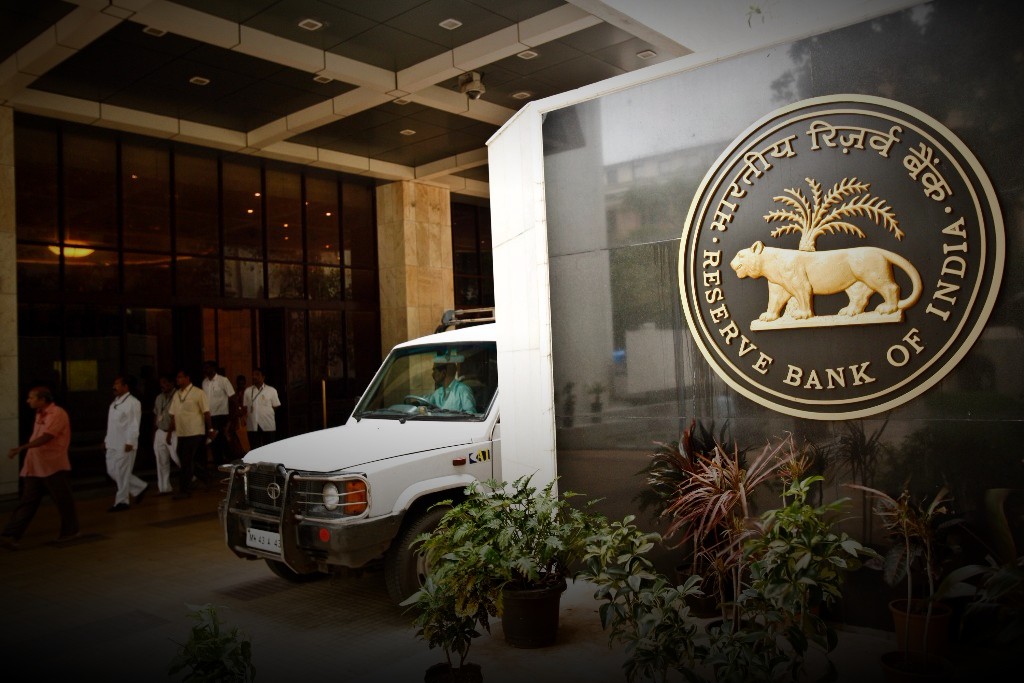
The Reserve Bank of India (RBI) and the government are discussing new options, including sector-specific and size-specific mechanisms, to speed up resolution of bad loans, said deputy governor SS Mundra on Thursday.
“I think there is a clear acknowledgement and recognition that the asset quality situation in which we are, there is no one size, which fits all. There would be case specific instruments, which would be required to be deployed,” said Mundra during the press conference which followed the central bank's first monetary policy review of the financial year.
While Mundra did not detail the options that the RBI and the government are working on, he gave some hints.
The RBI is considering the possibility of ensuring faster implementation of decisions made by Joint Lenders' Forum; increasing the number and ambit of oversight committees; and introducing sectoral or size specific rules for resolutions.
The brain storming on ideas to fix the bad loan problem comes at a time when total bad loans in the system have ballooned to over Rs 7 lakh crore as of the end of the December quarter. Schemes introduced by the RBI to help clean up bad loans have not had much impact so far.
In February, Deputy Governor Viral Acharya also suggested fresh structures through which bad loans could be resolved.
In seeking a optimal structure for resolving stressed assets in India, Acharya suggested two models – A Private Asset Management Company (PAMC) and A National Asset Management Company (NAMC). These, he said, would be different from asset restructuring companies, and would be along the lines of resolution agencies.
While the proposed PAMC may be useful for sectors such as steel and textiles where some sectoral recovery is in sight, the NAMC model could be applied in cases where the asset may appear to be unviable in the short to medium term.

The RBI, however, will not move back to the days of forbearance, said RBI governor Urjit Patel while referring to a period when provisions like corporate debt restructuring allowed banks to under-provide for stressed assets.
“Further creeping forebearance in the treatment of bank losses is untenable and costly for the rest of the economy,” said Patel in his opening statement.
Also Read: Banks Want Overseeing Committee To Give ‘Comfort' On Large Haircuts
Review Of Prompt Corrective Action Framework
The RBI, having completed its asset quality review (AQR) exercise, is now increasing its focus on ensuring that bank balance sheets are strengthened.
In a statement today, the RBI stated that the existing framework on prompt corrective action for banks has been reviewed and updated, and the changes would be notified to banks by mid-April.
Under the current prompt corrective action framework, the RBI places operational restrictions on banks if they underperform on three key parameters–capital adequacy, bad loans, and return on assets. The RBI stated that banks' leverage would now be monitored under this framework.
This (bad loan resolution) will be undertaken concomittantly with resolution of the weakest bank balance sheets, under the aegis of a revised prompt corrective action framework and our new enforcement department that has started its work this week.Urjit Patel, Governor, Reserve Bank of India
The non performing assets (NPA) resolution framework still seems to be work in progress, said Rajnish Kumar, managing director at State Bank Of India in a reaction to BloombergQuint.
"The statements made by the RBI suggest that there will be some policies for resolution of NPAs at the individual account level and that is the right approach. For the large corporate accounts, each case is very different and there cannot be and should not be a common prescription,” said Kumar.

-
Unhedged Position: Can India See An Indonesia-Style Time Correction?

The Nifty is trading below levels it first clocked in 2024. Is there, then, as I have suggested in the headline, potential that the current time correction drags on painfully for the next three-five, even ten years?
-
Navigating Friction And Energy Realities: An Analysis Of Marco Rubio's October Visit To India
Occurring at a critical juncture marked by stalled trade negotiations and escalating geopolitical pressures over global energy supplies, the visit offers a profound window into modern US-India relations.
-
India Exports Capital. Why Not Export Trusteeship?
The big question, then, is whether India can build an institution that global borrowers, investors, banks, and lawyers can trust, even without an Indian connection.
-
France's Economy & Politics Are In Crisis | The Reason Why
Let's look at how the French economy and politics evolved under Nicolas Sarkozy, Franois Hollande and Emmanuel Macron.
-
You May Inherit The Business. You Must Earn Its Credibility.
Succession tests the founder's ability to share authority as much as it tests the next generation's readiness to assume it.
-
Signing Deals Is One Thing; Making Them Work Is Another | The Week In Whys
Sometimes, things don't turn out as planned. Indian companies have lost some bids to rivals, some projects won't produce until 2030.
-
FOMC Wall, PERM Suspension, Hospital Stocks | Talking Points This Week
A PERM suspension would directly affect green-card sponsorship rather than H-1B visas, so the near-term earnings impact could remain relatively limited. The key question is whether this marks a new phase in US scrutiny of Indian IT.
-
Everything, Everywhere, All At Once: Dalal Street's Week To Forget | Joining The Dots
Visa curbs, a Starlink spat and cancer drug caps: what connects this week's shocks for Indian markets
-
India Is Going Abroad For Critical Minerals. But It May Take Years To Pay Off | The Reason Why
Although India's steps are in the right direction, they remain modest compared with India's growing dependence.
-
When Everyone Has AI, What Gives You An Edge?
India's young workforce is entering an uncertain world of work where powerful AI tools are becoming widely accessible. The advantage will belong to those who combine deep expertise with digital fluency, and the distinctly human capabilities that technology cannot manufacture.









