No Mass Layoffs In IT Sector, Says IT Secretary
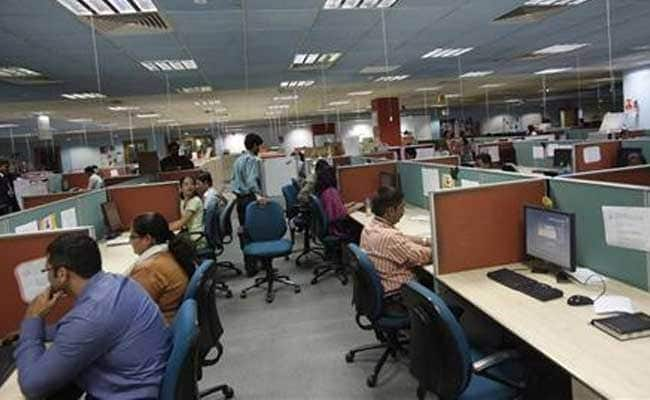
Indian IT companies have not done anything different this year that they were not doing earlier. That's how the Indian Information Technology secretary Ms Aruna Sundarajan responded to reports that Indian tech giants are being forced into mass layoffs after President Trump's directive to hire local talent for their projects in the US.
"I don't know how this narrative is being built," said Aruna Sundarajan and added, "I have categoric assurance that this year's performance appraisal is no different from the earlier years."
The IT secretary, however, admitted that there were far reaching changes with regard to technology and skill. "What's happening is that new technologies are emerging, new verticals are being created, cloud computing among others. People are moving from one field to another," said Ms Sundarajan.
IT professionals, however, are not so optimistic as different companies have come up with their downsizing plan. Cognizant has already laid off 1,000 employees by renewing their contracts. This number could go up. Tech Mahindra has reduced their strength by 1,000. Wipro too would let go off 600 employees while Infosys too may not renew the contract of up to 1,000 employees.
But all companies insists that its part of their regular appraisal process that's based on performance," Certain amount of loss of jobs are cyclical in nature. Then there is also issue about skill," says Priya Chetty Rajgopal, CXO Search Consultant, an executive search firm.
Though the government is downplaying job losses in the IT sector, it is concerned about the proposed changes to the H1B visa regime and its economic impact on the IT sector.

-
High US Salaries, No Green Card Certainty: The Financial Calculation Facing Indian H-1B Families

The suspension of PERM processing at eight technology employers does not cancel existing H-1B visas. What it does is force a question many Indian families have been avoiding: is the US salary worth tying your career and family plans to one employer?
-
Unhedged Position: Can India See An Indonesia-Style Time Correction?
The Nifty is trading below levels it first clocked in 2024. Is there, then, as I have suggested in the headline, potential that the current time correction drags on painfully for the next three-five, even ten years?
-
Navigating Friction And Energy Realities: An Analysis Of Marco Rubio's October Visit To India
Occurring at a critical juncture marked by stalled trade negotiations and escalating geopolitical pressures over global energy supplies, the visit offers a profound window into modern US-India relations.
-
India Exports Capital. Why Not Export Trusteeship?
The big question, then, is whether India can build an institution that global borrowers, investors, banks, and lawyers can trust, even without an Indian connection.
-
France's Economy & Politics Are In Crisis | The Reason Why
Let's look at how the French economy and politics evolved under Nicolas Sarkozy, Franois Hollande and Emmanuel Macron.
-
You May Inherit The Business. You Must Earn Its Credibility.
Succession tests the founder's ability to share authority as much as it tests the next generation's readiness to assume it.
-
Signing Deals Is One Thing; Making Them Work Is Another | The Week In Whys
Sometimes, things don't turn out as planned. Indian companies have lost some bids to rivals, some projects won't produce until 2030.
-
FOMC Wall, PERM Suspension, Hospital Stocks | Talking Points This Week
A PERM suspension would directly affect green-card sponsorship rather than H-1B visas, so the near-term earnings impact could remain relatively limited. The key question is whether this marks a new phase in US scrutiny of Indian IT.
-
Everything, Everywhere, All At Once: Dalal Street's Week To Forget | Joining The Dots
Visa curbs, a Starlink spat and cancer drug caps: what connects this week's shocks for Indian markets
-
India Is Going Abroad For Critical Minerals. But It May Take Years To Pay Off | The Reason Why
Although India's steps are in the right direction, they remain modest compared with India's growing dependence.









