Jobs, Credit, Farm Focus In Nirmala Sitharaman's Atmanirbhar Bharat 3.0
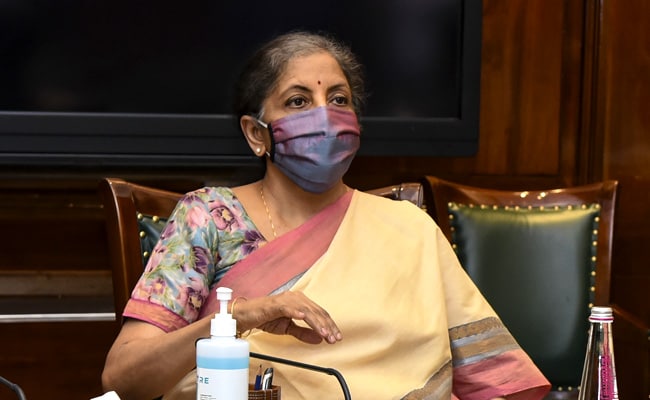
- The economy is seeing a strong rebound taking root, the Finance Minister said in a media briefing while announcing a third round of fiscal stimulus to help stressed sectors withstand the COVID-19 pandemic. “It is just not pent-up demand,” Ms Sitharaman said, pointing to some high-frequency indicators.
- Latest measures included additional funding for real estate developers and contractors, fertiliser subsidies, a new employment scheme and additional spending on the rural jobs scheme among other initiatives.
- The government unveiled a scheme to incentivise the creation of new jobs in a bid to fuel a rebound. Micro-, small- and medium-sized businesses across 26 sectors will be eligible for a credit-guarantee program, and will get a one-year moratorium on loans and four more years to repay the amount, Ms Sitharaman said.
- The Finance Minister earmarked an extra Rs 65,000 crore in fertiliser subsidies for 2020-21, to ensure there is adequate availability of fertilisers to farmers.
- She counted a production-linked incentive scheme worth Rs 1.46 lakh crore for the manufacturing sector, approved by the government on Wednesday, as part of 12 support measures unveiled on Thursday.
- Economists said the measures will help the economy in the long run. "The government is subtly combining both near- and medium-term reforms to help the economy come out from the lockdown impact... Some of the measures are immediate in nature and address the issue of employment especially in rural areas," CARE Ratings chief economist Madan Sabnavis told NDTV.
- Some economists say the actual fiscal cost for the government may be much less. Also, there was no clarity on how much impact the new spending will have on the fiscal deficit. Barclays said it estimates the deficit would rise to 7 per cent of GDP.
- The economy is expected to contract close to 10 per cent in the current financial year, which ends in March 2021. But Ms Sitharaman said the RBI had expressed a strong likelihood that the economy might begin to show growth in the October-December quarter.
- The Finance Minister said an increase in GST collections, higher energy consumption, a rise in the purchasing managers' index, improved bank credit and a stock market surge all suggested that stimulus measures taken so far had helped.
- The economy - which the International Monetary Fund singled out as a global bright spot only a few years ago - is seen shrinking over 10 per cent in the current financial year, which would be its worst annual contraction in four decades. It shrank a record 23.9 per cent in the April-June period.

-
Talking Points This Week: Tech Nerves, FII Buying, And A Faraway Banking Shock

The global markets are not shining this Diwali. The exception in the large markets is, India.
-
Midterm Rally Lasted A Day. The Hard Reality Of A Divided US May Last Two Years | Opinion
Between a contested AI boom, a debt ceiling that arrives in 2027 and a president with every incentive to act alone, the next two years may prove more volatile than the first day's rally suggests.
-
Blue Wave Will Derail the AI Trade but Won't Dismantle the AI Era | Unhedged Position
The Democrats' sweep of the US Congress will see politics collide with economic forces both over the long and short term.
-
It's Time To Take The GST Council's Bet On Trust Global
Payment records can prove India's services exports, and clear, proportionate rules can bring foreign digital sellers into the tax net.
-
Opinion | India at 38: From Innovation Overperformer to Innovation Powerhouse
India now has 453 VC-backed deep science startups, 18 of them late-stage, after 117 percent growth since 2020. Laurus Labs, at USD 9.3 billion, is the most valuable deep science company in any middle-income economy outside China.
-
Navigating Energy Crossroads: S Jaishankar's Call For Diversified Supply Chains At G20 Ministerial Meeting
As geopolitical fault lines continue to test maritime trade routes and commodity flows, Jaishankar's message remains pertinent: true economic resilience requires open markets, protected transit lines, and a genuine commitment to multilateral cooperation rather than coercion.
-
Indians Are Travelling, But Not Every Journey Is A Holiday | The Week In Whys
Pilgrims, patients and working women are the real travellers, and the system hasn't quite caught up with them.
-
Getting To Work Costs Women More | The Reason Why
It is not just about women paying more than men. It is about women paying much more in cities than in villages.
-
AI Bias In Investing Cannot Be Eliminated, But It Can Be Governed
Framing is a particularly important example as identical financial information presented in terms of gains rather than losses can lead an LLM to reach a different assessment.