PNB Fraud: India Could Begin Nirav Modi's Extradition Process In The UK
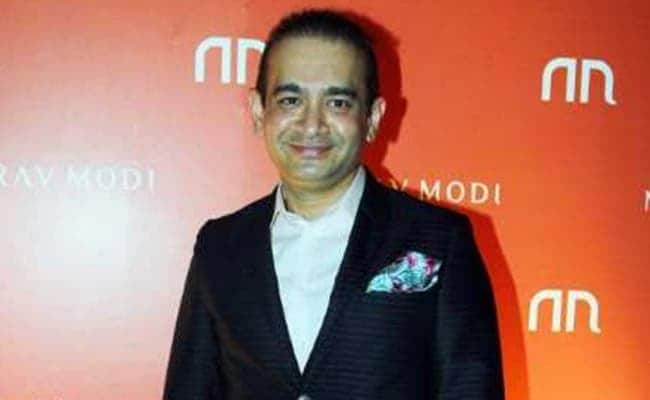
London: India has been informed by the UK's Crown Prosecution Service (CPS) that it can initiate extradition proceedings against Indian diamantaire Nirav Modi even though his exact whereabouts remain uncertain, a senior Indian official said today. The Central Bureau of Investigation (CBI) has begun the process of filing an extradition request for Modi, which will then have to be approved by the UK Home Office following which an extradition warrant can be issued.
"There is no confirmation about Nirav Modi's whereabouts. He could be in the UK or indeed left the UK since his last reported exit on a flight to Paris. We have now been advised by the CPS that we can proceed with an extradition request so that a warrant can be issued and he can be arrested on being traced," the official said.
According to information available in the UK, Modi - wanted in India for an alleged Rs 13,500 crore Punjab National Bank (PNB) fraud - arrived in London earlier this year on an Indian passport.
The UK government was informed about the revocation of that particular passport via a formal Note Verbale from the Indian authorities on February 19, following which the UK Home Office indicated that the businessman had already entered the UK on that travel document but there was no record of him exiting the country.
This gave rise to speculation in India that Modi may be hiding out in the UK. However, subsequently the Indian authorities became aware of multiple Indian passports being used by the diamond merchant, with his last documented exit from the UK at the end of March by air to Paris.
It remains unclear exactly how many passports Modi has been travelling on in the last few months and strict data protection laws in the UK have prevented the British government from confirming if he has indefinite leave to remain (ILR) in the UK or if he has sought to apply for political asylum. "If he has ILR in the UK, he would have to be extradited.
However, if that is not the case, he can be deported on the basis of illegally travelling to Britain using fraudulent travel documentation. We are pursuing both these lines," the senior Indian official said. If Modi does go ahead with a political asylum request in the UK, it is likely to delay any extradition proceedings at the very least.
"It is much harder to succeed in an asylum claim from a constitutional democracy like India. However, if there was evidence of an unfair trial, a person's claim might succeed," said Mark Symes, a senior immigration barrister who has represented another wealthy Indian national in the past who was refused asylum by the UK Home Office but won the claim before an independent judge on appeal.
"Generally speaking, a person needs to prove they face persecution rather than prosecution. So, a legitimate prosecution that leads to a lawful conviction following a fair trial could not give rise to a viable claim. However, if the charges were politically motivated or the trial was very unfair or excess punishment might result, the claim might succeed," he explains.
A non-bailable warrant was issued against Modi and 10 other accused, including his family members, in the PNB fraud case following a chargesheet filed by the Enforcement Directorate (ED) last month. The businessman is believed to have left India with his family around a month before the PNB filed its first complaint with the CBI at the beginning of this year.
Since then there has been a flurry of media speculation over his whereabouts and the kind of passport he is travelling on. Most of these reports have either been officially denied or remain unsubstantiated. The UK Home Office has refused to comment on "individual cases".
(Except for the headline, this story has not been edited by NDTV staff and is published from a syndicated feed.)

-
High US Salaries, No Green Card Certainty: The Financial Calculation Facing Indian H-1B Families

The suspension of PERM processing at eight technology employers does not cancel existing H-1B visas. What it does is force a question many Indian families have been avoiding: is the US salary worth tying your career and family plans to one employer?
-
Unhedged Position: Can India See An Indonesia-Style Time Correction?
The Nifty is trading below levels it first clocked in 2024. Is there, then, as I have suggested in the headline, potential that the current time correction drags on painfully for the next three-five, even ten years?
-
Navigating Friction And Energy Realities: An Analysis Of Marco Rubio's October Visit To India
Occurring at a critical juncture marked by stalled trade negotiations and escalating geopolitical pressures over global energy supplies, the visit offers a profound window into modern US-India relations.
-
India Exports Capital. Why Not Export Trusteeship?
The big question, then, is whether India can build an institution that global borrowers, investors, banks, and lawyers can trust, even without an Indian connection.
-
France's Economy & Politics Are In Crisis | The Reason Why
Let's look at how the French economy and politics evolved under Nicolas Sarkozy, Franois Hollande and Emmanuel Macron.
-
You May Inherit The Business. You Must Earn Its Credibility.
Succession tests the founder's ability to share authority as much as it tests the next generation's readiness to assume it.
-
Signing Deals Is One Thing; Making Them Work Is Another | The Week In Whys
Sometimes, things don't turn out as planned. Indian companies have lost some bids to rivals, some projects won't produce until 2030.
-
FOMC Wall, PERM Suspension, Hospital Stocks | Talking Points This Week
A PERM suspension would directly affect green-card sponsorship rather than H-1B visas, so the near-term earnings impact could remain relatively limited. The key question is whether this marks a new phase in US scrutiny of Indian IT.
-
Everything, Everywhere, All At Once: Dalal Street's Week To Forget | Joining The Dots
Visa curbs, a Starlink spat and cancer drug caps: what connects this week's shocks for Indian markets
-
India Is Going Abroad For Critical Minerals. But It May Take Years To Pay Off | The Reason Why
Although India's steps are in the right direction, they remain modest compared with India's growing dependence.









