Hardcore Nationalist, Man of Consensus: How Niira Radia Recalls Ratan Tata
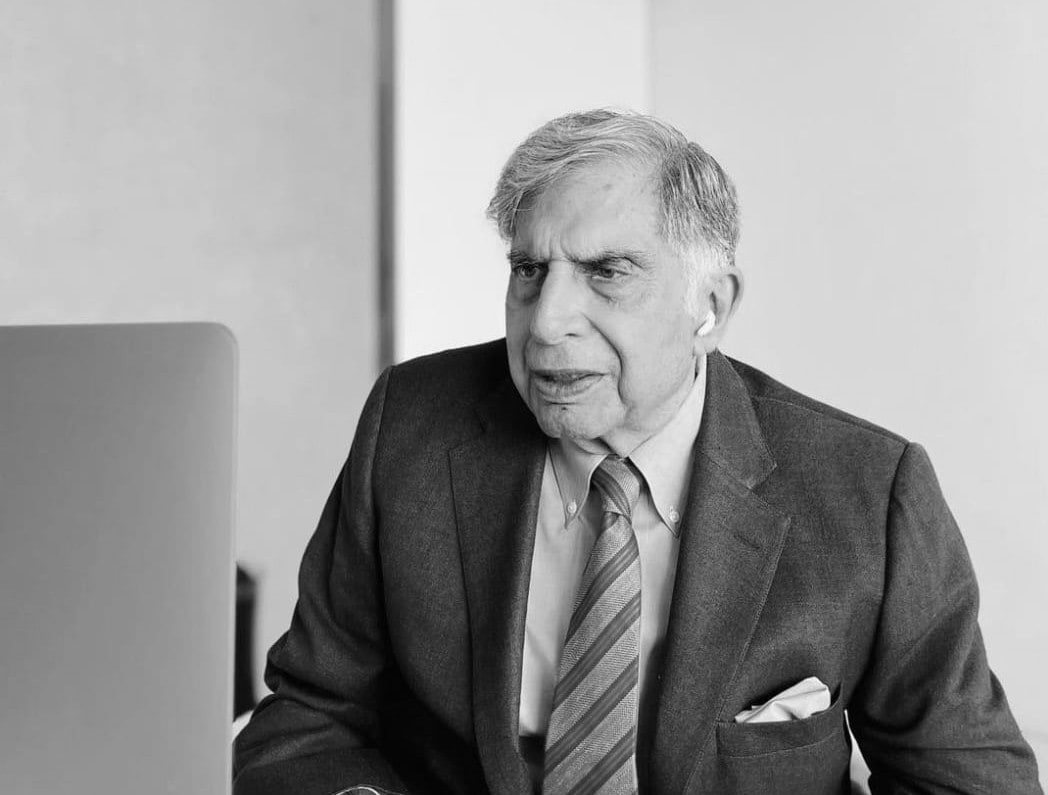
Niira Radia, a former corporate lobbyist who handled the public relations of Tata Group for nearly 12 years, recalled Ratan Tata as visionary and fearless leader, a "hardcore nationalist", and a "man of consensus."
In her first televised interview in more than a decade, Radia shared insights into the leadership style of Ratan Tata, who led Tata Sons, the holding entity of Tata Group, for 21 consecutive years between 1991 and 2012.
Radia, who handled the communications of Tata Group between 2000 and 2012 through the now-defunct Vaishnavi Communications, pointed towards the launch of Nano to highlight the leadership style of the late industrialist.
The project to launch Tata Nano, at an introductory price of Rs 1 lakh, shows he was a hardcore nationalist whose plans were always rooted in the betterment of the country, Radia said while speaking exclusively to NDTV Profit.
Ratan Tata believed that the Nano project could transform the lives of millions by providing an affordable four-wheeler option.
"When it was first mentioned that Ratan Tata wanted to make a Rs 1-lakh car, we all looked at him in shock," Radia said.
Radia recalled that Ratan Tata deliberately chose West Bengal for setting up the Tata Nano manufacturing plant to promote industrialisation in the state. Singur was specifically chosen because the area was represented by an opposition leader at the time, Rabindranath Bhattacharya of Trinamool Congress. "He always wanted to take everybody along with him," Radia explained.
However, the acquisition of land for the proposed project caused a political row, which eventually led the project being shifted to Gujarat's Sanand.
Radia said she first met Ratan Tata when the Tata Group was seeking to enter the aviation sector. In 1998-99, as consultants for Singapore Airlines, they discussed Tata's bid for Air India.
"...the (Tata) group was at the receiving end of negative publicity. But they kept quiet. They focused on work and communicating only what was necessary," she recalled.
On Noel Tata's elevation as the Tata Trusts chairperson, Radia said Ratan Tata would have been happy that it was a unanimous decision. "He always was a man of consensus; it was never a top-down approach. That it was unanimous, he would have be very happy," she said.
According to Radia, the one big learning from Ratan Tata was to always take things on the front foot and be courageous. He was totally fearless, she said.
Workaholic After Retirement?
On being asked if Ratan Tata was still a workaholic after retirement, Radia recalled that even after retiring he remained deeply engaged and passionate about new ventures.
He expressed a desire to nurture young entrepreneurs, taking on positions in various companies to help them develop. He recognised the potential of entrepreneurial spirit in India long before it became mainstream. As far back as 20 years ago, he would often say, “These bright young minds need opportunities."
Watch the full interaction here:

-
Navigating Friction And Energy Realities: An Analysis Of Marco Rubio's October Visit To India

Occurring at a critical juncture marked by stalled trade negotiations and escalating geopolitical pressures over global energy supplies, the visit offers a profound window into modern US-India relations.
-
India Exports Capital. Why Not Export Trusteeship?
The big question, then, is whether India can build an institution that global borrowers, investors, banks, and lawyers can trust, even without an Indian connection.
-
France's Economy & Politics Are In Crisis | The Reason Why
Let's look at how the French economy and politics evolved under Nicolas Sarkozy, Franois Hollande and Emmanuel Macron.
-
You May Inherit The Business. You Must Earn Its Credibility.
Succession tests the founder's ability to share authority as much as it tests the next generation's readiness to assume it.
-
Signing Deals Is One Thing; Making Them Work Is Another | The Week In Whys
Sometimes, things don't turn out as planned. Indian companies have lost some bids to rivals, some projects won't produce until 2030.
-
FOMC Wall, PERM Suspension, Hospital Stocks | Talking Points This Week
A PERM suspension would directly affect green-card sponsorship rather than H-1B visas, so the near-term earnings impact could remain relatively limited. The key question is whether this marks a new phase in US scrutiny of Indian IT.
-
Everything, Everywhere, All At Once: Dalal Street's Week To Forget | Joining The Dots
Visa curbs, a Starlink spat and cancer drug caps: what connects this week's shocks for Indian markets
-
India Is Going Abroad For Critical Minerals. But It May Take Years To Pay Off | The Reason Why
Although India's steps are in the right direction, they remain modest compared with India's growing dependence.
-
When Everyone Has AI, What Gives You An Edge?
India's young workforce is entering an uncertain world of work where powerful AI tools are becoming widely accessible. The advantage will belong to those who combine deep expertise with digital fluency, and the distinctly human capabilities that technology cannot manufacture.
-
Wrong Labels, High Pesticide Residues Holding Back Agri Exports | The Reason Why
India needs stronger domestic food-safety and labelling standards, with best practices becoming part of everyday business for farmers, traders and food companies.










