NFT Auction Raises More Than $50 Million For WikiLeaks' Julian Assange
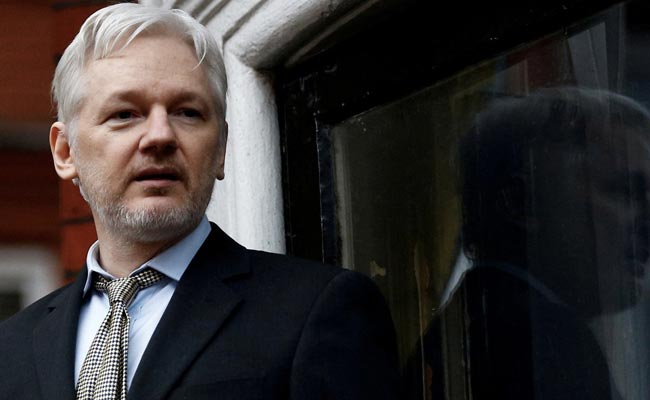
London: An online auction of digital art to raise money towards WikiLeaks founder Julian Assange's legal defence saw bids reach more than $50 million on Wednesday.
Assange is battling extradition from Britain to the United States where the authorities want him to face trial on 18 criminal charges including breaking a spying law, after WikiLeaks began to publish thousands of secret classified files and diplomatic cables in 2010.
Last month, Assange, who remains in a London prison, was given the chance to challenge approval of his extradition at Britain's highest court. The Supreme Court will now decide whether or not to hear his case.
Assange collaborated with a crypto artist known as Pak to sell a collection of NFTs (non-fungible tokens) called Censored in an online auction from February 7-9 to help raise funds to support his case.
NFTs are a kind of crypto asset that uses blockchain to record the ownership status of digital files such as images, videos and even items within online games.
The centrepiece of the auction is an NFT artwork, Clock, that displays the number of days Assange has been imprisoned in white text on a black background. It updates each day.
Bids on the Clock NFT were at 16,593 ether, which is worth just under $52 million, as of 1115 GMT on Wednesday.
The bid was placed by Assange supporters who formed a group called AssangeDAO to bid collectively on the NFT.
A Decentralised Autonomous Organisation (DAO) is a sort of online community which allows members to pool their money and use blockchain-based tokens to vote on decisions about how it is run.
The AssangeDAO raised 17,422 of the cryptocurrency ether - around $54.6 million - since Feb. 2, according to the crowdfunding website Juicebox. More than 10,000 people contributed to the fundraise.
"This is tens of thousands of people coming together to show real strength - the Power of the People," AssangeDAO community lead Joshua Bate said in a Discord post announcing the bid. "In less than one week, we have shown that decentralised and distributed peoples can band together to fight injustice."
Proceeds from the sale of Clock will go to support Assange's legal defence, the group said.
The auction closes at 1400 GMT. If the AssangeDAO loses the auction, people who have paid in to the DAO will have the option to withdraw their funds, the AssangeDAO website said.
The Censored auction also allows supporters to create their own NFTs, choosing an amount to pay and typing in a short message which gets turned into an image showing the words struck through, as though censored.
Supporters raised more than 587 ether ($1.8 million) in this way, creating 27,875 "censored" messages, with the proceeds going to pro-freedom organisations chosen by Assange and Pak.
(Except for the headline, this story has not been edited by NDTV staff and is published from a syndicated feed.)

-
Why Amazon And Flipkart Are Struggling To Beat Meesho In India's Smaller Cities

With 274 million users and lowest-cost logistics, Meesho is defending its value commerce crown against giants like Amazon and Flipkart.
-
High US Salaries, No Green Card Certainty: The Financial Calculation Facing Indian H-1B Families
The suspension of PERM processing at eight technology employers does not cancel existing H-1B visas. What it does is force a question many Indian families have been avoiding: is the US salary worth tying your career and family plans to one employer?
-
Swiggy vs Eternal: Food Delivery's Two Rivals Are No Longer In The Same Race
Eternal is building a private AI assistant, dark.ai. Swiggy is still working out how to make Instamart pay, with an operating loss of Rs 895 crore in the July-September quarter while Blinkit stayed profitable.
-
Where You Live Shapes How You Get To Work | The Reason Why
Two-wheelers are the most popular way to get to work in India, accounting for nearly 43% of workplace commutes.
-
Unhedged Position: Can India See An Indonesia-Style Time Correction?
The Nifty is trading below levels it first clocked in 2024. Is there, then, as I have suggested in the headline, potential that the current time correction drags on painfully for the next three-five, even ten years?
-
Navigating Friction And Energy Realities: An Analysis Of Marco Rubio's October Visit To India
Occurring at a critical juncture marked by stalled trade negotiations and escalating geopolitical pressures over global energy supplies, the visit offers a profound window into modern US-India relations.
-
India Exports Capital. Why Not Export Trusteeship?
The big question, then, is whether India can build an institution that global borrowers, investors, banks, and lawyers can trust, even without an Indian connection.
-
France's Economy & Politics Are In Crisis | The Reason Why
Let's look at how the French economy and politics evolved under Nicolas Sarkozy, Franois Hollande and Emmanuel Macron.
-
You May Inherit The Business. You Must Earn Its Credibility.
Succession tests the founder's ability to share authority as much as it tests the next generation's readiness to assume it.
-
Signing Deals Is One Thing; Making Them Work Is Another | The Week In Whys
Sometimes, things don't turn out as planned. Indian companies have lost some bids to rivals, some projects won't produce until 2030.










