New Rule Aimed At Boosting Redevelopment Unlikely To Work In Mumbai
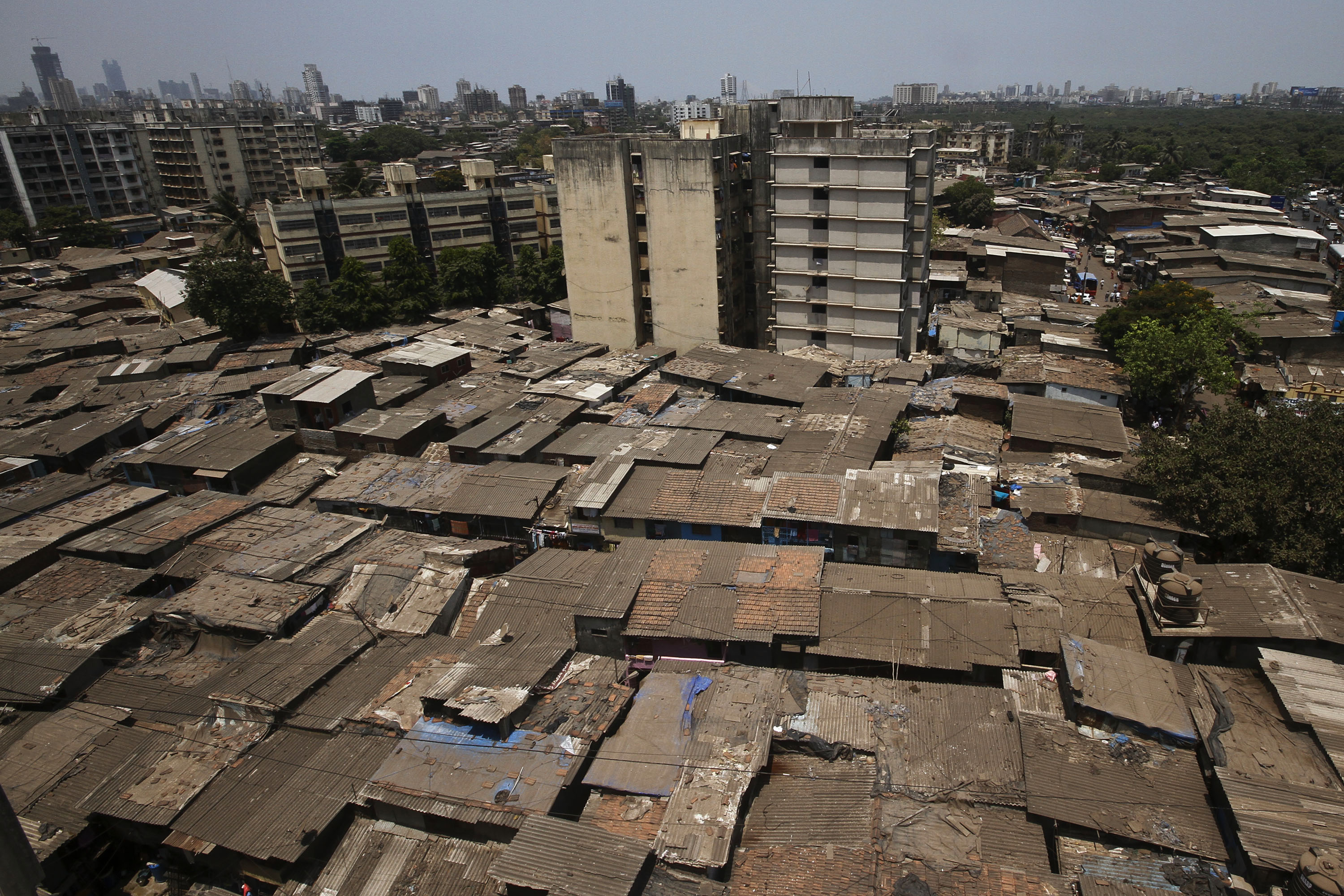
Siddharth Pardhe's 53-year-old apartment block in Mumbai needs to be rebuilt. The Marathi writer and his neighbours couldn't go ahead as they didn't own the land—it was given by the government. New rules allow them to pay a fee and take ownership, something they have been seeking for years. But there's a catch: it's unaffordable.
The government linked the conversion fee to the minimum market rates decided by the civic authority. The Sahitya Sahawas Co-Operative Housing Society, spread over 10,000 square meters with 84 apartments, is located near Kalanagar, Bandra-East. The so-called ready-reckoner rate for the area is Rs 1.69 lakh per square metre. The society will have to pay Rs 16 crore—or about Rs 20 lakh by every owner.
“Most of us are from middle-class families. This amount will make the conversion very difficult for us,” Pardhe said. “Given the current state of the real estate market, we don't think any developer will come forward for the redevelopment.”
Maharashtra on March 8 notified rules allowing conversion of restricted or leased land to aid redevelopment of old buildings, and earn revenue from the fee. In the state capital Mumbai, the world's second-most crowded city, the decision will help create additional housing. But the property market is yet to completely recover from a slowdown triggered by the cash ban and a new housing law that arms buyers against fraud by builders.

The land in question was given to certain sections for housing at either lower or full market rates. Within the island city limits, most of it was leased by the British, according to Arvind Wadke, an architect and treasurer of the Brihanmumbai Centre, Indian Institute of Architects. After Independence, it was given on class-II occupancy basis in the suburbs, he said. There were restrictions on transfer of the both types of land to ensure it was used for the intended purpose.
Around 3,000 housing societies in Mumbai and 22,000 across Maharashtra exist on such land, according to property lawyer Uday Wavikar. They require the collector's approval for sale, transfer, redevelopment and even mortgaging a flat, he said. The process causes delays, he said, more so when the majority of them are in dire need of rebuilding.
The Fees
The new rules come three years after the Maharashtra Land Revenue Code (1966) was amended to pave the way for the conversion. According to them:
- Co-operative housing societies that had paid the full market premium when they were granted class-II occupancy will be charged 10 percent of the ready reckoner rate.
- Housing societies granted land on concession or lease will be charged 15 percent.
- For land granted on class-II occupancy or lease for industrial and commercial purposes, the premium is 50 percent of the ready-reckoner rate.
Mumbai is the costliest property market in India because of high cost of land. Most of the apartment blocks on leased or restricted land are located in Bandra, Chembur, Santacruz, Andheri, Kurla, Versova, Kandivali, Borivali and Dombivli, among others. In the majority of these areas, an average-sized single-bedroom apartment would cost at least Rs 1 crore, according to property portal magicbricks.com. That results in high ready-reckoner rates.
Salil Rameshchandra, president of the lobby of flat-owners with homes on such land, said the bigger problem is that the conversion fee, according to the new rules, will rise after three years to 60 and 75 percent of the ready-reckoner rates. The assumption is that all societies want to redevelop and can pay for it, he said. “Looking at the real-estate recession, very few are thinking about it,” he said. “A maximum of 5 percent of such societies can go for the scheme within three years. The rest won't be able to avail it since the conversion premiums will become even more unaffordable.”
Redevelopment is not the only reason why they want the ownership of the land. Subhash Agarwal's 1,200-sq-mt Green Blaze Co-Operative Housing Society is built on such land near Juhu-Versova Link Road, but it doesn't need to be rebuilt anytime soon. “Still, it's important for us to get our land converted to freehold as we have to get prior approval of the collector for almost everything,” he said. “We can't even rent our flats without the nod.”
In his case, each of the 24 apartment owners will have to pay Rs 8.7 lakh each given the rate of Rs 1.16 lakh per square metre and a 15 percent conversion fee. “Most of us are retired sportspersons and this price seems quite unaffordable. We request the government to bring them down.”

Not everyone finds the fee steep. Ashutosh Limaye, director and head-consultancy services at Anarock Property Consultants, said the rates are “fine”. If some societies feel the rates are too high, they can initiate redevelopment and ask the developer to pay up for conversion, he said. If a technicality bars the developer from doing so, owners can recover the amount after the building is redeveloped, he said. “It's difficult to meet expectations of each and every stakeholder. At best, it could be aimed to meet expectations of the majority, and I think this rate does that.”
Prasad Shetty, an urban planner, agreed. The rates charged by the government are marginal compared to the profit societies will make after redevelopment as they or the developer can build more flats and sell at market prices. The government can help by allowing redevelopment without conversion on the condition that the occupation certification—declaring a building fit for living—will be given only after the payment of premium, he said. “This way, the societies will be able to afford it.”
Developers would, however, prefer that flat-owners take the ownership of the land first. Then it would be easier for them to either redevelop the building themselves or rope in a builder, said Nayan Shah, president of the Maharashtra Chamber of Housing Industry. “Depending on the viability of plots, the developers will come forward.”
But that means people like Pardhe will have to bear the upfront costs of conversion. And while he is glad that the government accepted their demand, he reiterated that costs are prohibitive. “A lower premium will help both the government earn more revenue and societies to go for redevelopment.”

-
Opinion | India at 38: From Innovation Overperformer to Innovation Powerhouse

India now has 453 VC-backed deep science startups, 18 of them late-stage, after 117 percent growth since 2020. Laurus Labs, at USD 9.3 billion, is the most valuable deep science company in any middle-income economy outside China.
-
Navigating Energy Crossroads: S Jaishankar's Call For Diversified Supply Chains At G20 Ministerial Meeting
As geopolitical fault lines continue to test maritime trade routes and commodity flows, Jaishankar's message remains pertinent: true economic resilience requires open markets, protected transit lines, and a genuine commitment to multilateral cooperation rather than coercion.
-
Indians Are Travelling, But Not Every Journey Is A Holiday | The Week In Whys
Pilgrims, patients and working women are the real travellers, and the system hasn't quite caught up with them.
-
Getting To Work Costs Women More | The Reason Why
It is not just about women paying more than men. It is about women paying much more in cities than in villages.
-
AI Bias In Investing Cannot Be Eliminated, But It Can Be Governed
Framing is a particularly important example as identical financial information presented in terms of gains rather than losses can lead an LLM to reach a different assessment.
-
Joining The Dots | Dark Skies, Steady Diya: Why Hope Holds This Diwali
With war, a weak rupee and foreign outflows weighing on sentiment, policymakers at the NDTV World Summit and market veterans at NDTV Profit Ignite: Diwali Edition offered the same advice: stay invested and filter out the noise.
-
The Curious Case of Equitas Small Finance Bank And A CEO Who Quit For Stock
PN Vasudevan believes persistent investor concerns over a perceived conflict of interest had become a governance overhang on Equitas Small Finance Bank's stock, even as the lender improved profitability and asset quality.
-
Talking Points This Week: AI Cash Burn, A Tiger Comeback And An India That Still Finds Its Own Path
India is not immune to higher oil or tighter global liquidity, yet its earnings base is broader, its domestic policy levers are still available.
-
Foreign Investors Own Half Of HDFC Bank and ICICI Bank. An LTCG Cut Could Matter Most Here
Foreign portfolio investors have US$115 billion parked in HDFC Bank, ICICI Bank. If the government cuts long-term capital gains tax, Jefferies says returning foreign money could land here first.










