New RBI Chief Urjit Patel's Policies To Broadly Echo Rajan's: Poll
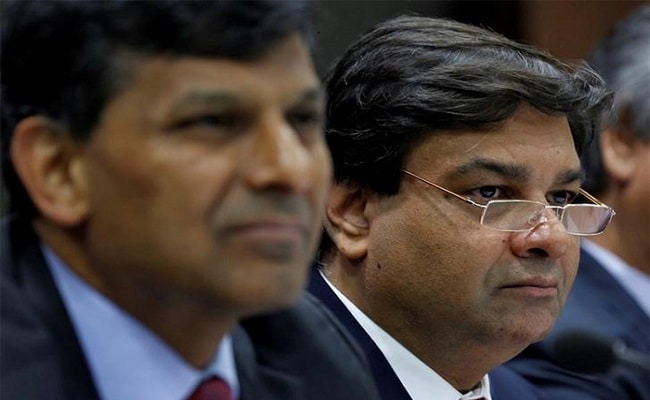
Bengaluru: The Reserve Bank of India's monetary policy is likely to stay broadly unchanged when Urjit Patel takes over as governor of the central bank, according to a Reuters poll, but his approach to cleaning up public banks' bad debts could be less stringent.
Currently a deputy governor in charge of monetary policy, Mr Patel will become RBI governor once Raghuram Rajan steps down on September 4.
His appointment by the government was widely viewed as a move to ensure continuity, and all but one of the 30 economists polled between August 23 and August 29 said they expected Mr Patel to broadly tread the same path as Mr Rajan, basing interest rate decisions on the same criteria.
"Urjit Patel and Raghuram Rajan share the same school of thought and they have co-signed the circulars that recommended inflation targeting," said Hemanth Raj Reddy, analyst at Cholamandalam Investment & Finance Co Ltd, a brokerage firm in Mumbai.
"Following his past decision making methodologies which were very data driven and methodical, all of which are analogous to Rajan's; this reinforces our belief that there would be no change in the RBI's prerequisites for a rate cut."
Mr Patel, after all, led a panel that recommended landmark changes to monetary policy, including a switch to inflation-targeting and the creation of a committee to set interest rates.
Whereas Mr Rajan ultimately took sole responsibility for decisions to change interest rates, Mr Patel is expected to head a Monetary Policy Committee (MPC) that will make those calls.
"The effectiveness of the new governor in forging consensus within the Monetary Policy Committee will be crucial," said Abhishek Upadhyay, economist at ICICI Securities, a primary dealer in Mumbai that transacts with the RBI.
"A sharply divided MPC could undermine central bank credibility."
During his three-year term, Mr Rajan focused on taming inflation, which has historically remained high due to weak farm supply chains, erratic rains and unrelenting demand from the country's vast population.
As inflation began cooling due to falling global oil prices, Mr Rajan slashed lending rates by a cumulative 150 basis points since January 2015.
But with annual consumer inflation running at 6.07 per cent in July - well above the RBI's March 2017 target of 5 per cent - the room for further rate cuts is limited, although economists earlier this month said one was likely between October and December.
A large majority of respondents in the latest survey said the RBI is unlikely to change its medium-term inflation goal.
In response to an extra question, economists picked a clean-up drive of government-controlled banks' balance sheets, as the top area where Mr Patel is likely to take a different approach.
"While he will pursue with the balance sheet clean up, he will also ensure that banks don't become completely risk averse, thanks to his prior experience as a lender to the infrastructure sector," said Rupa Rege Nitsure, economist at Larsen & Turbo.
Mr Rajan had set an ambitious March 2017 deadline to fully make provisions for the $120 billion of sour loans Indian banks are plagued with.
Mr Patel is taking over at the RBI at a time when India is the world's fastest growing major economy, inflation is relatively steady and the rupee exchange rate is stable. In contrast, Mr Rajan took office in the midst of a currency crisis, with inflation running at double-digit levels and the economy suffering from weak growth.
A separate Reuters poll on Monday showed the economy likely grew 7.6 per cent in the April-June quarter compared to a year ago, slower than the 7.9 per cent of the previous three months.
Seventeen out of the 29 economists polled expected Patel to have a neutral impact on the economy over the coming year.
Eleven expected him to have a positive effect, and one expected him to have a negative effect.

-
High US Salaries, No Green Card Certainty: The Financial Calculation Facing Indian H-1B Families

The suspension of PERM processing at eight technology employers does not cancel existing H-1B visas. What it does is force a question many Indian families have been avoiding: is the US salary worth tying your career and family plans to one employer?
-
Swiggy vs Eternal: Food Delivery's Two Rivals Are No Longer In The Same Race
Eternal is building a private AI assistant, dark.ai. Swiggy is still working out how to make Instamart pay, with an operating loss of Rs 895 crore in the July-September quarter while Blinkit stayed profitable.
-
Where You Live Shapes How You Get To Work | The Reason Why
Two-wheelers are the most popular way to get to work in India, accounting for nearly 43% of workplace commutes.
-
Unhedged Position: Can India See An Indonesia-Style Time Correction?
The Nifty is trading below levels it first clocked in 2024. Is there, then, as I have suggested in the headline, potential that the current time correction drags on painfully for the next three-five, even ten years?
-
Navigating Friction And Energy Realities: An Analysis Of Marco Rubio's October Visit To India
Occurring at a critical juncture marked by stalled trade negotiations and escalating geopolitical pressures over global energy supplies, the visit offers a profound window into modern US-India relations.
-
India Exports Capital. Why Not Export Trusteeship?
The big question, then, is whether India can build an institution that global borrowers, investors, banks, and lawyers can trust, even without an Indian connection.
-
France's Economy & Politics Are In Crisis | The Reason Why
Let's look at how the French economy and politics evolved under Nicolas Sarkozy, Franois Hollande and Emmanuel Macron.
-
You May Inherit The Business. You Must Earn Its Credibility.
Succession tests the founder's ability to share authority as much as it tests the next generation's readiness to assume it.
-
Signing Deals Is One Thing; Making Them Work Is Another | The Week In Whys
Sometimes, things don't turn out as planned. Indian companies have lost some bids to rivals, some projects won't produce until 2030.
-
FOMC Wall, PERM Suspension, Hospital Stocks | Talking Points This Week
A PERM suspension would directly affect green-card sponsorship rather than H-1B visas, so the near-term earnings impact could remain relatively limited. The key question is whether this marks a new phase in US scrutiny of Indian IT.









