Nestle Wants Bigger Piece of High-end Chocolate
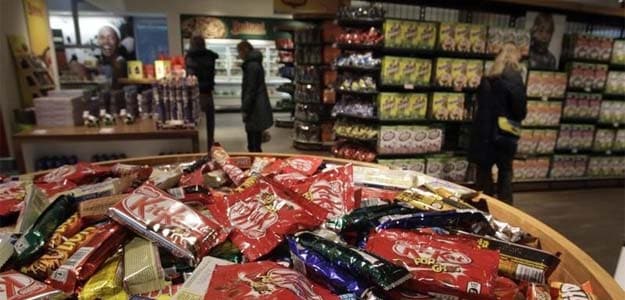
Nestle's chief executive, who oversees a sprawling empire stretching from baby food to wrinkle treatment, admits to finding one of its oldest businesses, chocolate, a source of frustration.
Nestle is one of many consumer goods companies trying to tap interest in high-end, natural, artisan, exclusive or organic goods to augment packaged food sales that have been sluggish in Europe and North America since the global recession.
Its Nespresso brand enjoys a comfortable position at the high end of the coffee market, helped by exclusive distribution, break-through technology and ads with George Clooney. But the company has not done the same in chocolate.
"Premium chocolate is my small intimate frustration," chief executive Paul Bulcke told investors at a conference in Boston on June 4 where he also discussed the company's shrinking appetite for underperforming brands.
His revelation prompted renewed speculation the company, known for mass-market chocolate, may seek to buy its way into a bigger role in the premium sector, particularly in the United States. A Nestle spokesman declined to comment on any plans.
"I think there will be some sort of premium chocolate initiative on a global basis for the company over coming months and quarters," Kepler Cheuvreux analyst Jon Cox said.
"And to be honest, about time too."
Nestle sold about 7.5 billion Swiss francs ($8.39 billion at $1 = 0.8951 Swiss francs) of chocolate in 2013, accounting for about 8 per cent of group sales. Its confectionery business is No. 3 behind Mondelez International and Mars in a global market with more than $196 billion in retail sales, according to Euromonitor International.
Over the last seven years, Nestle's confectionery business has grown at an average rate of 5.7 per cent, below the group average of 6.3 per cent, according to Vontobel analysts.
Gourmet chocolate, often made with higher cacao content and exotic flavours such as chilli or ginger, is still a small part of the market and boasts a range of independent players such as La Maison du Chocolat and Vosges.
But multinationals are increasingly present. Mondelez owns Green & Black's, Korea's Lotte owns Belgium's Guylian, Mars owns Pure Dark and Hershey Co owns Scharffen Berger.
Nestle also sells premium brands - Switzerland's Cailler and Italy's Baci Perugina - but the vast majority of sales come from mainstream brands such as Kit Kat, Aero, Crunch and Butterfinger.
"We're trying to answer that. It's going to be a long-term journey but we do have the quality in chocolate, we do have the knowledge, we do have the 'metier'. We just have to do it," Mr Bulcke said, noting that part of the problem was the company's decentralised structure.
"Super-premium luxury chocolate brands should be monolithic worldwide, like Nespresso is. That goes against the DNA of our organisation, so we're going to have to find ways to go around that," he said.
To build or buy
The easiest way for Nestle to move upmarket in chocolate would be an acquisition, and rumours of its interest in Switzerland's Lindt & Spruengli and Italy's Ferrero have recurred over the years.
"What's interesting about both Lindt and Ferrero is both of those companies would fit beautifully into any of the other four big players," said Andrew Cosgrove, lead analyst at EY's global consumer products practice, referring to Mondelez, Mars, Nestle and Hershey.
"But neither asset looks affordable or available in the short term."
Any buyer of Lindt, the maker of Lindor and Ghirardelli chocolates, would have to offer a hefty premium to its current market value of $12.8 billion, paying for the luxury positioning that lets Lindt generate high single-digit sales growth in developed markets, where mainstream peers see flat or low single-digit increases.
In October, Italian media said Nestle had offered to buy Ferrero, the family-controlled maker of Kinder chocolate, which bankers value at more than 10 billion euros ($13.5 billion). Ferrero denied the report.
Yet Mr Bulcke's comments this week led some analysts to believe that acquisitions may be back on the agenda.
"Management appeared to acknowledge that an acquisition may eventually be needed in order for them to achieve scale and relevance (in the U.S. confectionery market)," Jefferies wrote in a note. Nestle remains open to bolt-on acquisitions, announcing a $1.4 billion deal last month to expand in injectible wrinkle treatments.
Other targets in chocolate could possibly include Godiva, though its owner, Turkish conglomerate Yildiz Holdings, in October sold a 20 per cent stake of its food business Ulker Biskuvi.
Meanwhile Russell Stover, known for its boxed chocolates, is reportedly running a takeover auction that reports say has attracted interest from suitors including Hershey, Yildiz and private equity firms.
Hershey chief executive John P Bilbrey recognises the growth of the premium segment but explained in a February interview that mass brands still account for 85 per cent of all chocolate sold, with the remainder evenly split between "super-premium" and "mass-premium" brands, which people trade up to in good economic times and down from in tough times.
"People ask me all the time 'what are you doing in premium, what are you doing in premium?'," Mr Bilbrey said.
"And I always reorient them. I say: 'I'm growing well in the biggest part of the market'."
Copyright @ Thomson Reuters 2014

-
High US Salaries, No Green Card Certainty: The Financial Calculation Facing Indian H-1B Families

The suspension of PERM processing at eight technology employers does not cancel existing H-1B visas. What it does is force a question many Indian families have been avoiding: is the US salary worth tying your career and family plans to one employer?
-
Swiggy vs Eternal: Food Delivery's Two Rivals Are No Longer In The Same Race
Eternal is building a private AI assistant, dark.ai. Swiggy is still working out how to make Instamart pay, with an operating loss of Rs 895 crore in the July-September quarter while Blinkit stayed profitable.
-
Where You Live Shapes How You Get To Work | The Reason Why
Two-wheelers are the most popular way to get to work in India, accounting for nearly 43% of workplace commutes.
-
Unhedged Position: Can India See An Indonesia-Style Time Correction?
The Nifty is trading below levels it first clocked in 2024. Is there, then, as I have suggested in the headline, potential that the current time correction drags on painfully for the next three-five, even ten years?
-
Navigating Friction And Energy Realities: An Analysis Of Marco Rubio's October Visit To India
Occurring at a critical juncture marked by stalled trade negotiations and escalating geopolitical pressures over global energy supplies, the visit offers a profound window into modern US-India relations.
-
India Exports Capital. Why Not Export Trusteeship?
The big question, then, is whether India can build an institution that global borrowers, investors, banks, and lawyers can trust, even without an Indian connection.
-
France's Economy & Politics Are In Crisis | The Reason Why
Let's look at how the French economy and politics evolved under Nicolas Sarkozy, Franois Hollande and Emmanuel Macron.
-
You May Inherit The Business. You Must Earn Its Credibility.
Succession tests the founder's ability to share authority as much as it tests the next generation's readiness to assume it.
-
Signing Deals Is One Thing; Making Them Work Is Another | The Week In Whys
Sometimes, things don't turn out as planned. Indian companies have lost some bids to rivals, some projects won't produce until 2030.
-
FOMC Wall, PERM Suspension, Hospital Stocks | Talking Points This Week
A PERM suspension would directly affect green-card sponsorship rather than H-1B visas, so the near-term earnings impact could remain relatively limited. The key question is whether this marks a new phase in US scrutiny of Indian IT.









