Airtel’s Sunil Mittal Calls For Further Tariff Hike To Boost Digital Infrastructure
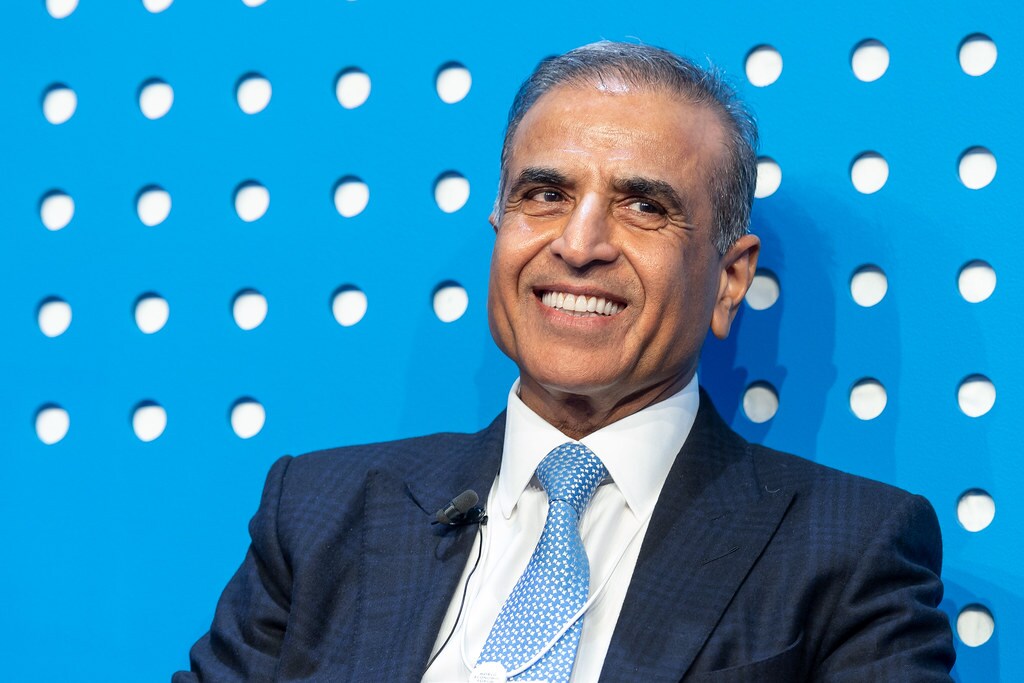
Sunil Bharti Mittal, chairman of Bharti Enterprises Ltd., has advocated further tariff hikes to enhance India's digital infrastructure, emphasising the importance of investing in connectivity for citizens.
Mittal was speaking exclusively at the NDTV World Summit 2024. “We are at two and a half dollars after the tariff hikes. You can imagine what we have been suffering for a long time. Ideally it should go to $5. That is where we need to get to to buy more spectrum, put more investment in infrastructure,” he said.
Mittal also highlighted that the country's future rests on digital infrastructure. Digital public infrastructure (DPI) is a gift to every citizen of this nation, and can hopefully be used in Africa and other developing countries too, he said.
“UPI, direct benefit transfers, Aadhaar based identification—all of this is creating wonderful magic. Just imagine these phones in the hands of villagers who are connected to the world now on high speed data, paying a very small amount of money. We really need to create a first rate infrastructure here, continue to invest in it, and if that means crowd sourced another half $1 or $1 from each customer in the country, trust me, it's worth it, because we will build the same networks, as you see in Japan and Singapore right here in this country,” Mittal said.
Answering whether the country has the appetite for another tariff increase, Mittal argued that current Revenue Per User (RPU) is lower than in 2016, and rising costs from inflation—such as electricity, fuel, and salaries—have not been addressed. He highlighted that in the UK, regulatory bodies like Ofcom allow price increases in line with inflation, while their own tariffs have been reduced. “We have been going back on our tariffs, so coming back a little bit at some point in time will be valid, very valid,” Mittal said.
Mittal also said that satellite communication presents a great opportunity for telecom operators to cover areas which have been left behind, and connect about 2 billion more people to the internet.
“I've been into satellite for the last four and a half years. I personally feel that it is truly one of the magic bullets to cover the dark areas, we still have about 2 billion people in the world who are not connected to the internet,” he said.
Mittal further explained that even in advanced countries like the US, there are still significant gaps in high-speed broadband access, despite initiatives like the $16 billion Rural Development Opportunity Fund. This highlights the challenges of connecting remote areas. Similarly, in India, regions such as the deserts of Rajasthan and the forests of the Himalayas face similar connectivity issues. In these areas, neither the mobile networks nor the fiber optics reach, hence there is satellite communication needed there.
“India provides a very high quality signal to 95% of its population. There are 5% of people who don't get internet in the country, and they live in 25% of the area of the country. So it's a very large area with a very small population. The only way to cover that is by satellite,” Mittal said.
He further noted that Airtel has two ground stations - in Gujarat and Pondicherry ready to start services, and is awaiting permission from the government.
Mittal, speaking about the improvement of network quality, noted that India offers better value with more data at a lower price, even in comparison with the US. While it outperforms many regions including Europe, UK, and Africa, it lags behind countries like Japan, Singapore, Dubai and South Korea in network quality.
Further elaborating the problem he said, that the availability of spectrum has increased, but issues remain with tower siting, as residents resist having towers near their homes. Although mobile operators spend billions on spectrum and infrastructure, the challenge lies in gaining access to install towers and fiber.
“Thankfully, the new telecom act provides for access to buildings, a right of way to put fiber in the hands of the mobile operators. Is it working on the ground, not fully, state governments have to be sensitized. It's just putting in more infrastructure,” he said.

-
Navigating Friction And Energy Realities: An Analysis Of Marco Rubio's October Visit To India

Occurring at a critical juncture marked by stalled trade negotiations and escalating geopolitical pressures over global energy supplies, the visit offers a profound window into modern US-India relations.
-
India Exports Capital. Why Not Export Trusteeship?
The big question, then, is whether India can build an institution that global borrowers, investors, banks, and lawyers can trust, even without an Indian connection.
-
France's Economy & Politics Are In Crisis | The Reason Why
Let's look at how the French economy and politics evolved under Nicolas Sarkozy, Franois Hollande and Emmanuel Macron.
-
You May Inherit The Business. You Must Earn Its Credibility.
Succession tests the founder's ability to share authority as much as it tests the next generation's readiness to assume it.
-
Signing Deals Is One Thing; Making Them Work Is Another | The Week In Whys
Sometimes, things don't turn out as planned. Indian companies have lost some bids to rivals, some projects won't produce until 2030.
-
FOMC Wall, PERM Suspension, Hospital Stocks | Talking Points This Week
A PERM suspension would directly affect green-card sponsorship rather than H-1B visas, so the near-term earnings impact could remain relatively limited. The key question is whether this marks a new phase in US scrutiny of Indian IT.
-
Everything, Everywhere, All At Once: Dalal Street's Week To Forget | Joining The Dots
Visa curbs, a Starlink spat and cancer drug caps: what connects this week's shocks for Indian markets
-
India Is Going Abroad For Critical Minerals. But It May Take Years To Pay Off | The Reason Why
Although India's steps are in the right direction, they remain modest compared with India's growing dependence.
-
When Everyone Has AI, What Gives You An Edge?
India's young workforce is entering an uncertain world of work where powerful AI tools are becoming widely accessible. The advantage will belong to those who combine deep expertise with digital fluency, and the distinctly human capabilities that technology cannot manufacture.
-
Wrong Labels, High Pesticide Residues Holding Back Agri Exports | The Reason Why
India needs stronger domestic food-safety and labelling standards, with best practices becoming part of everyday business for farmers, traders and food companies.










