National Steel Policy To Boost Sector’s Growth By 200-250 Basis Points: JSPL’s Ravi Uppal
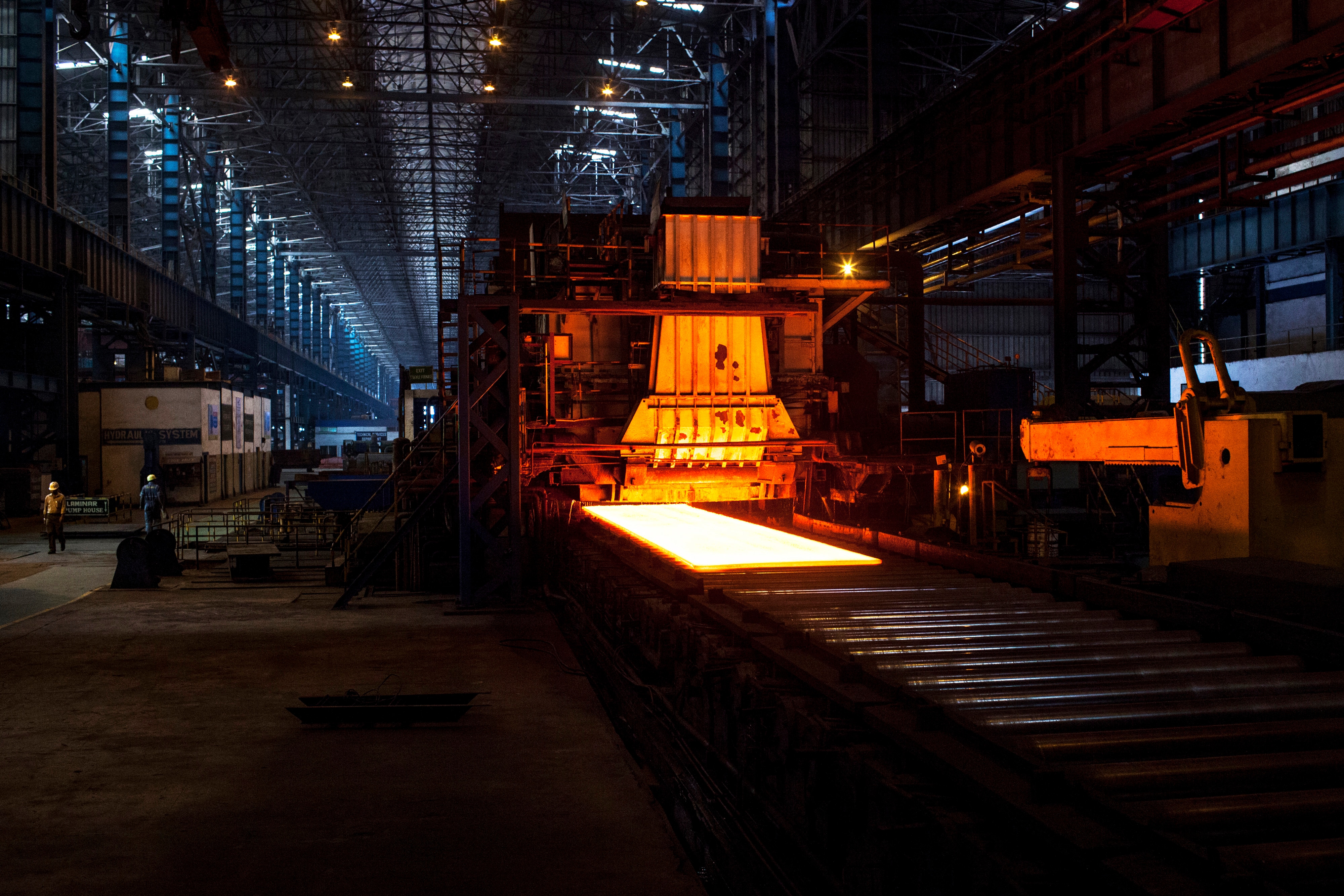
Ravi Uppal, chief executive officer and managing director of Jindal Steel & Power Ltd. (JSPL) is hoping that the government's new steel policy will provide the much-needed fillip to struggling metal producers, making 2017 a “turnaround” year.
Right now, the steel industry is growing at the rate of 3.5-4 percent. I am hoping that as the months go along, it might go up to a level of 5-6 percent.Ravi Uppal, CEO And MD, JSPL
The Union Cabinet passed a policy on Wednesday that gives preference to domestically manufactured steel products in government-sponsored projects. The new steel policy also aims to triple the production capacity over the next 13 years.
Uppal said the single biggest challenge going forward will be the support lenders give to steel companies.
Below is an edited transcript of the interview.
How do domestic steel companies benefit from the new steel policy's focus on making India the second largest steel producer in the world? How will this lead to greater demand?
Those are two separate issues. One is to create demand which is the first thing to do and the government has advised several ministries like the Ministry of Urban Development, Ministry of Roads and Transport and Ministry of Railways to use more steel. The government, I believe, has also earmarked Rs 3,50,000 crore for infrastructure development in the current year. We should see some action in terms of demand for steel.
The railways is spending a lot of money and so is the road ministry and then of course private institutions need to be created, a lot of buildings have to come up, all these things happen only when there is positive confidence in the economy. Right now the steel industry is growing in the range of 3.5-4 percent, and I am hoping that as the months go along, it might go up to a level of 5-6 percent.
Indian steel producers are also focusing a lot on exports at the moment. Exports had doubled last year, touching nearly 8.5 million tonnes. So last year we were net exporters of steel from India. Imports had come down to a level of 7.8 million tonnes. The government is very mindful that the demand has to go up and one good thing that happened last year that although the domestic demand grew only 3.5 percent, the actual production went up by as much as 10 percent.
If you look at the primary producers where their demand grew by 14 percent but the smaller units like the small and medium enterprises (SMEs) and others, their production only grew by less than 2 percent. So overall production last year was 10.5 percent higher than the year before. As production is on the rise, capacity utilisation will also improve. Having said that, the Indian steel industry barring a couple of private players have gone through a lot of financial stress.
Price of steel had reduced by 50 percent between 2011 and 2015. This basically had an impact on their margins and profitability. They had to service a lot of debt. As prices have improved, they have recovered quite a bit since then. A lot more can happen. It all depends on the growth of domestic demand and the growth of exports that we do. So, I just hope that, the current financial year will be the year when the steel industry will turnaround and the single biggest challenge is going to be how other support banks lend to steel producers. You know that every billion tonne of steel costs you a billion dollars. It is a gestation period from the time you hit the ground till it's up and running is between 4-5 years.
So the government has to think in terms of subvention to core sector industries like steel, hydro-electric projects, thermal projects, only then will they see more investment coming in to it. Otherwise, the load of interest is quite crippling and they have to extend the term before they give the funding. That has to also happen.
One of the things the new policy intends to do is ease raw material bottlenecks. So along with the easing of the raw materials, there needs to be easing of funding of interest cost by banks in order to help the industry?
What is reflecting the steel sector is the stressed financial conditions. They are not able to service the debts, they have mounted up the debt because the capacity utilisation has gone down, but they are all looking up now. The good news is that the trend is now improving. It is a recovery mode that they are going through.
Raw materials are equally important, specially the coking coal which is being imported can be replaced by local domestic coking coal. We have to make sure that we intensify mining in the domestic coal mines. We want many more companies to do mine coking coal, set up washeries and make coal available.
Right now 70 percent of the coking coal is being imported from Australia and South Africa, that can be replaced by local production and can be made competitive. The other challenge will be the cost of logistics and the availability of logistics will play a very major role in the distribution of the steel and the consequent cost to the customers. This will be a good policy for the private producers. They will negotiate based on the volumes offered to them and special discounts will be offered to them, that is also a step in the right direction.
I must compliment the government for being so proactive and doing things with the sense of urgency. This will give support to the steel industry by putting in place the minimum import price (MIP) and anti-dumping to fight this kind of predatory pricing by Chinese and Koreans. Now they are looking at the issue of demand availability of the raw materials.
The only thing missing is to make affordable funding for the industry. Government has now come with hydropower policy in which they are giving more funds to those who are developing hydro-electric projects. The same can be made available to the steel industry as well. Hydro projects like steel industry have a long gestation period, so same can be made available for steel and you will see more investments coming in for steel.
The government mentioned that there would be preference to locally manufactured steel. Is this a big kicker?
It will be because the government is a big spender in infrastructure. So for their projects they are saying that they will give preference to local producers. I think that means a lot. They are translating this into ‘Make In India' and that India's infrastructure will be built with Indian steel just like America, China and Japan did. So there is no reason to be bearish about it.
Are you bullish on financial year 2018 as a year for JSPL and the industry?
I am. Because we are going to commission the country's largest blast furnace very soon. So our own capacity is going to go up by 50-60 percent.

-
Why Amazon And Flipkart Are Struggling To Beat Meesho In India's Smaller Cities

With 274 million users and lowest-cost logistics, Meesho is defending its value commerce crown against giants like Amazon and Flipkart.
-
High US Salaries, No Green Card Certainty: The Financial Calculation Facing Indian H-1B Families
The suspension of PERM processing at eight technology employers does not cancel existing H-1B visas. What it does is force a question many Indian families have been avoiding: is the US salary worth tying your career and family plans to one employer?
-
Swiggy vs Eternal: Food Delivery's Two Rivals Are No Longer In The Same Race
Eternal is building a private AI assistant, dark.ai. Swiggy is still working out how to make Instamart pay, with an operating loss of Rs 895 crore in the July-September quarter while Blinkit stayed profitable.
-
Where You Live Shapes How You Get To Work | The Reason Why
Two-wheelers are the most popular way to get to work in India, accounting for nearly 43% of workplace commutes.
-
Unhedged Position: Can India See An Indonesia-Style Time Correction?
The Nifty is trading below levels it first clocked in 2024. Is there, then, as I have suggested in the headline, potential that the current time correction drags on painfully for the next three-five, even ten years?
-
Navigating Friction And Energy Realities: An Analysis Of Marco Rubio's October Visit To India
Occurring at a critical juncture marked by stalled trade negotiations and escalating geopolitical pressures over global energy supplies, the visit offers a profound window into modern US-India relations.
-
India Exports Capital. Why Not Export Trusteeship?
The big question, then, is whether India can build an institution that global borrowers, investors, banks, and lawyers can trust, even without an Indian connection.
-
France's Economy & Politics Are In Crisis | The Reason Why
Let's look at how the French economy and politics evolved under Nicolas Sarkozy, Franois Hollande and Emmanuel Macron.
-
You May Inherit The Business. You Must Earn Its Credibility.
Succession tests the founder's ability to share authority as much as it tests the next generation's readiness to assume it.
-
Signing Deals Is One Thing; Making Them Work Is Another | The Week In Whys
Sometimes, things don't turn out as planned. Indian companies have lost some bids to rivals, some projects won't produce until 2030.










