Nasscom Says Latest Proposal On H-1B Visas Could Put U.S. Jobs At Risk
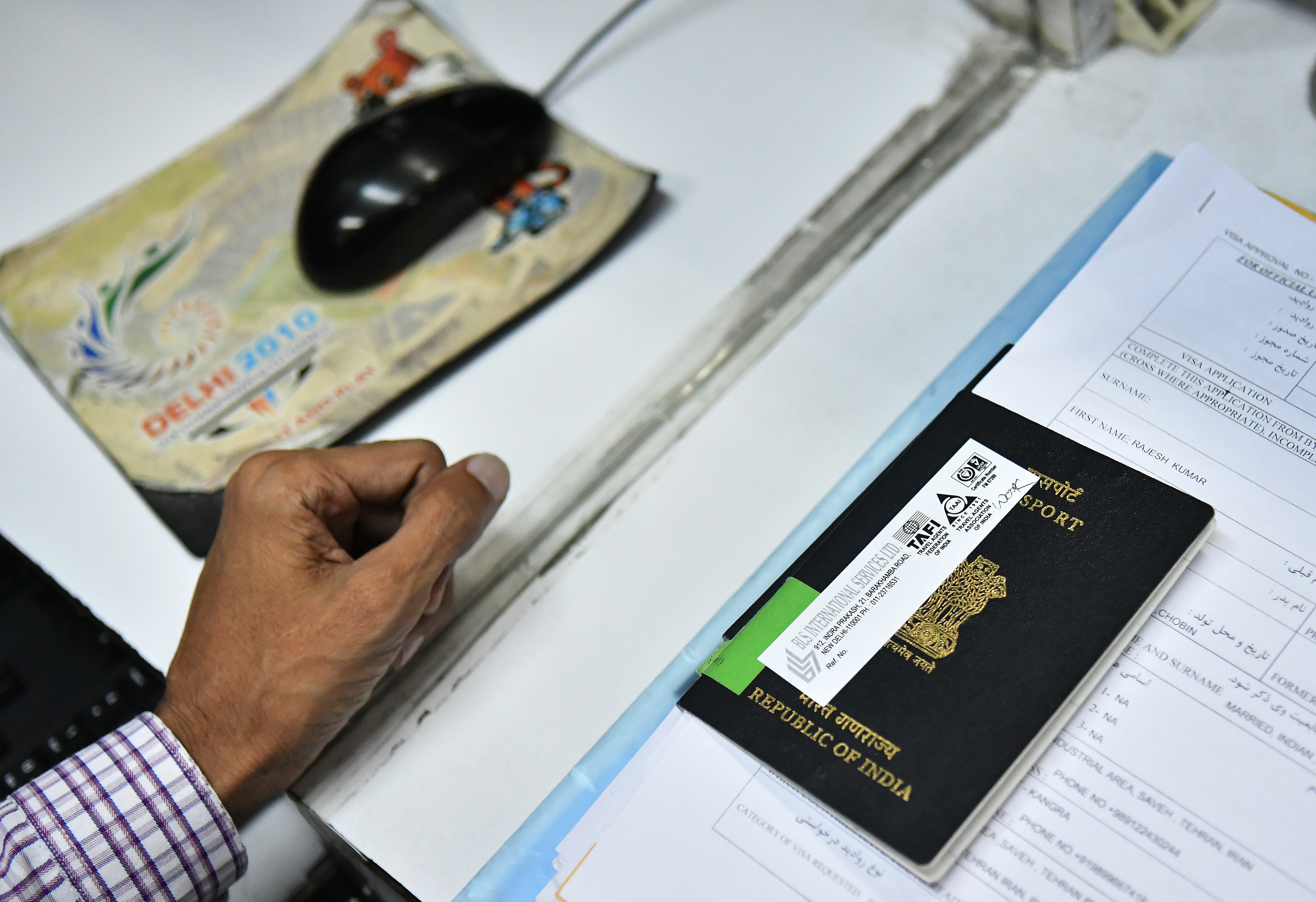
Nasscom has raised concerns over the U.S. government's latest proposal that will require H1-B visa seeking firms to electronically register their petitions in advance, saying this will lead to "uncertainties" and could put U.S. jobs at risk.
The IT industry body, in a statement, said it will carefully review the 139-page proposal and evaluate its implications for U.S. companies and the economy, and then submit comments.
The Trump administration on Friday proposed major changes to the H-1B application process, including a new rule requiring companies to electronically register their petitions in advance, aimed at awarding this popular American work visa to the most skilled and highest-paid foreign workers.
"...there is not much time between now and when the next H-1B lottery season opens in April 2019. Companies have already begun assessing their needs and planning their submissions for next year, so we are concerned about the uncertainties that could arise as the government seeks to implement another major change in the H-1B process during that timeframe," Nasscom said in a statement.
It added that it will review the proposal before submitting comments and "take other actions as appropriate to best ensure that the process makes sense, is fair, and does no harm".
The Department of Homeland Security said public comments on the proposed rule may be submitted starting Dec. 3, when the proposed rule publishes in the Federal Register, and must be received on or before Jan. 2.
“To the extent U.S. policy makes it more difficult and costlier for global IT service companies to provide their expertise in the U.S., it will weaken the US companies that depend on them to help fill their skills gaps. Contrary to what is intended, this action could put U.S. jobs at risk and create pressure to send more IT work abroad, rather than performing it in the U.S.,” Nasscom pointed out.
The apex industry body highlighted that the proposed rule would affect all companies employing H-1B workers.
"...speaking for our members, India-based and India-centric global IT services companies play a critical role helping U.S. companies be nimbler and more competitive, enabling them to grow and create more jobs and opportunities for Americans," it said.
Nasscom said its members are already investing billions of dollars in the U.S., employing more than 1.5 lakh people, and spending millions of dollars on upskilling programmes.
"It is important that they and others continue to have access to the necessary talent," Nasscom urged.
Over the past many months, there has been increased scrutiny related to work visas across countries like the U.S., the U.K. and Australia. This has prompted many Indian IT companies to ramp up efforts to hire locally. Companies like Tata Consultancy Services and Infosys are also engaging extensively with local academic institutions to train manpower, especially in new-age technology areas like artificial intelligence and automation.
The H-1B visa - a non-immigrant visa that allows U.S. companies to employ foreign workers in speciality occupations that require theoretical or technical expertise - has numerical limit cap of 65,000 visas each fiscal year as mandated by the U.S. Congress. The first 20,000 petitions filed on behalf of beneficiaries with a U.S. master's degree or higher are exempt from the cap.
Under the new rule, the United States Citizenship and Immigration Services would also reverse the order by which it selects H-1B petitions under the H-1B cap and the advanced degree exemption.
According to DHS, the proposed process would result in an estimated increase of up to 16 percent (or 5,340 workers) in the number of selected H-1B beneficiaries with a master's degree or higher from a U.S. institution of higher education.
The USCIS said it expects that shifting to electronic registration would reduce overall costs for petitioners and create a more efficient and cost-effective H-1B cap petition process for the agency.
The proposed rule would help alleviate massive administrative burdens on the USCIS since the agency would no longer need to physically receive and handle hundreds of thousands of H-1B petitions and supporting documentation before conducting the cap selection process, it said.

-
High US Salaries, No Green Card Certainty: The Financial Calculation Facing Indian H-1B Families

The suspension of PERM processing at eight technology employers does not cancel existing H-1B visas. What it does is force a question many Indian families have been avoiding: is the US salary worth tying your career and family plans to one employer?
-
Swiggy vs Eternal: Food Delivery's Two Rivals Are No Longer In The Same Race
Eternal is building a private AI assistant, dark.ai. Swiggy is still working out how to make Instamart pay, with an operating loss of Rs 895 crore in the July-September quarter while Blinkit stayed profitable.
-
Where You Live Shapes How You Get To Work | The Reason Why
Two-wheelers are the most popular way to get to work in India, accounting for nearly 43% of workplace commutes.
-
Unhedged Position: Can India See An Indonesia-Style Time Correction?
The Nifty is trading below levels it first clocked in 2024. Is there, then, as I have suggested in the headline, potential that the current time correction drags on painfully for the next three-five, even ten years?
-
Navigating Friction And Energy Realities: An Analysis Of Marco Rubio's October Visit To India
Occurring at a critical juncture marked by stalled trade negotiations and escalating geopolitical pressures over global energy supplies, the visit offers a profound window into modern US-India relations.
-
India Exports Capital. Why Not Export Trusteeship?
The big question, then, is whether India can build an institution that global borrowers, investors, banks, and lawyers can trust, even without an Indian connection.
-
France's Economy & Politics Are In Crisis | The Reason Why
Let's look at how the French economy and politics evolved under Nicolas Sarkozy, Franois Hollande and Emmanuel Macron.
-
You May Inherit The Business. You Must Earn Its Credibility.
Succession tests the founder's ability to share authority as much as it tests the next generation's readiness to assume it.
-
Signing Deals Is One Thing; Making Them Work Is Another | The Week In Whys
Sometimes, things don't turn out as planned. Indian companies have lost some bids to rivals, some projects won't produce until 2030.
-
FOMC Wall, PERM Suspension, Hospital Stocks | Talking Points This Week
A PERM suspension would directly affect green-card sponsorship rather than H-1B visas, so the near-term earnings impact could remain relatively limited. The key question is whether this marks a new phase in US scrutiny of Indian IT.









