Mutual Funds Dismiss RBI’s Red Flag On Passing On Default Risk To Investors
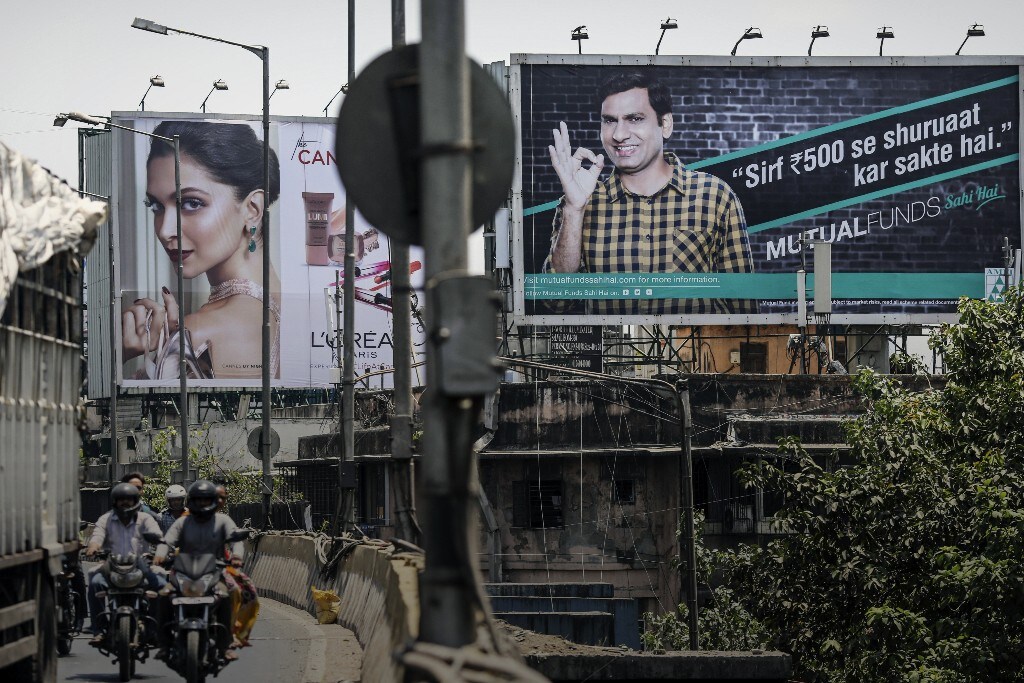
Mutual funds said there are enough safeguards to ensure that credit risk from the IL&FS default is contained, dismissing the Reserve Bank of India's concerns that asset managers were passing on the entire risk to investors.
A fair valuation methodology adopted by mutual funds and the recent approval by Securities and Exchange Board of India to allow side-pocketing—or separating distressed and illiquid assets in a portfolio—reduces the risk to investors, said A Balasubramanian, chief executive officer, Aditya Birla Sun Life AMC Ltd.
Mutual funds largely invest in AA and above-rated paper. They wrote down the value of their Rs 6,500-crore investments in Infrastructure Leasing & Financial Services Ltd. after it was downgraded by multiple notches to default. That, according to the RBI's Financial Stability Report, only passes the default risk on to investors.
Even veteran banker Uday Kotak recently highlighted the risk involved in an increasing amount of savings being funnelled into markets. The financial sector is highly leveraged and in the case of mutual funds, it is infinitely leveraged because they hold no capital and invest whatever comes in, Kotak, managing director and chief executive office at Kotak Mahindra Bank, said. “Regulators across sectors need to align and understand this shift in the model.”
Balasubramanian, however, said mutual funds are supposed to be only pass-through vehicles since their fee is fixed, he said. “Even if we earn 20 percent, we don't earn extra whereas in the case of NBFCs, whatever they earn extra that goes to their bottom line,” he said. “In our case it goes to the bottom line of the customers.”
Value Research, a mutual fund research house, pins the blame on the banking regulator. The RBI should figure out how an AAA-rated bond of a non-banking financial company regulated by the central bank turned out to be completely hollow, said Dhirendra Kumar, chief executive officer, Value Research. “This is a regulatory failure.”
He underscored that defaults by companies whose paper is held by mutual funds is rare. The total default, all put together historically, is about Rs 400 crore, according to Kumar. “In cases where we have faced problems — Deccan Chronicle, Amtek Auto —the total magnitude is nothing compared to the total asset under management.”
The RBI should find out how mutual funds do it so well with respect to (managing) the default in their portfolios.Dhirendra Kumar, Chief Executive Officer, Value Research
Kumar, however, lauded the market regulator for new guidelines on segregation of assets in the event of credit risks. SEBI has done an excellent job of creating a side-pocketing which would prevent any such crisis from permeating into the system, Kumar said. “It has become even more safer.”
The market regulator is also looking to tighten risk management framework for liquid and money market schemes. It's working with the industry body and mutual funds to reduce volatility in inflows and outflows in liquid schemes, SEBI Chairman Ajay Tyagi had said after the regulator's board meeting in December. It plans to come out with a policy soon.
Close to Rs 19 lakh crore was invested in liquid and money market schemes, usually used by large investors to park short-term cash, according to November data by Association of Mutual Funds of India. The RBI, in its report, said 95 percent of them are high net-worth individuals, corporates, banks and financial institutions.
A mutual fund is not a bank as no amount of capital requirement will ever be enough to prevent a default or a crisis given the level of total investments, according to Kumar. “Today, the largest liquid fund is Rs 1 lakh crore. How much capital will you have? Rs 8,000 crore? If somebody wants a safety they should go to a bank and today your capital will be at risk as there would be huge non-performing assets.”
Lakshmi Iyer, chief investment officer, debt and head of products at Kotak Mahindra Asset Management Company Ltd., said mutual funds have always passed through the fallout of a credit event to investors. “If capital requirements are brought in for the industry, then what will be the big difference between mutual funds and banks?”
Admitting that there was default risk in case of debt investments, she said the industry needs to work out a solution so that retail investors are willing to participate.

-
Where You Live Shapes How You Get To Work | The Reason Why

Two-wheelers are the most popular way to get to work in India, accounting for nearly 43% of workplace commutes.
-
High US Salaries, No Green Card Certainty: The Financial Calculation Facing Indian H-1B Families
The suspension of PERM processing at eight technology employers does not cancel existing H-1B visas. What it does is force a question many Indian families have been avoiding: is the US salary worth tying your career and family plans to one employer?
-
Unhedged Position: Can India See An Indonesia-Style Time Correction?
The Nifty is trading below levels it first clocked in 2024. Is there, then, as I have suggested in the headline, potential that the current time correction drags on painfully for the next three-five, even ten years?
-
Navigating Friction And Energy Realities: An Analysis Of Marco Rubio's October Visit To India
Occurring at a critical juncture marked by stalled trade negotiations and escalating geopolitical pressures over global energy supplies, the visit offers a profound window into modern US-India relations.
-
India Exports Capital. Why Not Export Trusteeship?
The big question, then, is whether India can build an institution that global borrowers, investors, banks, and lawyers can trust, even without an Indian connection.
-
France's Economy & Politics Are In Crisis | The Reason Why
Let's look at how the French economy and politics evolved under Nicolas Sarkozy, Franois Hollande and Emmanuel Macron.
-
You May Inherit The Business. You Must Earn Its Credibility.
Succession tests the founder's ability to share authority as much as it tests the next generation's readiness to assume it.
-
Signing Deals Is One Thing; Making Them Work Is Another | The Week In Whys
Sometimes, things don't turn out as planned. Indian companies have lost some bids to rivals, some projects won't produce until 2030.
-
FOMC Wall, PERM Suspension, Hospital Stocks | Talking Points This Week
A PERM suspension would directly affect green-card sponsorship rather than H-1B visas, so the near-term earnings impact could remain relatively limited. The key question is whether this marks a new phase in US scrutiny of Indian IT.
-
Everything, Everywhere, All At Once: Dalal Street's Week To Forget | Joining The Dots
Visa curbs, a Starlink spat and cancer drug caps: what connects this week's shocks for Indian markets









