Mumbai Home Sales Zoom To 8-Year High As Prices Drop, Loans Become Cheaper
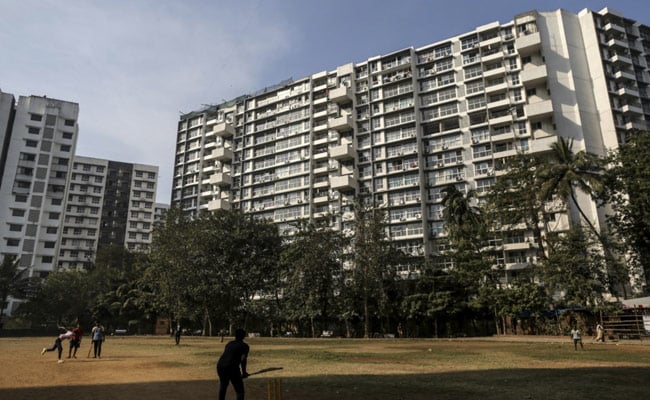
Before the pandemic, Mayank Vora, 34, and his wife were struggling to afford a one-bedroom apartment in one of Asia's costliest cities. Now they are the proud owners of a two-bedroom home in a high-end residential complex on the outskirts of Mumbai they bought for Rs 1.09 crore ($150,000).
"What was unaffordable a few years back is now our dream come true," Mr Vora said. "Everything fell into our budget this time."
They're not the only one jumping in. Home sales in the city, India's commercial capital, jumped to an eight year high in October, according to data from Knight Frank.
It's an abrupt turnaround for a market that's spent three years in the doldrums after a prolonged shadow banking crisis strangled access to credit. At the end of June, prices in Mumbai were 0.45 per cent lower than the same quarter in 2018, according to data from the central bank.
India isn't alone in seeing a resurgence in property despite the grim economic backdrop - the likes of New Zealand and the U.K. have also seen prices jump. Rather than worrying about the prospects of a bubble though, in India authorities are grateful for the rebound.
With millions out of work, a resurgence in house sales and corresponding increase in building could boost output everywhere from banks to builders to consumer goods factories. Construction creates the most jobs in India each year.

Already financiers are getting in on the act. Post-pandemic, mortgages are back in vogue among executives who see property loans as a relatively safe asset in a country where owning a house is a symbol of security and defaulting on loan repayments is a social taboo. Bad loans overall at the nation's banks are estimated to swell to a two-decade high of 12.5 per cent of credit by March.
Home loans grew 2.6 per cent between April and October, even as overall loans shrank 0.5 per cent, according to the Reserve Bank of India.
ICICI Bank, India's second-largest private lender, wrote a record value of home loans in October and new players are also jumping in.
Godrej Housing Finance, a new unit of the Indian conglomerate that manufactures industrial and consumer goods as well as building homes, launched its mortgage offering last month with the lowest rates in the industry. It aims to have a loan book of 100 billion rupees in the next three years, according to Chairman Pirojsha Godrej.
"People who were on the sidelines have now taken a call to buy"
This easier credit means buyers are finding their money is going further. The combination of interest rates at a 16-year low, price discounts and tax reductions in some regions means affordability across India's 10 biggest cities has improved as much as 35 per cent compared to five years ago, according to CRISIL Ratings, the local arm of S&P Global Ratings.

"People who were on the sidelines have now taken a call to buy," Mohit Malhotra, Chief Executive Officer of Godrej Properties, the second largest listed developer, said at a recent industry event. "Prices have bottomed out."
Adding to the attraction of property is a general inflation rate of 7 per cent which, if wages in key sectors keepup, offers the prospect of substantially eroding the real value of people's debt.
Developers in top cities are also offering incentive schemes including delayed payments, free amenities, festival discounts, rent guarantee and absorption of state tax. Taken together, these typically knock between 5 per cent and 15 per cent off the effective price, Anarock Property Consultants estimates.
(Except for the headline, this story has not been edited by NDTV staff and is published from a syndicated feed.)

-
Unhedged Position: Can India See An Indonesia-Style Time Correction?

The Nifty is trading below levels it first clocked in 2024. Is there, then, as I have suggested in the headline, potential that the current time correction drags on painfully for the next three-five, even ten years?
-
Navigating Friction And Energy Realities: An Analysis Of Marco Rubio's October Visit To India
Occurring at a critical juncture marked by stalled trade negotiations and escalating geopolitical pressures over global energy supplies, the visit offers a profound window into modern US-India relations.
-
India Exports Capital. Why Not Export Trusteeship?
The big question, then, is whether India can build an institution that global borrowers, investors, banks, and lawyers can trust, even without an Indian connection.
-
France's Economy & Politics Are In Crisis | The Reason Why
Let's look at how the French economy and politics evolved under Nicolas Sarkozy, Franois Hollande and Emmanuel Macron.
-
You May Inherit The Business. You Must Earn Its Credibility.
Succession tests the founder's ability to share authority as much as it tests the next generation's readiness to assume it.
-
Signing Deals Is One Thing; Making Them Work Is Another | The Week In Whys
Sometimes, things don't turn out as planned. Indian companies have lost some bids to rivals, some projects won't produce until 2030.
-
FOMC Wall, PERM Suspension, Hospital Stocks | Talking Points This Week
A PERM suspension would directly affect green-card sponsorship rather than H-1B visas, so the near-term earnings impact could remain relatively limited. The key question is whether this marks a new phase in US scrutiny of Indian IT.
-
Everything, Everywhere, All At Once: Dalal Street's Week To Forget | Joining The Dots
Visa curbs, a Starlink spat and cancer drug caps: what connects this week's shocks for Indian markets
-
India Is Going Abroad For Critical Minerals. But It May Take Years To Pay Off | The Reason Why
Although India's steps are in the right direction, they remain modest compared with India's growing dependence.
-
When Everyone Has AI, What Gives You An Edge?
India's young workforce is entering an uncertain world of work where powerful AI tools are becoming widely accessible. The advantage will belong to those who combine deep expertise with digital fluency, and the distinctly human capabilities that technology cannot manufacture.









