Mumbai Coastal Road Work Likely To Begin By Year-End
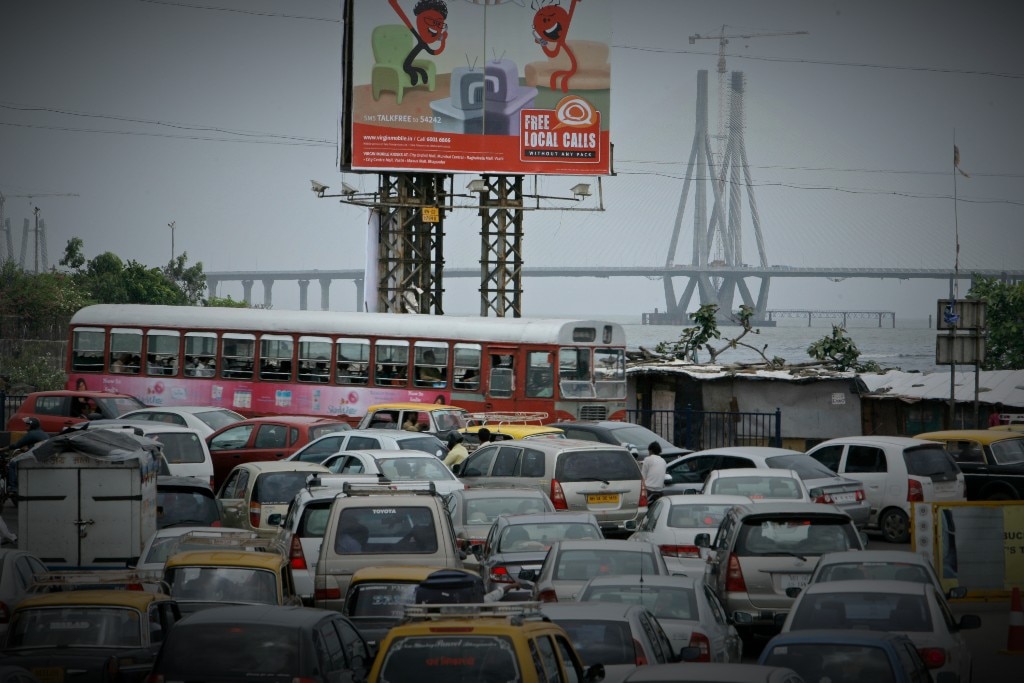
An eight-lane, 29-kilometre road along Mumbai's coast, running through reclaimed land, an undersea tunnel, elevated roads and bridges will connect Nariman Point on the southern edge to the city's northern suburb of Kandivali.
Six years after the coastal road was first proposed, the Brihanmumbai Municipal Corporation has secured environmental clearance for the Rs 15,000-crore project. The nod came amid concerns that the project would destroy mangroves and disrupt livelihood of fishermen.
Also Read: Mumbai Coastal Road Project Gets Final Green Nod, Says Maharashtra CM Fadnavis
“The necessary clearances are in place and we would begin work mostly by the end of the year,” Sanjay Mukherjee, additional municipal commissioner (projects), Brihanmumbai Municipal Corporation, told BloombergQuint. “The money is already in the bank and we would not need any funding for the project,” Mukherjee said.
The BMC would build the coastal road in two phases – first, the southern part, stretching from Marine Drive up to the existing Bandra-Worli Sea Link; and then the northern part from Bandra to Kandivali.
The southern section would be built at a cost of Rs 5,300 crore, while the northern part would cost Rs 9,800 crore. Work on the southern section would be divided into three segments and will take four years.
About 11 companies have already submitted the request for quotation, while the corporation would float the request for proposals by June-end, and the work could begin after monsoon, Mukherjee said.
Cutting Travel Time
According to the minutes of the 168th meeting of the Expert Appraisal Committee in March 2017, the road would reduce the commuting time by 70 percent on the southern section. It takes about an hour to travel from Marine Drive to Worli, but the coastal road will reduce the time to 20 minutes. A car taking the road would save a third of the fuel daily and reduce the carbon footprint by 1,826 tonnes of carbon dioxide per year, the report said.
The southern section would have three interchanges, or ramps to get on/off the road, to decongest the traffic on internal roads, Mukherjee said. The entire stretch would be built by reclaiming about 90 hectares, three-fourths of which will be used to build green spaces. According to the blueprint, the southern section will have an undersea tunnel comprising two tubes of 3.45 kilometre each.
The feasibility study, conducted by consulting firm Ernst & Young and STUP Consultants, estimated a moderate rise in population of about 5 percent in the next two decades, and a traffic growth of 21 percent between 2014 and 2024 and 18 percent between 2024 and 2034.
Dedicated Bus Lane, Sea Wall
One of the criticisms that the project had to face initially was that only up to 2 percent of Mumbai's car owners would use the coastal road. The BMC, to shrug it off, has proposed a dedicated bus lane.
Mukherjee said there are no mangroves or any forest stretch on the southern stretch, which is why the BMC has decided to build this segment first. The proposed northern segment has mangroves and faces opposition, he said.
Environmentalists have argued that the destruction of mangroves could make the city flood-prone. BMC, in its proposals, said that it would construct a sea wall to prevent erosion and protect the city from any storm surge.
Environmentalists also accuse the BMC of ignoring the livelihood of fishing communities along the coast. Mukherjee said the BMC has already secured approval from the ministry of fisheries and can go ahead with the project.

-
Navigating Energy Crossroads: S Jaishankar's Call For Diversified Supply Chains At G20 Ministerial Meeting

As geopolitical fault lines continue to test maritime trade routes and commodity flows, Jaishankar's message remains pertinent: true economic resilience requires open markets, protected transit lines, and a genuine commitment to multilateral cooperation rather than coercion.
-
Indians Are Travelling, But Not Every Journey Is A Holiday | The Week In Whys
Pilgrims, patients and working women are the real travellers, and the system hasn't quite caught up with them.
-
Getting To Work Costs Women More | The Reason Why
It is not just about women paying more than men. It is about women paying much more in cities than in villages.
-
AI Bias In Investing Cannot Be Eliminated, But It Can Be Governed
Framing is a particularly important example as identical financial information presented in terms of gains rather than losses can lead an LLM to reach a different assessment.
-
Joining The Dots | Dark Skies, Steady Diya: Why Hope Holds This Diwali
With war, a weak rupee and foreign outflows weighing on sentiment, policymakers at the NDTV World Summit and market veterans at NDTV Profit Ignite: Diwali Edition offered the same advice: stay invested and filter out the noise.
-
The Curious Case of Equitas Small Finance Bank And A CEO Who Quit For Stock
PN Vasudevan believes persistent investor concerns over a perceived conflict of interest had become a governance overhang on Equitas Small Finance Bank's stock, even as the lender improved profitability and asset quality.
-
Talking Points This Week: AI Cash Burn, A Tiger Comeback And An India That Still Finds Its Own Path
India is not immune to higher oil or tighter global liquidity, yet its earnings base is broader, its domestic policy levers are still available.
-
Foreign Investors Own Half Of HDFC Bank and ICICI Bank. An LTCG Cut Could Matter Most Here
Foreign portfolio investors have US$115 billion parked in HDFC Bank, ICICI Bank. If the government cuts long-term capital gains tax, Jefferies says returning foreign money could land here first.
-
'Never Seen This Level Of Negativity': Sandeep Tandon Says The Next Rally May Be Closer Than You Think
Veteran investor Sandeep Tandon says foreign selling is easing, large-caps are due a comeback and mid-caps are crowded, while he turns positive on gold, power and pharma this Diwali.










