MTR Foods Owner Rejigs Corporate Structure, Operations In India
Norwegian consumer goods maker Orkla is restructuring its operations and top management in India, paving the way for each of the businesses to grow independently in the fast-expanding Rs 4 lakh crore packaged food market.
As part of the revamp, Orkla created three separate verticals — MTR, Eastern and International — to sharpen its focus on the core businesses as it pushes for a larger pie of the ready-to-eat market, said Orkla India's Chief Executive Officer Sanjay Sharma.
These verticals will operate under one business entity, Orkla India, also marking the Norwegian major's presence as a distinct entity in the country.
The change is part of the global restructuring at Orkla ASA, the parent company, under the newly appointed President and CEO Nils K Selte. Orkla India is now among the 12 independent portfolio companies that was set up with effect from April this year to give them greater autonomy.
The integration process of the domestic business is almost over, and all the units are functioning independently for over a month now.
"The trigger for the change is the growing importance of India in the parent company's portfolio," Sharma told BQ Prime. "Each of our business units is at a different stage of evolution, and under one umbrella of Orkla India, we will have a deep dedicated focus to accelerate their growth."
Orkla India currently has three brands under its portfolio.
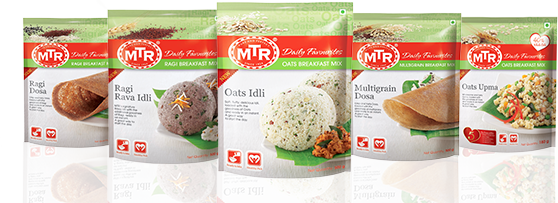
It acquired MTR Foods Pvt. in 2007 and the business has grown seven times in the last 16 years to become a Rs 1,000-crore brand, said Sharma.
It bought Rasoi Magic Foods (India) Pvt. through MTR back in 2011.
Orkla acquired 67.8% stake in Kerala-based spicemaker Eastern Condiments Pvt. in 2020.
"As a whole, we are today about Rs 2,200 crore in terms of size, which is meaningfully large in the food industry," he said.
Orkla India is the sixth largest company within the parent's portfolio, contributing 4% to total sales. "From an incremental growth standpoint, the Indian unit contributes roughly 15% of Orkla's turnover," Sharma said.
Orkla India expects to grow 10-12% year-on-year, he said.
Sharma said Orkla India intends to become a "collection of brands", indicating that the company may look to acquire more local brands—in a bid to shed its image of being a regional player to become a national brand.
"We believe, in India food is local. Each of our brands are catering to a diverse, regional set of audience," said Sharma. MTR, for instance, has a strong footprint in Karnataka, Andhra Pradesh; Kerala is the largest market for Eastern; while Rasoi Magic is the market leader in western region.
Each of the business units will be headed by three different CEOs.
Sunay Basin, who is currently the chief commercial officer at MTR Foods, will be elevated to the chief executive officer role. Eastern Condiments will continue to be headed by Navas Meeran, who also belongs to the promoter family.
Both MTR and Eastern will maintain their independent brand identities while benefiting from the mutual synergies, scale, expertise, and cost advantage that this reorganization brings along, said Sharma.
For the international business, Orkla India has roped in Ashwin Subramanian as the new CEO. Sharma said that Orkla India sells its products to 42 countries which cumulatively comprise 18% of turnover.
"Essentially, we have been focusing on the Indian diaspora, but we believe that a dedicated focus is required to become a global brand," he said.
As part of the business overhaul, Orkla India will have four central functions: Finance and IT, Operations—Supply Chain and Logistics, Human Resource, and Digital Transformation and Sustainability.
However, Sharma denied any intention of going public at this point of time.
Cautious Optimism
The company has missed its pre-Covid revenue guidance of Rs 2,000 crore for MTR. And high food inflation continues to hurt margin and volume.
"We have had a very high inflation hitting us last year, roughly to the tune of 12-13%, as a result of which the volume growth remained flat," said Sharma. "Given the way the monsoons have panned out, one can expect food inflation to remain a cause of concern at least for another year."
By the end of the year, Sharma expects inflation to cool down to 10%. "But that is still high," he said, hoping to see a recovery in margin next fiscal.
Sharma didn't give specific forward-looking statements as consent was required from the listed parent, as part of the business restructuring.
Still, he was "cautiously optimistic" about the upcoming festive season.
"Early indicators, like sales in Onam, indicate that consumers are spending on food. So, if that continues, we can certainly see a growth over last year, even if it doesn't turn out to be a bumper season," according to Sharma.

-
Opinion | India at 38: From Innovation Overperformer to Innovation Powerhouse

India now has 453 VC-backed deep science startups, 18 of them late-stage, after 117 percent growth since 2020. Laurus Labs, at USD 9.3 billion, is the most valuable deep science company in any middle-income economy outside China.
-
Navigating Energy Crossroads: S Jaishankar's Call For Diversified Supply Chains At G20 Ministerial Meeting
As geopolitical fault lines continue to test maritime trade routes and commodity flows, Jaishankar's message remains pertinent: true economic resilience requires open markets, protected transit lines, and a genuine commitment to multilateral cooperation rather than coercion.
-
Indians Are Travelling, But Not Every Journey Is A Holiday | The Week In Whys
Pilgrims, patients and working women are the real travellers, and the system hasn't quite caught up with them.
-
Getting To Work Costs Women More | The Reason Why
It is not just about women paying more than men. It is about women paying much more in cities than in villages.
-
AI Bias In Investing Cannot Be Eliminated, But It Can Be Governed
Framing is a particularly important example as identical financial information presented in terms of gains rather than losses can lead an LLM to reach a different assessment.
-
Joining The Dots | Dark Skies, Steady Diya: Why Hope Holds This Diwali
With war, a weak rupee and foreign outflows weighing on sentiment, policymakers at the NDTV World Summit and market veterans at NDTV Profit Ignite: Diwali Edition offered the same advice: stay invested and filter out the noise.
-
The Curious Case of Equitas Small Finance Bank And A CEO Who Quit For Stock
PN Vasudevan believes persistent investor concerns over a perceived conflict of interest had become a governance overhang on Equitas Small Finance Bank's stock, even as the lender improved profitability and asset quality.
-
Talking Points This Week: AI Cash Burn, A Tiger Comeback And An India That Still Finds Its Own Path
India is not immune to higher oil or tighter global liquidity, yet its earnings base is broader, its domestic policy levers are still available.
-
Foreign Investors Own Half Of HDFC Bank and ICICI Bank. An LTCG Cut Could Matter Most Here
Foreign portfolio investors have US$115 billion parked in HDFC Bank, ICICI Bank. If the government cuts long-term capital gains tax, Jefferies says returning foreign money could land here first.










