Most States Opt For Trusts Amid Rush To Roll Out Modi’s Health Insurance
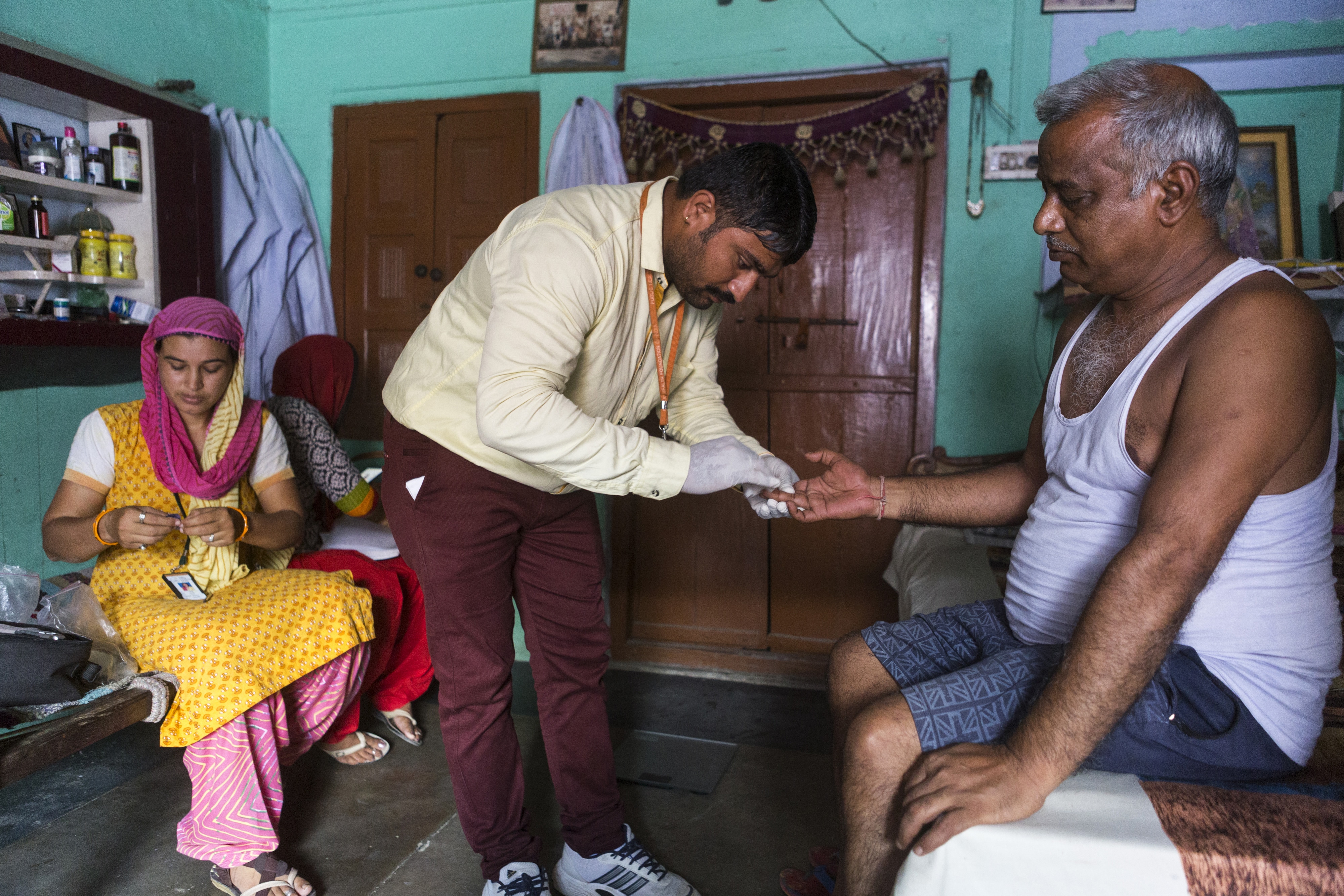
Most states have opted to set up subsidy pools to fund Prime Minister Narendra Modi's health insurance scheme that will cover more than half of Indians, as insurers stayed away because of pricing concerns and officials rush to meet the Aug. 15 deadline.
Twenty out of the 36 states and union territories will create non-profit trusts to pool in subsidy contributed by central and state governments, according to the National Health Agency, the implementing authority. Seven, including two union territories, opted for tying up with insurers—only one, Nagaland, has done so. Eight opted for the mixed model—payments below Rs 50,000 will be covered through insurance and the rest will be paid from the corpus.
Odisha decided to stay out. Seven have still not officially joined but indicated preference for trusts, the agency said.
“It's a quick fix,” said Anirudh Jain, who heads insurance at the financial services firm Centrum Group. Forming public-private partnerships with insurers takes time, and given the launch must happen on Independence Day, the trust model seems to be the only option left on the table, he said.
Indians pay over three-fourths of all healthcare costs out of pocket, according to a study by the Public Health Foundation of India published in May. Nearly 5.5 crore people were pushed below the poverty line because of healthcare expenses, of which 3.8 crore became poor only because they had to bear medicine costs, it said. Modi's scheme targets such households. The Ayushman Bharat National Health Protection Mission will cover about 17 crore families a year through a cashless cover of Rs 5 lakh each.
It will subsume all existing plans in participating states, increasing the coverage from the initial 10 crore families. Only four—Andhra Pradesh, Telangana, Karnataka and Assam—followed the trust model.
“It cannot be called insurance, which is more than just pooling of funds,” said Nidhesh Jain, financial services analyst at Investec Capital Services. The subsidy pools don't involve price discovery through actuarial valuation, risk assessment, creation of reserves for expected claims or reinsurance, he said. “That could mean increased government liabilities, delay in claim settlement and more frauds in the long run.”
Joydeep Roy, insurance leader at PwC India, said the health insurance plan will yield better results if implemented in a public-private partnership. An insurer would ensure that claims management, technology, service delivery and fraud detection are robust to ensure profitability, he said.
The head of implementing authority, however, said states that opted for trusts “might have some distrust in insurance agencies” and felt that these pools can provide more effective service in a short period. Agreeing that the “government's risk will be unlimited”, Indu Bhushan, chief executive officer of Ayushman Bharat, said in an emailed response that they were inspired by the good performance in Andhra Pradesh and Telangana.
The trust will get subsidy from a designated escrow account at Rs 500 for each family in the 60:40 ratio from the central and state governments. Bhushan said, “We will review the scheme after six months and based on the actual costs, the premium will be revised.”
Low Premium
An insurer that quotes the lowest premium is selected to join the scheme. The government pays it the premium to settle claims. Apollo Munich won the Nagaland bid at Rs 444 per family a year.
But for India's largest general insurer, pricing is a concern. Ramesh Nag, chief manager (government health business) at state-run New India Assurance Company, cited the example of Rajasthan, where premium had to revised from Rs 370 to Rs 1,263 a family for a coverage of Rs 3 lakh a year.
“We are not making profits even at a higher premium as the claims ratio is over 200 percent,” he said. “How can we then quote anything less than Rs 2,500 a family for a scheme that has a sum assured of Rs 5 lakh?”
Jain of Investec Capital concurred. Calling the pricing “unsustainable”, he said insurers' experience with the previous Rashtriya Swasthya Bima Yojana doesn't inspire confidence. There were long delays in disbursal of premium subsidy while insurance companies had to pay the claims immediately, he said.
Moreover, the claims ratio of group health insurance—the closest in structure to the Prime Minister's scheme— in general stays above 100 percent: that is insurers pay more to policyholders than they collect as premium.
Vinod Kumar Paul, member at NITI Aayog who was involved in planning the scheme, however, said there's no pre-determined budget or premium, and the government will keep providing funds to trusts based on the claims received.
Hospitals Yet To Sign Up
Selecting hospitals to offer healthcare services hasn't started yet. The implementing authority is initially looking to enrol 6,000—half of them state-run, Bhushan said. “We expect to have more than 10,000 hospitals enrolled by Aug. 15.”
Hospitals are, however, seeking better rates to provide quality services. Competitive package rates for hospitals would ensure better services and fewer frauds, according to Sanjay Datta, chief of underwriting and claims at ICICI Lombard General Insurance. “There is a high chance that private healthcare providers would stay away from the scheme if the present medical package rates are not made competitive. This could also lead to capacity constraints and substandard medical infrastructure—some of the issues companies faced in the initial stages of RSBY.”

-
A New Samvat Wishlist: Inclusive Prosperity And Human Development

India has strengthened its economic foundations through infrastructure, digital access and enterprise. Its next growth chapter must deepen productivity, create better livelihoods and widen participation in prosperity.
-
Love, Sex Aur Dhokha: The Audacious Plot To Spy On Jensen Huang
A Taipei dinner, a Singapore chip buyer and a suspected Chinese asset: inside the alleged spy operation that got close to NVIDIA's Jensen Huang.
-
Ten Things I Learnt This Samvat
Patience can be a trap. Cheap stocks can stay cheap. Leverage can wipe you out. What did Samvat 2082 teach us? Niraj Shah writes on 10 lessons from the year gone by.
-
Talking Points This Week: Tech Nerves, FII Buying, And A Faraway Banking Shock
The global markets are not shining this Diwali. The exception in the large markets is, India.
-
Midterm Rally Lasted A Day. The Hard Reality Of A Divided US May Last Two Years | Opinion
Between a contested AI boom, a debt ceiling that arrives in 2027 and a president with every incentive to act alone, the next two years may prove more volatile than the first day's rally suggests.
-
Blue Wave Will Derail the AI Trade but Won't Dismantle the AI Era | Unhedged Position
The Democrats' sweep of the US Congress will see politics collide with economic forces both over the long and short term.
-
It's Time To Take The GST Council's Bet On Trust Global
Payment records can prove India's services exports, and clear, proportionate rules can bring foreign digital sellers into the tax net.
-
Opinion | India at 38: From Innovation Overperformer to Innovation Powerhouse
India now has 453 VC-backed deep science startups, 18 of them late-stage, after 117 percent growth since 2020. Laurus Labs, at USD 9.3 billion, is the most valuable deep science company in any middle-income economy outside China.
-
Navigating Energy Crossroads: S Jaishankar's Call For Diversified Supply Chains At G20 Ministerial Meeting
As geopolitical fault lines continue to test maritime trade routes and commodity flows, Jaishankar's message remains pertinent: true economic resilience requires open markets, protected transit lines, and a genuine commitment to multilateral cooperation rather than coercion.










