Monsoons, Winters In India Are Getting Hot Faster Than Summers
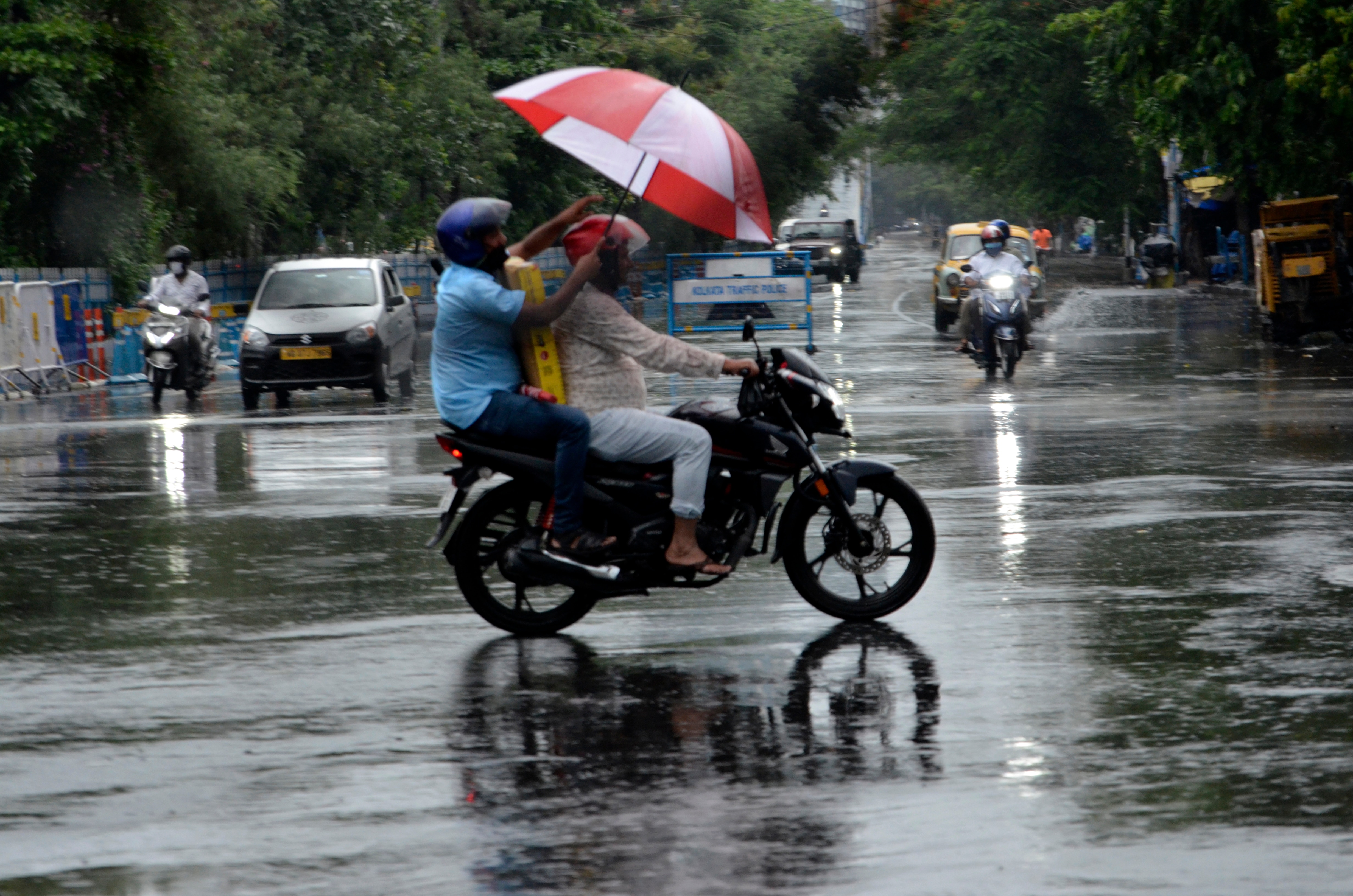
Average temperatures during the monsoon and winter seasons in India are getting hot at a faster rate than its summer, a trend that could worsen with increasing climate change.
At the all-India level, the monsoon season that runs from June-September has been 0.3-0.4 degrees Celsius hotter than the summers over the last decade, according to an analysis by the Centre for Science and Environment. "With time, monsoon is getting even hotter."
It's not just monsoons though. Between 2012 and 2022, the post-monsoon and winter seasons were 0.73 and 0.68 degrees hotter than India's long-term average.
The summer, too, has gotten 0.49 degrees hotter than the normal baseline. However, its rise is slower than that of all other seasons.
The findings underscore the extreme heat risk that India and other South Asian countries face due to the worsening climate crisis.
Besides being a huge health hazard, extreme heat will have major economic consequences for India.
The International Labour Organization estimates 3.4 crore full-time jobs to be lost by 2030 due to heat stress. And as it gets hotter, work hours worth roughly 2.5-4.5% of GDP could be lost, according to McKinsey Global Institute.
India's central bank itself has warned of reduction in trade and economic activity due to rising mercury.
"This is a very disturbing trend as policy preparedness to mitigate rising heat due to climate change is nearly absent in India," said Anumita Roychowdhury, executive director, research and advocacy, CSE. "This requires urgent time-bound mitigation."

While India as a whole has gotten hotter, the northwest region has seen nearly twice as much warming as the rest of the country. This year, the average maximum temperatures for northwestern states were 4 degrees Celsius above the normal level, CSE's report said.
Another trend noted is that this year mega cities were much hotter than the larger region around them. Seasonal average temperatures of Delhi, Mumbai, Kolkata and Hyderabad were 1-2 degrees higher than the all-India average. And they were 2.5-3.8 degrees hotter than the northwestern states.
Higher heat is generated from cities mainly due to human activities, excessive concrete surfaces and waste generation. This extra heat should dissipate after sunset. However, due to pollution and continued generation of waste heat, the cities fail to cool down leading to warmer conditions compared to rural areas, it said.
"In this climate-constrained world, heat stress is expected to worsen," Roychowdhury said. "This will require strategic interventions to reduce heat island effects in cities by conserving and expanding urban greens/forests and water bodies, adopt architectural design guidelines for the built environment to reduce heat load on built structures, and contain concretisation of surface areas."

-
Unhedged Position: Can India See An Indonesia-Style Time Correction?

The Nifty is trading below levels it first clocked in 2024. Is there, then, as I have suggested in the headline, potential that the current time correction drags on painfully for the next three-five, even ten years?
-
Navigating Friction And Energy Realities: An Analysis Of Marco Rubio's October Visit To India
Occurring at a critical juncture marked by stalled trade negotiations and escalating geopolitical pressures over global energy supplies, the visit offers a profound window into modern US-India relations.
-
India Exports Capital. Why Not Export Trusteeship?
The big question, then, is whether India can build an institution that global borrowers, investors, banks, and lawyers can trust, even without an Indian connection.
-
France's Economy & Politics Are In Crisis | The Reason Why
Let's look at how the French economy and politics evolved under Nicolas Sarkozy, Franois Hollande and Emmanuel Macron.
-
You May Inherit The Business. You Must Earn Its Credibility.
Succession tests the founder's ability to share authority as much as it tests the next generation's readiness to assume it.
-
Signing Deals Is One Thing; Making Them Work Is Another | The Week In Whys
Sometimes, things don't turn out as planned. Indian companies have lost some bids to rivals, some projects won't produce until 2030.
-
FOMC Wall, PERM Suspension, Hospital Stocks | Talking Points This Week
A PERM suspension would directly affect green-card sponsorship rather than H-1B visas, so the near-term earnings impact could remain relatively limited. The key question is whether this marks a new phase in US scrutiny of Indian IT.
-
Everything, Everywhere, All At Once: Dalal Street's Week To Forget | Joining The Dots
Visa curbs, a Starlink spat and cancer drug caps: what connects this week's shocks for Indian markets
-
India Is Going Abroad For Critical Minerals. But It May Take Years To Pay Off | The Reason Why
Although India's steps are in the right direction, they remain modest compared with India's growing dependence.
-
When Everyone Has AI, What Gives You An Edge?
India's young workforce is entering an uncertain world of work where powerful AI tools are becoming widely accessible. The advantage will belong to those who combine deep expertise with digital fluency, and the distinctly human capabilities that technology cannot manufacture.









