Monsoon Rains Hit Kerala Coast 3 Days Ahead Of Schedule: Weather Office
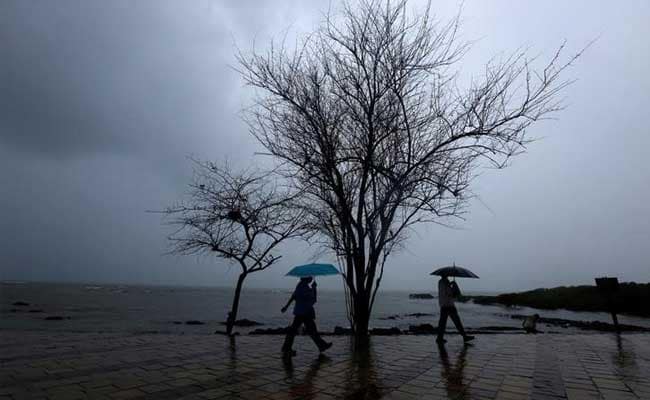
Monsoon rains hit the southern state of Kerala a few days earlier than normal on Tuesday, the country's weather office said, potentially brightening the nation's outlook for agricultural output and economic growth.
Monsoons deliver about 70 per cent of India's annual rainfall and are the lifeblood of its $2.5 trillion economy, spurring farm output and boosting rural spending on items ranging from gold to cars, motorcycles and refrigerators.
"The southwest monsoon has set in over the southern state of Kerala, three days ahead of its normal date," the state-run India Meteorological Department (IMD) said in a statement.
The early arrival of monsoon rains typically enables farmers to bring forward sowing of crops such as rice, sugar cane, corn, cotton and soybeans because nearly half the country's farmland lacks irrigation.
However, IMD Monsoon Director General KJ Ramesh last month forecast that monsoon rains were expected to be 97-per cent of a long-term average.
India's weather office defines average, or normal, rainfall as between 96 per cent and 104 per cent of a 50-year average of 89 cm for the entire four-month season beginning June.
Other than boosting farm output and wider economic growth, a spell of roughly average rains could help keep a lid on inflation, potentially tempting Prime Minister Narendra Modi to bring forward a general elections due in May 2019.
Monsoon rains are likely to be unaffected by the El Nino weather pattern, which is expected to set in only after the four-month rainy season ends in September.
In 2017, monsoon rains were 95 per cent of the long-term average compared to forecasts of 98 per cent.
Before receiving average rains in 2016, India suffered back-to-back drought years for only the fourth time in more than a century, hurting incomes and driving some farmers to suicide.
Average monsoon rainfall would help India retain its position as the world's top rice exporter, but could further stoke a glut in supply of sugar.
(Except for the headline, this story has not been edited by NDTV staff and is published from a syndicated feed.)

-
Love, Sex Aur Dhokha: The Audacious Plot To Spy On Jensen Huang

A Taipei dinner, a Singapore chip buyer and a suspected Chinese asset: inside the alleged spy operation that got close to NVIDIA's Jensen Huang.
-
Ten Things I Learnt This Samvat
Patience can be a trap. Cheap stocks can stay cheap. Leverage can wipe you out. What did Samvat 2082 teach us? Niraj Shah writes on 10 lessons from the year gone by.
-
Talking Points This Week: Tech Nerves, FII Buying, And A Faraway Banking Shock
The global markets are not shining this Diwali. The exception in the large markets is, India.
-
Midterm Rally Lasted A Day. The Hard Reality Of A Divided US May Last Two Years | Opinion
Between a contested AI boom, a debt ceiling that arrives in 2027 and a president with every incentive to act alone, the next two years may prove more volatile than the first day's rally suggests.
-
Blue Wave Will Derail the AI Trade but Won't Dismantle the AI Era | Unhedged Position
The Democrats' sweep of the US Congress will see politics collide with economic forces both over the long and short term.
-
It's Time To Take The GST Council's Bet On Trust Global
Payment records can prove India's services exports, and clear, proportionate rules can bring foreign digital sellers into the tax net.
-
Opinion | India at 38: From Innovation Overperformer to Innovation Powerhouse
India now has 453 VC-backed deep science startups, 18 of them late-stage, after 117 percent growth since 2020. Laurus Labs, at USD 9.3 billion, is the most valuable deep science company in any middle-income economy outside China.
-
Navigating Energy Crossroads: S Jaishankar's Call For Diversified Supply Chains At G20 Ministerial Meeting
As geopolitical fault lines continue to test maritime trade routes and commodity flows, Jaishankar's message remains pertinent: true economic resilience requires open markets, protected transit lines, and a genuine commitment to multilateral cooperation rather than coercion.
-
Indians Are Travelling, But Not Every Journey Is A Holiday | The Week In Whys
Pilgrims, patients and working women are the real travellers, and the system hasn't quite caught up with them.









