Modi's Economic Ministers Take Charge
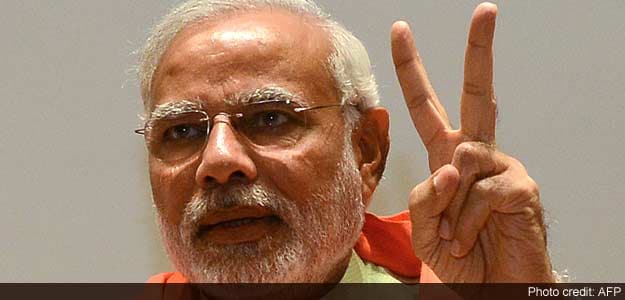
Prime Minister Narendra Modi's crack team of economic ministers led by Arun Jaitley in finance today began the Herculean task of arresting price rise, reviving investor confidence and boosting growth.
Jaitley, who has also been given the Ministry of Corporate Affairs, pledged to contain the price rise, restore the confidence of investors in the economy and promote growth while keeping the fiscal deficit under check.
New Telecom and Law Minister Ravi Shankar Prasad made the right noises on retrospective tax, which has been severely criticised by industry and foreign investors, and promised a stable fiscal regime to lure overseas investments.
Former BJP president and party heavyweight Nitin Gadkari, who turned 57 today, will take charge of the Road Transport and Highways and the Shipping ministries on Wednesday.
Three others -- Minister for Micro, Small and Medium Enterprises Kalraj Mishra, Fertiliser Minister Ananth Kumar and Heavy Industries and Public Enterprises Minister Anant Geete -- also did not take charge today.
Ramvilas Paswan, who assumed charge of the Ministry of Consumer Affairs, Food & Public Distribution, said his priority would be to streamline the working of FCI and making the public distribution system more effective.
Apart from Jaitley, Prasad and Paswan, some ministers holding economic portfolios are first-timers with no background of handling high-profile assignments.
After taking charge, Commerce and Industry Minister Nirmala Sitharaman reaffirmed the BJP's stand of not allowing foreign direct investment in multi-brand retail, but said her government will take steps to boost exports and create jobs.
Chartered accountant Piyush Goyal, now in charge of the warring coal and power ministries, vowed to end electricity shortages as he looked to develop synergies between fuel supply and power projects. He also holds the renewable energy portfolio.
Oil Minister Dharmendra Pradhan hinted at keeping the common man's interest in mind while deciding on issues such as natural gas price hike and fuel price de-regulation.

-
Where You Live Shapes How You Get To Work | The Reason Why

Two-wheelers are the most popular way to get to work in India, accounting for nearly 43% of workplace commutes.
-
High US Salaries, No Green Card Certainty: The Financial Calculation Facing Indian H-1B Families
The suspension of PERM processing at eight technology employers does not cancel existing H-1B visas. What it does is force a question many Indian families have been avoiding: is the US salary worth tying your career and family plans to one employer?
-
Unhedged Position: Can India See An Indonesia-Style Time Correction?
The Nifty is trading below levels it first clocked in 2024. Is there, then, as I have suggested in the headline, potential that the current time correction drags on painfully for the next three-five, even ten years?
-
Navigating Friction And Energy Realities: An Analysis Of Marco Rubio's October Visit To India
Occurring at a critical juncture marked by stalled trade negotiations and escalating geopolitical pressures over global energy supplies, the visit offers a profound window into modern US-India relations.
-
India Exports Capital. Why Not Export Trusteeship?
The big question, then, is whether India can build an institution that global borrowers, investors, banks, and lawyers can trust, even without an Indian connection.
-
France's Economy & Politics Are In Crisis | The Reason Why
Let's look at how the French economy and politics evolved under Nicolas Sarkozy, Franois Hollande and Emmanuel Macron.
-
You May Inherit The Business. You Must Earn Its Credibility.
Succession tests the founder's ability to share authority as much as it tests the next generation's readiness to assume it.
-
Signing Deals Is One Thing; Making Them Work Is Another | The Week In Whys
Sometimes, things don't turn out as planned. Indian companies have lost some bids to rivals, some projects won't produce until 2030.
-
FOMC Wall, PERM Suspension, Hospital Stocks | Talking Points This Week
A PERM suspension would directly affect green-card sponsorship rather than H-1B visas, so the near-term earnings impact could remain relatively limited. The key question is whether this marks a new phase in US scrutiny of Indian IT.
-
Everything, Everywhere, All At Once: Dalal Street's Week To Forget | Joining The Dots
Visa curbs, a Starlink spat and cancer drug caps: what connects this week's shocks for Indian markets









