MIT undergraduates to get $100 in bitcoin in digital money trial
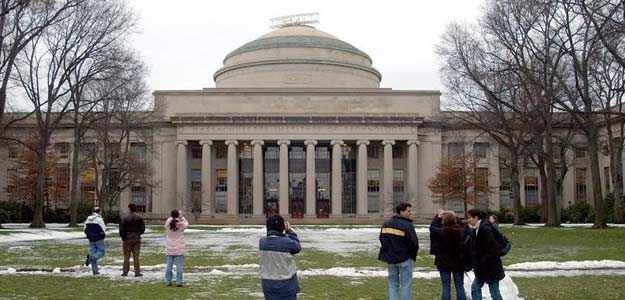
Every undergraduate student at the Massachusetts Institute of Technology next fall will be offered $100 in bitcoins in an experiment that students say will turn the prestigious university into one of the first places on the planet with widespread access to digital currency.
Bitcoin is not backed by any government or central bank, a digital currency whose value can swing dramatically based on demand. Users can transfer bitcoins to each other online and store the currency in digital "wallets."
Jeremy Rubin, a sophomore, and Dan Elitzer, an MBA candidate, raised half a million dollars from alumni and other sources to fund the experiment after coming up with the idea last month. The extra money will go toward infrastructure and education and the offer may eventually be extended to other students beyond undergrads.
"MIT's campus will become a place where bitcoin is more widely used than anywhere else in the world," said Elitzer, who is president of the MIT Bitcoin Club.
But not all bitcoin ventures have been a success.
Tokyo-based Mt. Gox, once the world's biggest bitcoin exchange, filed in February for bankruptcy protection in Japan, saying it may have lost nearly half a billion dollars worth of the virtual coins due to hacking of its computer system.
To avoid such problems, the students have sought help from MIT computer scientists and staff as well as organizations that facilitate digital currency payments.
"We are going to make sure this is done in a secure fashion," Elitzer told Reuters. "We are making sure we get the right expertise in here."
The bulk of the funding for the project came from MIT alumni. Alexander Morcos, class of 1997 and co-founder of the New York-based high-frequency trading firm Hudson River Trading LLC, donated about $250,000, the students said.
Rubin said he believed that giving classmates digital currencies was similar to providing Web access in the early days of the Internet.
While anybody can exchange digital currencies from a computer, most bitcoin users are isolated from each other. By issuing bitcoin to every undergrad on campus, Elitzer and Rubin hope it will encourage them to exchange it between each other as well.
"There are virtual communities where it has been common to find bitcoin users, but there has been no physical, geographic location where you can go to and assume that a significant proportion of the population knows what bitcoin is and uses it," he said.
"You will have a critical mass. The assumption will be that the other person has it," he said.
It will be an opt-in program, which means that students will not automatically be issued digital wallets, but won't get any money if they reject the digital currency.
"We're planning on bitcoin or bust," Rubin said.
Copyright: Thomson Reuters 2014

-
Where You Live Shapes How You Get To Work | The Reason Why

Two-wheelers are the most popular way to get to work in India, accounting for nearly 43% of workplace commutes.
-
High US Salaries, No Green Card Certainty: The Financial Calculation Facing Indian H-1B Families
The suspension of PERM processing at eight technology employers does not cancel existing H-1B visas. What it does is force a question many Indian families have been avoiding: is the US salary worth tying your career and family plans to one employer?
-
Unhedged Position: Can India See An Indonesia-Style Time Correction?
The Nifty is trading below levels it first clocked in 2024. Is there, then, as I have suggested in the headline, potential that the current time correction drags on painfully for the next three-five, even ten years?
-
Navigating Friction And Energy Realities: An Analysis Of Marco Rubio's October Visit To India
Occurring at a critical juncture marked by stalled trade negotiations and escalating geopolitical pressures over global energy supplies, the visit offers a profound window into modern US-India relations.
-
India Exports Capital. Why Not Export Trusteeship?
The big question, then, is whether India can build an institution that global borrowers, investors, banks, and lawyers can trust, even without an Indian connection.
-
France's Economy & Politics Are In Crisis | The Reason Why
Let's look at how the French economy and politics evolved under Nicolas Sarkozy, Franois Hollande and Emmanuel Macron.
-
You May Inherit The Business. You Must Earn Its Credibility.
Succession tests the founder's ability to share authority as much as it tests the next generation's readiness to assume it.
-
Signing Deals Is One Thing; Making Them Work Is Another | The Week In Whys
Sometimes, things don't turn out as planned. Indian companies have lost some bids to rivals, some projects won't produce until 2030.
-
FOMC Wall, PERM Suspension, Hospital Stocks | Talking Points This Week
A PERM suspension would directly affect green-card sponsorship rather than H-1B visas, so the near-term earnings impact could remain relatively limited. The key question is whether this marks a new phase in US scrutiny of Indian IT.
-
Everything, Everywhere, All At Once: Dalal Street's Week To Forget | Joining The Dots
Visa curbs, a Starlink spat and cancer drug caps: what connects this week's shocks for Indian markets









