Merger Of Associates On Track Despite Demonetisation: SBI MD
New Delhi: State Bank of India on Monday said the merger plan of associates with itself is on track and it should not get delayed due to the ongoing demonetisation process.
"No, I don't think so," SBI MD Rajnish Kumar said when asked if the merger of associate banks would be delayed due to the high-value currency withdrawal and its aftermath.
The merger of five associates and the Bharatiya Mahila Bank (BMB) is planned to be wrapped up by 2016-17 end.
Asked about expectations from the monetary policy review to be unveiled on December 7, he said "very difficult to predict now because the monetary policy committee now decides.
Maybe, like 25-50-basis point cut is what everybody expecting and no rate cut will be a bigger surprise".
If the incremental CRR comes down, it will help banks pass on the benefit to customers, he said on the sidelines of Inclusive Finance Summit here.
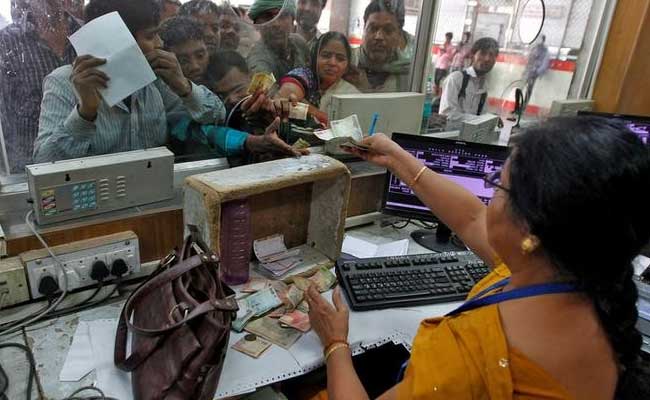
On demonetisation, Mr Kumar felt that the there would be salary and pension rush for the next 5-7 days. The deposit transaction will be slightly lower during the salary withdrawal period.
It is to be noted that the government earlier this year cleared the proposal to merge SBI with its five associate banks -- State Bank of Bikaner and Jaipur, State Bank of Travancore, State Bank of Mysore, State Bank of Patiala, State Bank of Hyderabad -- and BMB.
In August, SBI had said all its associate banks along with BMB will be merged into it and that will add an additional Rs 8 lakh crore to its assets, potentially making it a banking behemoth with total assets of Rs 30 lakh crore, an increase of about 36 per cent.
With the merger of all the five associates and BMB, SBI will become a global-sized bank and could compete with the largest in the world, with 22,500 branches and 58,000 ATMs. It will have over 50 crore customers.
SBI has close to 16,500 branches, including 191 foreign offices spread across 36 countries.
SBI had already merged two of its associates -- State Bank of Saurashtra in 2008 and State Bank of Indore in 2010 -- with itself.
(This story has not been edited by NDTV staff and is auto-generated from a syndicated feed.)

-
A New Samvat Wishlist: Inclusive Prosperity And Human Development

India has strengthened its economic foundations through infrastructure, digital access and enterprise. Its next growth chapter must deepen productivity, create better livelihoods and widen participation in prosperity.
-
Love, Sex Aur Dhokha: The Audacious Plot To Spy On Jensen Huang
A Taipei dinner, a Singapore chip buyer and a suspected Chinese asset: inside the alleged spy operation that got close to NVIDIA's Jensen Huang.
-
Ten Things I Learnt This Samvat
Patience can be a trap. Cheap stocks can stay cheap. Leverage can wipe you out. What did Samvat 2082 teach us? Niraj Shah writes on 10 lessons from the year gone by.
-
Talking Points This Week: Tech Nerves, FII Buying, And A Faraway Banking Shock
The global markets are not shining this Diwali. The exception in the large markets is, India.
-
Midterm Rally Lasted A Day. The Hard Reality Of A Divided US May Last Two Years | Opinion
Between a contested AI boom, a debt ceiling that arrives in 2027 and a president with every incentive to act alone, the next two years may prove more volatile than the first day's rally suggests.
-
Blue Wave Will Derail the AI Trade but Won't Dismantle the AI Era | Unhedged Position
The Democrats' sweep of the US Congress will see politics collide with economic forces both over the long and short term.
-
It's Time To Take The GST Council's Bet On Trust Global
Payment records can prove India's services exports, and clear, proportionate rules can bring foreign digital sellers into the tax net.
-
Opinion | India at 38: From Innovation Overperformer to Innovation Powerhouse
India now has 453 VC-backed deep science startups, 18 of them late-stage, after 117 percent growth since 2020. Laurus Labs, at USD 9.3 billion, is the most valuable deep science company in any middle-income economy outside China.
-
Navigating Energy Crossroads: S Jaishankar's Call For Diversified Supply Chains At G20 Ministerial Meeting
As geopolitical fault lines continue to test maritime trade routes and commodity flows, Jaishankar's message remains pertinent: true economic resilience requires open markets, protected transit lines, and a genuine commitment to multilateral cooperation rather than coercion.









