Mazagon Dock Stock Split Record Date Set For Dec. 27 — Check Details Here
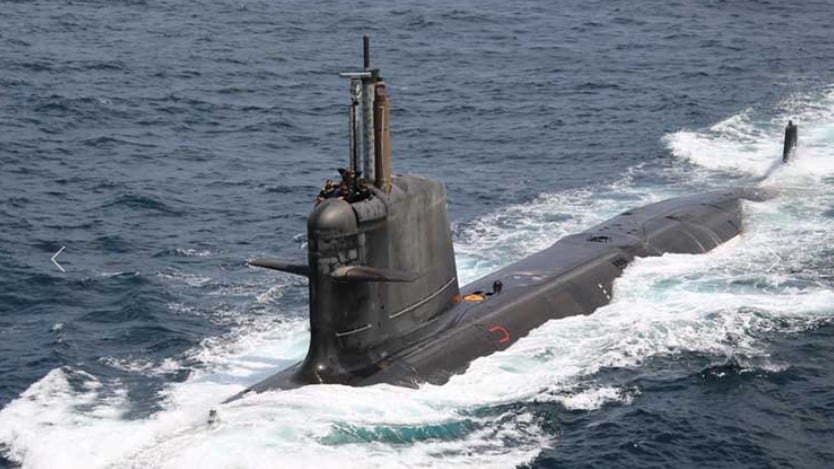
Mazagon Dock Shipbuilders Ltd. has fixed Friday, Dec. 27, as the record date for determining the eligibility of shareholders for its proposed stock split. Under the plan, each existing equity share with a face value of Rs 10 will be subdivided into two equity shares with a face value of Rs 5 each, fully paid up.
Consequently, Thursday, Dec. 26, will serve as the ex-date for the stock split, aligning with the T+1 settlement cycle.
Notably, the record date is a crucial benchmark set by companies to identify the shareholders entitled to receive benefits such as dividends, split shares, or bonus shares.
Earlier, on Oct. 22, Mazagon Dock had announced another stock split. In addition to this, the defence company's board had announced an interim dividend of Rs 23.19 per share with record date set for Oct. 30. This follows a final dividend of Rs 12.11 per share declared on Sept.19.
The company had also issued an interim dividend of Rs 15.34 per share on Nov. 20, 2023, and a final dividend of Rs 6.86 per share with an ex-date of Sept. 20, 2023.
Shares of the company have risen 102.35% in the last 12 months and 102.97% on a year-to-date basis.
Two out of the five analysts tracking Mazagon Dock have a 'buy' rating on the stock, two recommend a 'hold' and one suggests a 'sell', according to Bloomberg data. The 12-month analysts' consensus target price on the stock is Rs 4,029.8, implying a downside of 13%.
Mazagon Dock Q2 Results
Mazagon Dock's net profit rose 76% year-on-year in the quarter ended Sept. 30, beating analysts' estimates. The shipbuilding firm posted a bottomline of Rs 585 crore, which was higher than consensus estimate of Rs 489 crore shared by analysts tracked by Bloomberg.
The company's revenue rose 51% year-on-year to Rs 2,757 crore in the quarter as against the expectations of Rs 2,148 crore. The total operating expenses to revenue narrowed to 81.5% as compared to 90.3% in the year-ago period.

-
A New Samvat Wishlist: Inclusive Prosperity And Human Development

India has strengthened its economic foundations through infrastructure, digital access and enterprise. Its next growth chapter must deepen productivity, create better livelihoods and widen participation in prosperity.
-
Love, Sex Aur Dhokha: The Audacious Plot To Spy On Jensen Huang
A Taipei dinner, a Singapore chip buyer and a suspected Chinese asset: inside the alleged spy operation that got close to NVIDIA's Jensen Huang.
-
Ten Things I Learnt This Samvat
Patience can be a trap. Cheap stocks can stay cheap. Leverage can wipe you out. What did Samvat 2082 teach us? Niraj Shah writes on 10 lessons from the year gone by.
-
Talking Points This Week: Tech Nerves, FII Buying, And A Faraway Banking Shock
The global markets are not shining this Diwali. The exception in the large markets is, India.
-
Midterm Rally Lasted A Day. The Hard Reality Of A Divided US May Last Two Years | Opinion
Between a contested AI boom, a debt ceiling that arrives in 2027 and a president with every incentive to act alone, the next two years may prove more volatile than the first day's rally suggests.
-
Blue Wave Will Derail the AI Trade but Won't Dismantle the AI Era | Unhedged Position
The Democrats' sweep of the US Congress will see politics collide with economic forces both over the long and short term.
-
It's Time To Take The GST Council's Bet On Trust Global
Payment records can prove India's services exports, and clear, proportionate rules can bring foreign digital sellers into the tax net.
-
Opinion | India at 38: From Innovation Overperformer to Innovation Powerhouse
India now has 453 VC-backed deep science startups, 18 of them late-stage, after 117 percent growth since 2020. Laurus Labs, at USD 9.3 billion, is the most valuable deep science company in any middle-income economy outside China.
-
Navigating Energy Crossroads: S Jaishankar's Call For Diversified Supply Chains At G20 Ministerial Meeting
As geopolitical fault lines continue to test maritime trade routes and commodity flows, Jaishankar's message remains pertinent: true economic resilience requires open markets, protected transit lines, and a genuine commitment to multilateral cooperation rather than coercion.









