Mastercard Fined $647 Million By European Union
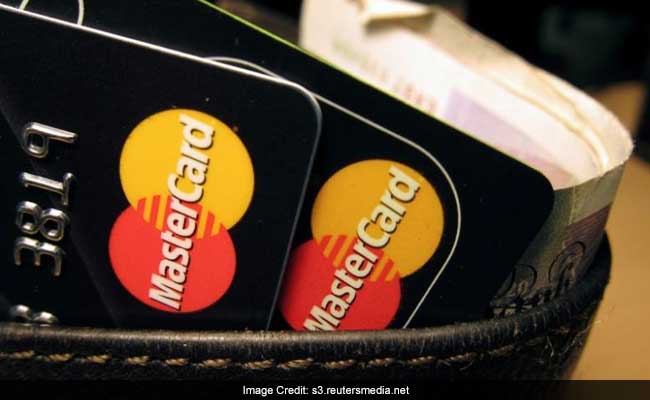
The European Union has fined global credit card giant Mastercard 570 million euros ($647 million) for limiting competition between banks offering cheaper payment fees.
"By preventing merchants from shopping around for better conditions offered by banks in other member states, Mastercard's rules artificially raised the costs of card payments, harming consumers and retailers," EU competition commissioner Margrethe Vestager said.
After Visa, Mastercard is the second largest credit card issuer in the European market. It has been the subject of an EU anti-trust investigation since April 2013, and has cooperated with the probe.
When a customer pays a retailer with a credit card, the store's bank pays a fee to the cardholder's bank.
The retailer's bank passes on this fee to the store, which increases costs for customers.
Prior to 2015, the level of these "interchange fees" varied widely across Europe, but Mastercard's rules at the time obliged banks receiving card payments to apply the fee set in their home country.
"This led to higher prices for retailers and consumers, to limited cross-border competition and to an artificial segmentation of the single market," the EU Commission said in a statement.
"On this basis, the Commission concluded that Mastercard's rules prevented retailers from benefitting from lower fees and restricted competition between banks cross border, in breach of EU antitrust rules.
"The infringement ended when Mastercard amended its rules in view of the entry into force of the Interchange Fee Regulation."
The fine would have been higher, but Brussels reduced it by 10 per cent to thank Mastercard for cooperating.
The company did not dispute the fine.
"This decision relates to historic practices only, covers a limited period of time of less than two years and will not require any modification of Mastercard's current business practices," it said.
"Mastercard sees the closure of this anti-trust chapter as an important milestone for the company," it added.

-
Where You Live Shapes How You Get To Work | The Reason Why

Two-wheelers are the most popular way to get to work in India, accounting for nearly 43% of workplace commutes.
-
High US Salaries, No Green Card Certainty: The Financial Calculation Facing Indian H-1B Families
The suspension of PERM processing at eight technology employers does not cancel existing H-1B visas. What it does is force a question many Indian families have been avoiding: is the US salary worth tying your career and family plans to one employer?
-
Unhedged Position: Can India See An Indonesia-Style Time Correction?
The Nifty is trading below levels it first clocked in 2024. Is there, then, as I have suggested in the headline, potential that the current time correction drags on painfully for the next three-five, even ten years?
-
Navigating Friction And Energy Realities: An Analysis Of Marco Rubio's October Visit To India
Occurring at a critical juncture marked by stalled trade negotiations and escalating geopolitical pressures over global energy supplies, the visit offers a profound window into modern US-India relations.
-
India Exports Capital. Why Not Export Trusteeship?
The big question, then, is whether India can build an institution that global borrowers, investors, banks, and lawyers can trust, even without an Indian connection.
-
France's Economy & Politics Are In Crisis | The Reason Why
Let's look at how the French economy and politics evolved under Nicolas Sarkozy, Franois Hollande and Emmanuel Macron.
-
You May Inherit The Business. You Must Earn Its Credibility.
Succession tests the founder's ability to share authority as much as it tests the next generation's readiness to assume it.
-
Signing Deals Is One Thing; Making Them Work Is Another | The Week In Whys
Sometimes, things don't turn out as planned. Indian companies have lost some bids to rivals, some projects won't produce until 2030.
-
FOMC Wall, PERM Suspension, Hospital Stocks | Talking Points This Week
A PERM suspension would directly affect green-card sponsorship rather than H-1B visas, so the near-term earnings impact could remain relatively limited. The key question is whether this marks a new phase in US scrutiny of Indian IT.
-
Everything, Everywhere, All At Once: Dalal Street's Week To Forget | Joining The Dots
Visa curbs, a Starlink spat and cancer drug caps: what connects this week's shocks for Indian markets









