Many Companies to Outsource Recruitment Work in Near Term: Experts
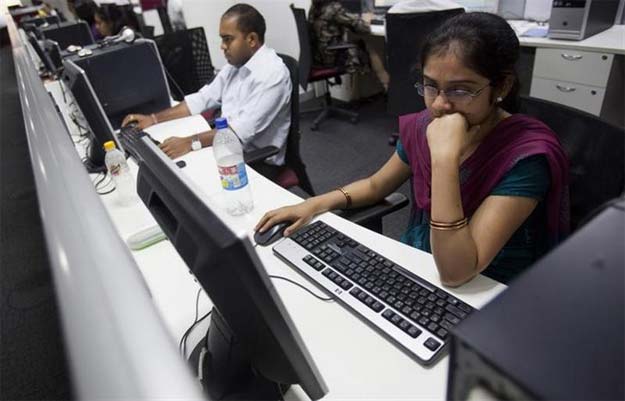
With businesses expected to ramp up hiring activities, a large number of companies are expected to outsource their recruitment process work, especially by the IT & ITeS industry, in the near term, according to HR experts.
India's recruitment process outsourcing (RPO), a fast growing industry, is projected to see an annual growth of 25-35 per cent, according to estimates.
These expectations also come against the backdrop of high hopes that efforts to revive the domestic economy would generate lakhs of new employment opportunities.
In signs of improving market sentiment, leading HR services firm Randstad India said that RPO industry "has been evolving rapidly in India in last 12 months".
Going by its market study, more than 70 per cent of Indian employers are likely to outsource all or part of their hiring process in the next five years.
"Though this trend (of doing RPOs) has been prevalent majorly with MNCs, we are seeing many Indian firms opting for this model of recruitment," Randstad India chief executive Moorthy K Uppaluri told PTI.
Experts said that the IT & ITeS sector does more of RPO in the country. Among others, the BFSI (banking, financial services and insurance) segment and e-commerce industry also resort to outsource their recruitment process activities.
"Services companies that hail from sectors like IT, BFSI, etc would use more RPO services as these businesses are people-driven and as such the largest cost centre at any such organisation would be their employees," Spectrum Talent Management director Vidur Gupta said.
RPO services are majorly used for recruitment needs for junior-level and mid-level employees mainly when there are "high volumes of hiring".
"The number and variety of roles recruited are greater and hence is a challenge for organisations to manage it in house," said Rajeev Menon, head-innovation and product management at MeritTrac, a talent assessment firm.
RPO service providers have access to reach out to larger talent pool and make these specialised recruitments happen more effectively, he added.
Mr Uppaluri said that the RPO service providers are "predominantly (utilised) for mid to junior level employees in the talent pyramid as typically RPO is suitable for high volumes of hiring, with a low mix of different profiles".
In the run up to Lok Sabha elections, HR experts pinning their hopes on a stable government had said that such a scenario would help create over two million new jobs and boost hiring activities by 30-40 per cent this year. A stable government has been formed with Narendra Modi at the helm after BJP got simple majority. No single party has won a simple majority since 1984.
Executive-search firm Lighthouse Partners managing partner Rajiv Burman observed that employers are now looking at outsourcing hiring services as the RPOs have substantially reduced their fees in past five years owing to the slowdown.
CareerBuilder India's managing director, Premlesh Machama, said that even though India Inc was slow to embrace outsourcing services, the trend has changed in recent years.
"...in the last couple of years, Indian companies have really understood the benefits of outsourcing to RPO and the number of companies availing these services is rapidly growing," he said.
The increased demand for RPO services is also anticipated to spur this industry's growth by as much as 25-35 per cent annually, Randstad India said.
Globally, the RPO market is estimated to be worth about $1.5 billion.

-
Where You Live Shapes How You Get To Work | The Reason Why

Two-wheelers are the most popular way to get to work in India, accounting for nearly 43% of workplace commutes.
-
High US Salaries, No Green Card Certainty: The Financial Calculation Facing Indian H-1B Families
The suspension of PERM processing at eight technology employers does not cancel existing H-1B visas. What it does is force a question many Indian families have been avoiding: is the US salary worth tying your career and family plans to one employer?
-
Unhedged Position: Can India See An Indonesia-Style Time Correction?
The Nifty is trading below levels it first clocked in 2024. Is there, then, as I have suggested in the headline, potential that the current time correction drags on painfully for the next three-five, even ten years?
-
Navigating Friction And Energy Realities: An Analysis Of Marco Rubio's October Visit To India
Occurring at a critical juncture marked by stalled trade negotiations and escalating geopolitical pressures over global energy supplies, the visit offers a profound window into modern US-India relations.
-
India Exports Capital. Why Not Export Trusteeship?
The big question, then, is whether India can build an institution that global borrowers, investors, banks, and lawyers can trust, even without an Indian connection.
-
France's Economy & Politics Are In Crisis | The Reason Why
Let's look at how the French economy and politics evolved under Nicolas Sarkozy, Franois Hollande and Emmanuel Macron.
-
You May Inherit The Business. You Must Earn Its Credibility.
Succession tests the founder's ability to share authority as much as it tests the next generation's readiness to assume it.
-
Signing Deals Is One Thing; Making Them Work Is Another | The Week In Whys
Sometimes, things don't turn out as planned. Indian companies have lost some bids to rivals, some projects won't produce until 2030.
-
FOMC Wall, PERM Suspension, Hospital Stocks | Talking Points This Week
A PERM suspension would directly affect green-card sponsorship rather than H-1B visas, so the near-term earnings impact could remain relatively limited. The key question is whether this marks a new phase in US scrutiny of Indian IT.
-
Everything, Everywhere, All At Once: Dalal Street's Week To Forget | Joining The Dots
Visa curbs, a Starlink spat and cancer drug caps: what connects this week's shocks for Indian markets









