M Narasimham, Who Championed India’s Banking Reforms, Dies
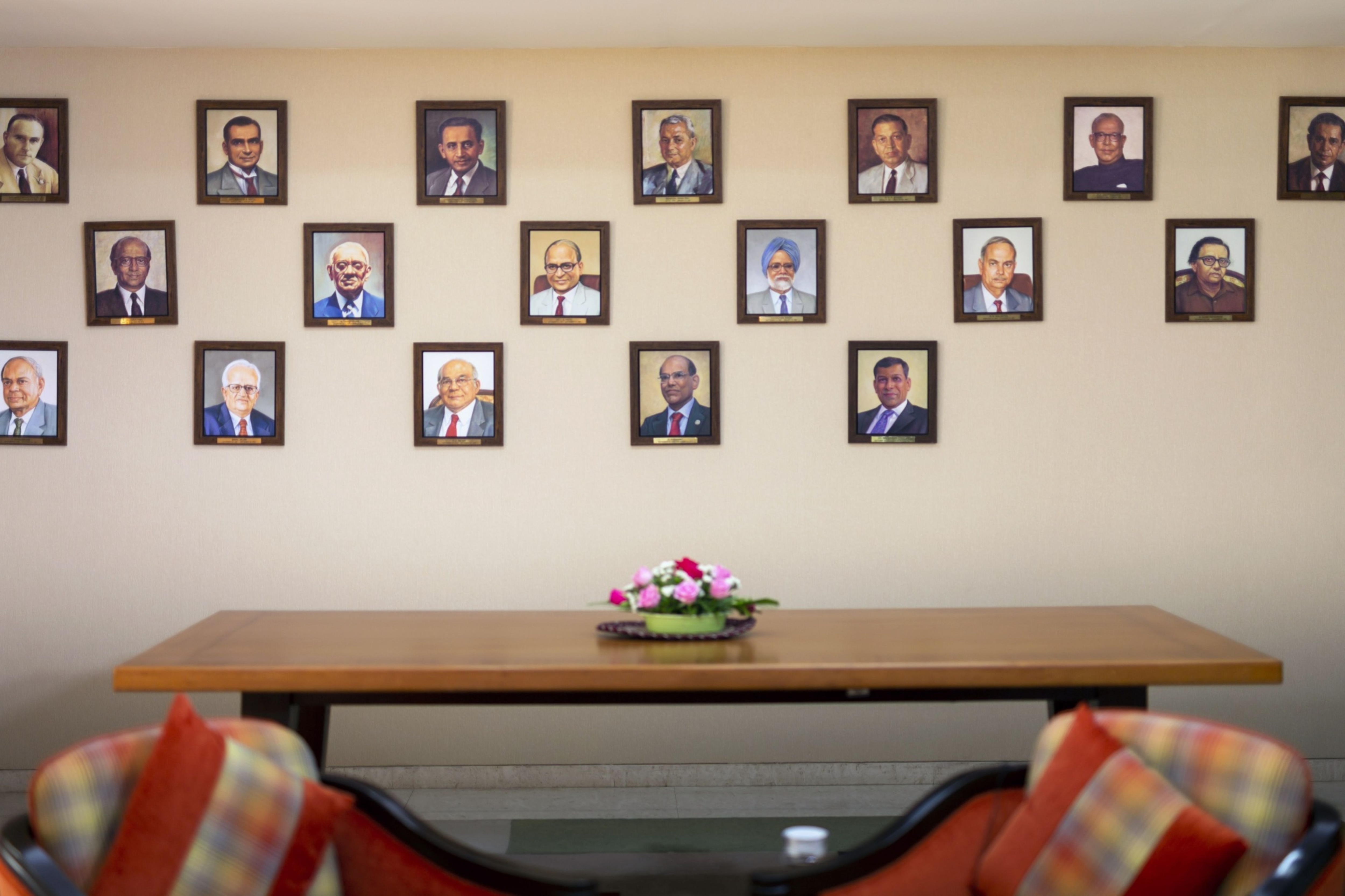
M Narasimham wasn't governor of the Reserve Bank of India for long. Just seven months. Neither did his most enduring contributions come during that brief period. Yet, his name will forever be linked to the trajectory of the Indian financial sector for, among other things, his two-part report on banking sector reforms, which suggested steps that India continues to debate till date.
Narasimham passed away on April 20. He was 94.
He served as governor between May and November of 1977 and had been appointed in an interim arrangement before IG Patel took over the post. Narasimham was the first and only governor to be appointed from the Reserve Bank cadre, according to the central bank's website. He joined the Bank as a research officer in the economic department.
Narasimham later served as executive director for India at the World Bank and thereafter at the International Monetary Fund.
“While he was a stopgap appointment as RBI Governor before IG Patel, Mr. Narasimhan later contributed immensely in securing India's largest IMF support package in 1981 as India's executive director,” said Rahul Bajoria, chief India economist at Barclays and author of “The Story Of The Reserve Bank of India”.
The 1981 package had become necessary against the backdrop of high inflation, a drought and diminished foreign exchange reserves, according to RBI History Volume-3. In October that year, India had to secure a loan from the extended financing facility of the International Monetary Fund. “This was arranged for in November of 1981 and, helped by a good monsoon and sensible monetary policies, the crisis was a thing of the past by the beginning of the next financial year,” the RBI History said.
During his years at the RBI, Narasimham was involved in a number of panels related to banking infrastructure.
In 1975, a committee headed by him looked into the feasibility of setting up new rural banks as subsidiaries of public sector banks to cater to the needs of the rural people. The regional rural banks that still dot India's banking landscape were a result of this work.
In 1997, he appointed a committee to study the impact of branch expansion since the bank nationalisation of 1969 and “to suggest the future course of action keeping in view the need for rural development and removal of regional imbalances,” the history volume says.
In his short tenure as governor, Narasimham also saw the Indian banking system transition towards the bifurcation of savings deposits into demand liabilities and time liabilities. This, according to the history volume, eventually led to “more meaningful concepts of money supply into those that consisted of interest-bearing assets as against those that did not.”
Like many other governors, he too finds his signature of the country's currency notes. The one rupee note bears his signature, although it's no longer in circulation.

The Banking Reform Roadmap
Narasimham's contribution to the course of India's banking sector is perhaps most frequently remembered via a two-part report on reforms in 1991 and 1998. Twenty years later many of these reforms still get discussed and while some are implemented, others.
It was the first of those two committees that laid down the definition of non-performing assets that's now followed, although the period of overdue loans tagged as non-performing has changed. The committee said those assets for which the interest remains due for a period of four quarters should be considered as NPAs. This period was later reduced to 90 days.
The committee also recommended a phased reduction of statutory liquidity ratio and cash reserve ratio, a higher capital adequacy ratio and deregulation of interest rates. Each of these suggestions were implemented over time.
The first volume of the Narasimham report also suggested a four-tier banking structure with 3 to 4 large banks, including State Bank of India at the top and rural banks at the bottom.
One suggestion made in the first volume was that the supervision of banks and financial institutions can be assigned to a quasi-autonomous body sponsored by RBI. This suggestion, despite many questions over the RBI's supervisory capabilities, has not been accepted.
The report had also suggested setting up of a asset reconstruction fund to take over a portion of the loan portfolio of banks whose recovery has become difficult, an idea not too far from the National Asset Reconstruction Company in the works now.
The concept of “narrow banks”, which was repurposed via the RBI's prompt corrective action programme for weak banks, was also recommended by the committee.
“In 1991, he laid down the foundation for an efficient and open banking system through his committee financial sector reforms, which liberalised India's financial sector,” Bajoria said.
It was the second volume of his report in 1998 that Narasimham suggested that the government reduce its minimum shareholding in nationalised banks and in SBI from 51% to 33%, This idea had followed from an observation in the first report, where the committee said that state-run banks should have greater autonomy.
While Narasimham's recommendation of lesser government control on banks did find its way into Yashwant Sinha's budget speech of 2000-01, it remains, till date, unimplemented.

-
High US Salaries, No Green Card Certainty: The Financial Calculation Facing Indian H-1B Families

The suspension of PERM processing at eight technology employers does not cancel existing H-1B visas. What it does is force a question many Indian families have been avoiding: is the US salary worth tying your career and family plans to one employer?
-
Swiggy vs Eternal: Food Delivery's Two Rivals Are No Longer In The Same Race
Eternal is building a private AI assistant, dark.ai. Swiggy is still working out how to make Instamart pay, with an operating loss of Rs 895 crore in the July-September quarter while Blinkit stayed profitable.
-
Where You Live Shapes How You Get To Work | The Reason Why
Two-wheelers are the most popular way to get to work in India, accounting for nearly 43% of workplace commutes.
-
Unhedged Position: Can India See An Indonesia-Style Time Correction?
The Nifty is trading below levels it first clocked in 2024. Is there, then, as I have suggested in the headline, potential that the current time correction drags on painfully for the next three-five, even ten years?
-
Navigating Friction And Energy Realities: An Analysis Of Marco Rubio's October Visit To India
Occurring at a critical juncture marked by stalled trade negotiations and escalating geopolitical pressures over global energy supplies, the visit offers a profound window into modern US-India relations.
-
India Exports Capital. Why Not Export Trusteeship?
The big question, then, is whether India can build an institution that global borrowers, investors, banks, and lawyers can trust, even without an Indian connection.
-
France's Economy & Politics Are In Crisis | The Reason Why
Let's look at how the French economy and politics evolved under Nicolas Sarkozy, Franois Hollande and Emmanuel Macron.
-
You May Inherit The Business. You Must Earn Its Credibility.
Succession tests the founder's ability to share authority as much as it tests the next generation's readiness to assume it.
-
Signing Deals Is One Thing; Making Them Work Is Another | The Week In Whys
Sometimes, things don't turn out as planned. Indian companies have lost some bids to rivals, some projects won't produce until 2030.
-
FOMC Wall, PERM Suspension, Hospital Stocks | Talking Points This Week
A PERM suspension would directly affect green-card sponsorship rather than H-1B visas, so the near-term earnings impact could remain relatively limited. The key question is whether this marks a new phase in US scrutiny of Indian IT.









