For Advising on a $64 Billion India Bank Deal, Bankers Get a 0.0002% Fee
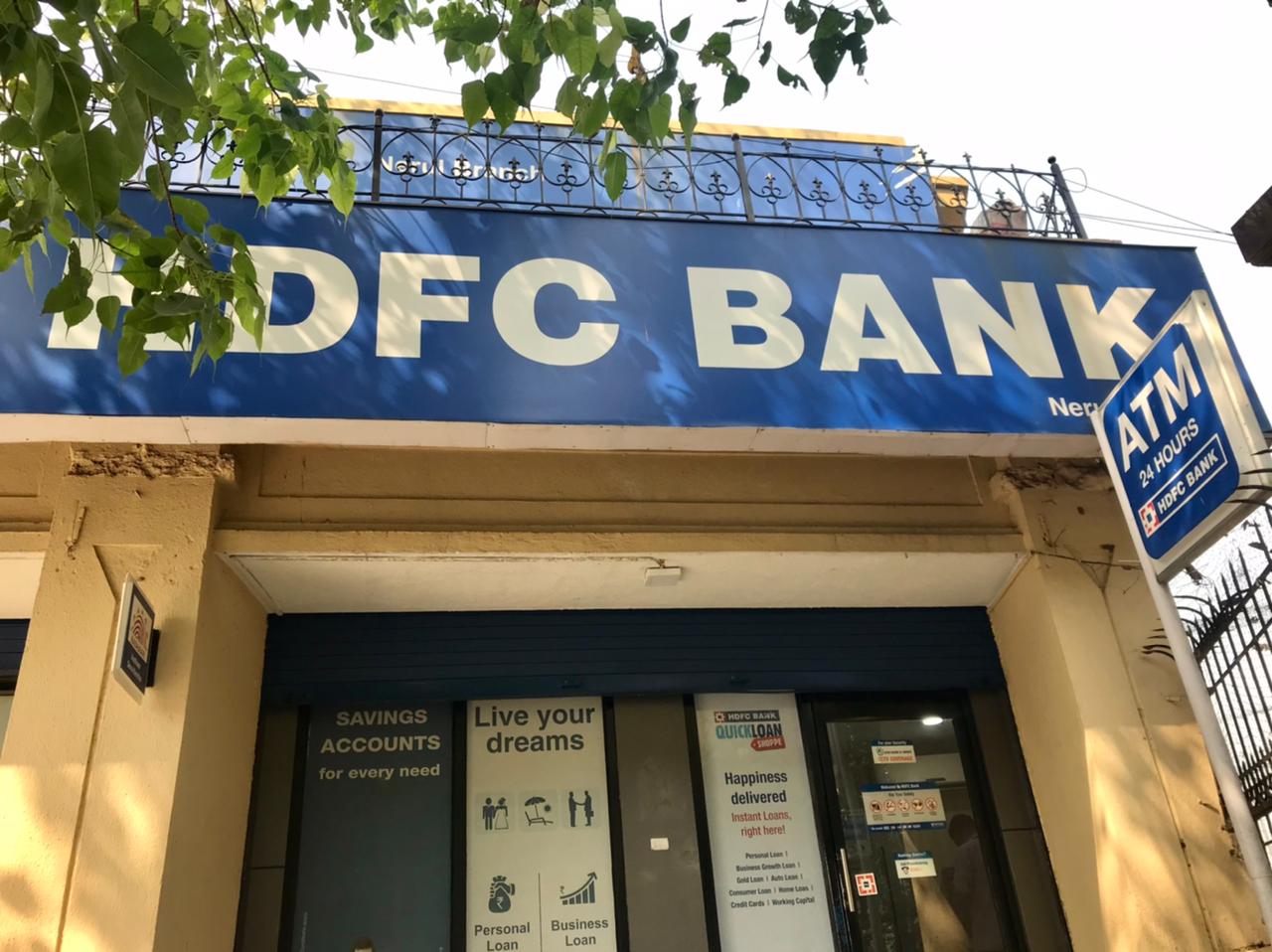
(Bloomberg) -- A $64 billion merger of two big Indian lenders is yielding almost no fees to financial advisers, highlighting investment bankers' struggle for profits in the country.
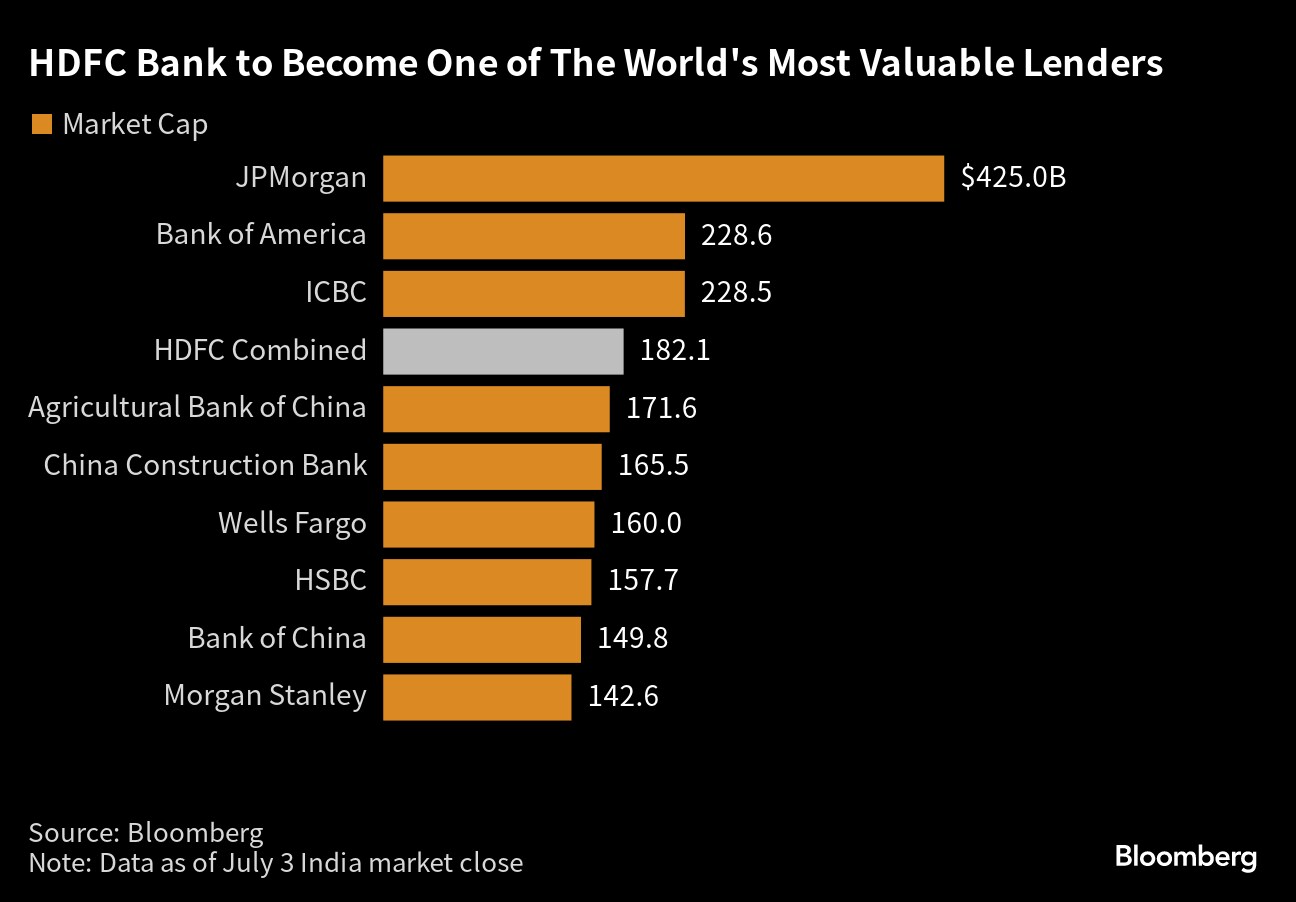
Housing Development Finance Corp.'s all-stock merger into HDFC Bank Ltd., which created one of the most valuable banks in the world, has about 18 advisers who got credit for a fee pool of just over $1 million, according to people familiar with the matter. Morgan Stanley and Bank of America Corp. will take the bulk of that pool while the rest will be paid just a token amount, they said, asking not to be identified as the information is not public.
The fee pool is disproportionately small as the board and executives of the companies led by Deepak Parekh, then chairman of HDFC, drove the merger process, and the role of the advisers was limited, the people said. Many of the advisers became aware that a merger was imminent only a day before the announcement and didn't have to do any work on the deal, they said.
“India is a tough place from a fee perspective unless one can offer value-added services or is structuring complex transactions,” said Pranav Haldea, managing director of Prime Database Group, which provides information on fundraisings. “This is an extremely price-conscious market, and thus, one always needs to keep costs under check.”
Major global banks, including Citigroup Inc., Goldman Sachs Group Inc., JPMorgan Chase & Co, and Jefferies Financial Group Inc., and leading domestic advisory firms like Kotak Mahindra Capital and Axis Capital, were among the 18 advisers who got league table credit for the deal.
Morgan Stanley and BofA were paid more than others as they provided a fairness opinion on the valuation for the proposed transaction, while the rest of the advisers didn't do much, the people said. HDFC Bank and the advisers declined to comment.
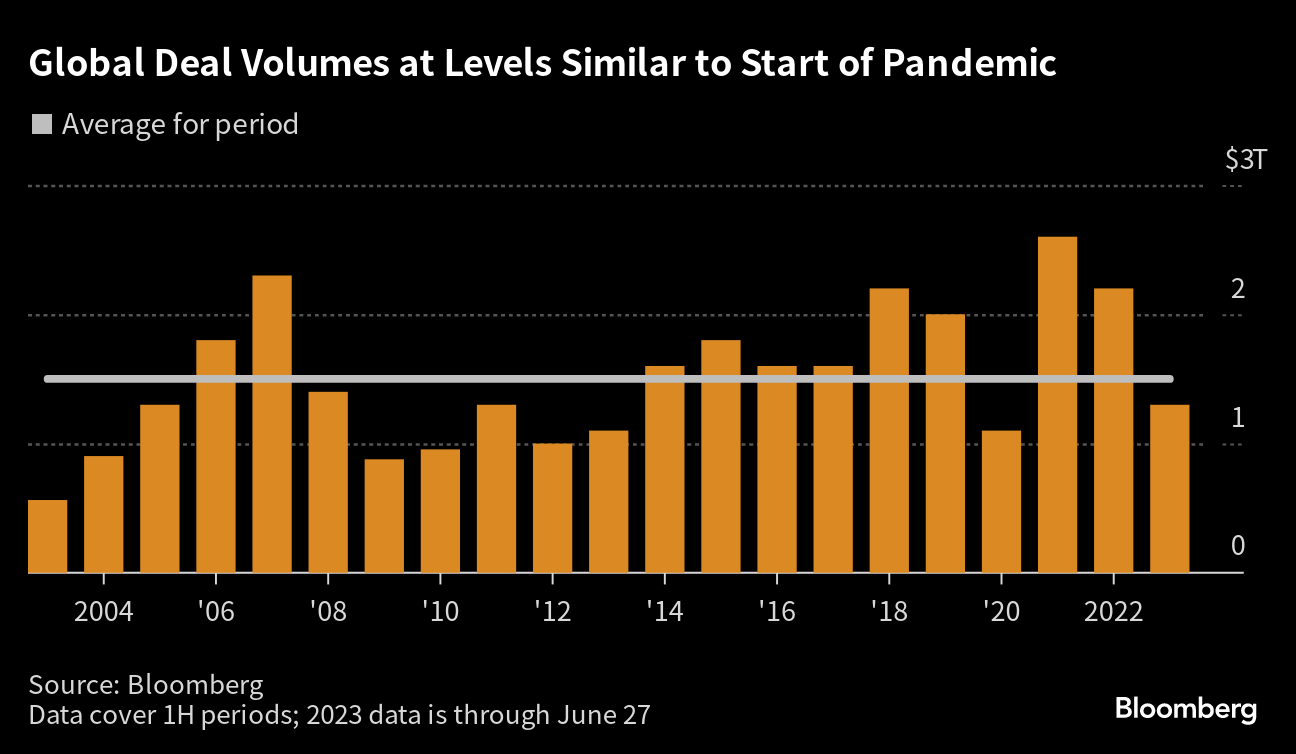
The investment banks' struggles in India to win fee-generating business are in line with advisers' challenges worldwide after a $1 trillion year-on-year drop in the value of mergers and acquisitions and initial public offerings in the first half of the year pushed them to embark on job cuts.
JPMorgan, Citigroup, Goldman Sachs, and Morgan Stanley are among those to have started firings across their investment banking divisions globally this year. However, advisory units of overseas and local banks in the South Asian nation were left mostly unscathed as the team sizes were already small and costs were in check.
More stories like this are available on bloomberg.com
©2023 Bloomberg L.P.

-
Blue Wave Will Derail the AI Trade but Won't Dismantle the AI Era | Unhedged Position

The Democrats' sweep of the US Congress will see politics collide with economic forces both over the long and short term.
-
It's Time To Take The GST Council's Bet On Trust Global
Payment records can prove India's services exports, and clear, proportionate rules can bring foreign digital sellers into the tax net.
-
Opinion | India at 38: From Innovation Overperformer to Innovation Powerhouse
India now has 453 VC-backed deep science startups, 18 of them late-stage, after 117 percent growth since 2020. Laurus Labs, at USD 9.3 billion, is the most valuable deep science company in any middle-income economy outside China.
-
Navigating Energy Crossroads: S Jaishankar's Call For Diversified Supply Chains At G20 Ministerial Meeting
As geopolitical fault lines continue to test maritime trade routes and commodity flows, Jaishankar's message remains pertinent: true economic resilience requires open markets, protected transit lines, and a genuine commitment to multilateral cooperation rather than coercion.
-
Indians Are Travelling, But Not Every Journey Is A Holiday | The Week In Whys
Pilgrims, patients and working women are the real travellers, and the system hasn't quite caught up with them.
-
Getting To Work Costs Women More | The Reason Why
It is not just about women paying more than men. It is about women paying much more in cities than in villages.
-
AI Bias In Investing Cannot Be Eliminated, But It Can Be Governed
Framing is a particularly important example as identical financial information presented in terms of gains rather than losses can lead an LLM to reach a different assessment.
-
Joining The Dots | Dark Skies, Steady Diya: Why Hope Holds This Diwali
With war, a weak rupee and foreign outflows weighing on sentiment, policymakers at the NDTV World Summit and market veterans at NDTV Profit Ignite: Diwali Edition offered the same advice: stay invested and filter out the noise.
-
The Curious Case of Equitas Small Finance Bank And A CEO Who Quit For Stock
PN Vasudevan believes persistent investor concerns over a perceived conflict of interest had become a governance overhang on Equitas Small Finance Bank's stock, even as the lender improved profitability and asset quality.










