Trouble For Household Budgets: Cooking Gas Price Hiked Again
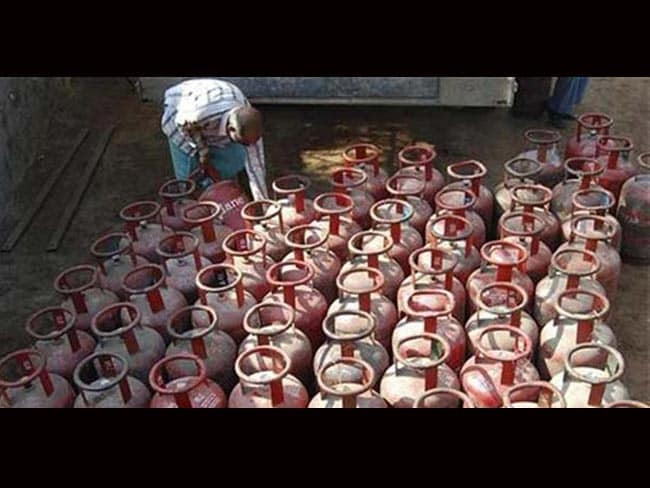
Cooking gas LPG price on Wednesday was hiked by Rs 50 per cylinder, the eighth increase in rates in the last one year that took the cumulative rise to Rs 244.
Non-subsidised LPG now costs Rs 1,053 per 14.2-kg cylinder in the national capital, up from Rs 1,003 previously, according to a price notification of state-owned fuel retailers.
Firming international energy prices have led to non-subsidised cooking gas (LPG) prices being increased on eight occasions in the past year. In all, rates have gone up by Rs 244 per cylinder or 30 per cent.
Common households pay non-subsidised rates for the cooking gas they buy after the government restricted subsidy to just poor beneficiaries who got connections under the Ujjwala scheme.
This is the fourth increase in the LPG rate since the Ukraine war. The price was hiked by Rs 50 per cylinder on March 22 and again by the same quantum on May 7. Rates went up by Rs 3.50 per cylinder on May 19.
Of the Rs 244 per cylinder hike in the past year, Rs 153.50 increase happened since March 2022.
Opposition Congress termed the increase "anti-people" decision and asked if this is the "cost" of toppling the Maharashtra government.
In a tweet in Hindi, Congress general secretary Priyanka Gandhi Vadra said the BJP spoke of the welfare of the poor at its national executive meeting while imposing a 5 per cent "Gabbar Singh Tax (GST)" on flour, cereals, curd and paneer, and then broke the back of the poor and middle class by increasing the price of domestic cooking gas by Rs 50.
Petrol and diesel prices, however, continue to be on freeze for the third straight month. The pause followed rates being hiked by a record Rs 10 per litre in a matter of 16 days beginning March 22.
In May, the government cut excise duty on petrol by Rs 8 per litre and diesel by Rs 6 per litre to cool soaring inflation.
At that time, the government also stated that Rs 200 per cylinder subsidy on cooking gas will be limited to only 9 crore poor women and other beneficiaries who got free connections under the Ujjwala scheme and the remaining users including households will pay the market price (also known as non-subsidised rate).
Originally, non-subsidised cooking gas was the one that consumers used to buy after exhausting their quota of 12 cylinders at subsidised or below-market rates. However, the government stopped paying subsidy on LPG to households in mid-2020.
Non-subsidised LPG costs Rs 1,052.50 per 14.2-kg cylinder in Mumbai, while it is priced at Rs 1,079 a bottle in Chennai and Rs 1,068.50 in Kolkata.
Rates differ from state to state depending on the incidence of local taxes such as VAT. Prices are higher in states with higher taxes.
Alongside, oil firms also reduced the price of commercial LPG cylinders -- the ones used by establishments like hotels and restaurants. It now costs Rs 2,012.50 per 19-kg cylinder in the national capital, down from Rs 2,021 per cylinder.
Industry sources said that commercial LPG prices were almost aligned with cost while the cooking gas used in the household kitchens was being sold at a discount.
The reduction in commercial LPG rates reflects softening in Saudi CPP prices while domestic LPG rates are being adjusted upwards to align them closer to cost.
Domestic LPG rates are about Rs 300 short of their actual cost.
International oil prices have been on the rise this year. They jumped to a 13-year high of $140 per barrel in March before shedding some of the gains. Brent was trading at $103.92 per barrel on Wednesday.
To compound things, the Indian rupee tumbled to Rs 79.24 to a dollar, making imports costlier.
India relies on overseas purchases to meet about 85 per cent of its oil requirement, making it one of the most vulnerable in Asia to higher oil prices.
While India has surplus oil refining capacity, it does not manufacture enough LPG to meet domestic demand and imports significant quantities from nations such as Saudi Arabia.

-
High US Salaries, No Green Card Certainty: The Financial Calculation Facing Indian H-1B Families

The suspension of PERM processing at eight technology employers does not cancel existing H-1B visas. What it does is force a question many Indian families have been avoiding: is the US salary worth tying your career and family plans to one employer?
-
Unhedged Position: Can India See An Indonesia-Style Time Correction?
The Nifty is trading below levels it first clocked in 2024. Is there, then, as I have suggested in the headline, potential that the current time correction drags on painfully for the next three-five, even ten years?
-
Navigating Friction And Energy Realities: An Analysis Of Marco Rubio's October Visit To India
Occurring at a critical juncture marked by stalled trade negotiations and escalating geopolitical pressures over global energy supplies, the visit offers a profound window into modern US-India relations.
-
India Exports Capital. Why Not Export Trusteeship?
The big question, then, is whether India can build an institution that global borrowers, investors, banks, and lawyers can trust, even without an Indian connection.
-
France's Economy & Politics Are In Crisis | The Reason Why
Let's look at how the French economy and politics evolved under Nicolas Sarkozy, Franois Hollande and Emmanuel Macron.
-
You May Inherit The Business. You Must Earn Its Credibility.
Succession tests the founder's ability to share authority as much as it tests the next generation's readiness to assume it.
-
Signing Deals Is One Thing; Making Them Work Is Another | The Week In Whys
Sometimes, things don't turn out as planned. Indian companies have lost some bids to rivals, some projects won't produce until 2030.
-
FOMC Wall, PERM Suspension, Hospital Stocks | Talking Points This Week
A PERM suspension would directly affect green-card sponsorship rather than H-1B visas, so the near-term earnings impact could remain relatively limited. The key question is whether this marks a new phase in US scrutiny of Indian IT.
-
Everything, Everywhere, All At Once: Dalal Street's Week To Forget | Joining The Dots
Visa curbs, a Starlink spat and cancer drug caps: what connects this week's shocks for Indian markets
-
India Is Going Abroad For Critical Minerals. But It May Take Years To Pay Off | The Reason Why
Although India's steps are in the right direction, they remain modest compared with India's growing dependence.









