Low-Key Urjit Patel Takes Over As RBI Governor With Pressing Matters
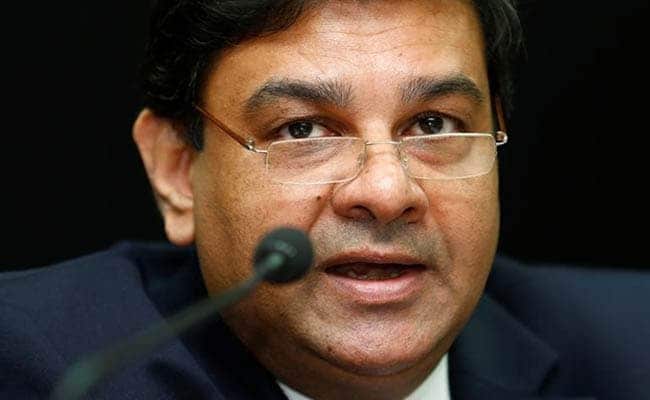
Mumbai: As Urjit Patel begins a three-year term as Reserve Bank of India Governor one task among many requires his immediate attention: working with the government to name members of a new monetary policy committee to set interest rates.
The committee is a key change that Mr Patel helped unveil as deputy governor in charge of monetary policy under outgoing RBI chief Raghuram Rajan. Both were widely credited for other signature reforms, including a target for consumer inflation.
The former Reliance Industries executive will also need to work closely with bankers - a relationship that frayed at times under Dr Rajan due to tensions over banks' reluctance to pass on the RBI's hefty rate cuts and a push to clean up $120 billion (nearly Rs 8lakh crore) in bad loans in the banking system by March 2017.
Mr Patel took over on Sunday, the RBI said. A private handover ceremony from Dr Rajan will take place on Tuesday.
"Mr Patel was part of the team at RBI that set in motion significant policy changes to deal with both high inflation and weak bank balance sheets, including through the set-up of new policy frameworks," said Thomas Rookmaaker, a director of Fitch Ratings' Asia-Pacific Sovereigns Group in an emailed statement.
"(He) seems well-positioned to further institutionalize these policy changes in the period ahead."
Most immediately, Mr Patel is expected to work with the government to appoint the six members of the monetary policy committee, with the next policy review due on October 4.
The central bank and the government will each have three representatives on the committee, with the RBI's being the governor and the two most senior monetary policy officials.
With the government having to announce a replacement for Mr Patel as a deputy governor, that gives New Delhi a role in picking four members of the inaugural committee.
Mr Patel and the panel will be responsible for ensuring inflation stays within a target of 4 percent with a range of two percentage points on either side, effectively creating a target range of 2 to 6 percent.
Dr Rajan had cut the policy repo rate by 150 basis points (bps) since the start of 2015, but has held off on easing further since April as inflation picked up. Consumer prices rose 6.07 percent in July from a year ago.
But economists say Mr Patel could have room to cut rates further if above-average monsoon rains temper food prices.
The economy could use some stimulus given growth slowed to a 15-month low of 7.1 percent in April-June, well below the 8 percent needed to create millions of new jobs.
But analysts see only room for another 25 bps cut sometime between October and December as the RBI is aiming to hit a target of 5 percent inflation by March 2017 as part of a "glide path" towards 4 percent.
Mr Patel will thus need banks to cut lending rates further, a relationship that will likely occupy much of his term.
However, unlike Dr Rajan, Mr Patel is expected to keep a much lower profile. The former RBI governor was seen as having upset some segments of Prime Minister Narendra Modi's government by speaking out in areas outside the direct purview of the central bank.
"Urjit Patel is likely to keep a low profile and refrain from commenting on non-economic issues," said K Vijayakumar, Chief Investment Strategist of Geojit BNP Paribas.

-
India Exports Capital. Why Not Export Trusteeship?

The big question, then, is whether India can build an institution that global borrowers, investors, banks, and lawyers can trust, even without an Indian connection.
-
France's Economy & Politics Are In Crisis | The Reason Why
Let's look at how the French economy and politics evolved under Nicolas Sarkozy, Franois Hollande and Emmanuel Macron.
-
You May Inherit The Business. You Must Earn Its Credibility.
Succession tests the founder's ability to share authority as much as it tests the next generation's readiness to assume it.
-
Signing Deals Is One Thing; Making Them Work Is Another | The Week In Whys
Sometimes, things don't turn out as planned. Indian companies have lost some bids to rivals, some projects won't produce until 2030.
-
FOMC Wall, PERM Suspension, Hospital Stocks | Talking Points This Week
A PERM suspension would directly affect green-card sponsorship rather than H-1B visas, so the near-term earnings impact could remain relatively limited. The key question is whether this marks a new phase in US scrutiny of Indian IT.
-
Everything, Everywhere, All At Once: Dalal Street's Week To Forget | Joining The Dots
Visa curbs, a Starlink spat and cancer drug caps: what connects this week's shocks for Indian markets
-
India Is Going Abroad For Critical Minerals. But It May Take Years To Pay Off | The Reason Why
Although India's steps are in the right direction, they remain modest compared with India's growing dependence.
-
When Everyone Has AI, What Gives You An Edge?
India's young workforce is entering an uncertain world of work where powerful AI tools are becoming widely accessible. The advantage will belong to those who combine deep expertise with digital fluency, and the distinctly human capabilities that technology cannot manufacture.
-
Wrong Labels, High Pesticide Residues Holding Back Agri Exports | The Reason Why
India needs stronger domestic food-safety and labelling standards, with best practices becoming part of everyday business for farmers, traders and food companies.
-
India Is Easy To Enter, Harder To Attract | The Week In Whys
The question is no longer just whether India can attract companies and capital. It is how much value they create here, how deeply they invest, and whether India remains relatively attractive when they have plenty of other options.










