Loan Moratorium Can Be Extended For 2 Years: Centre To Supreme Court
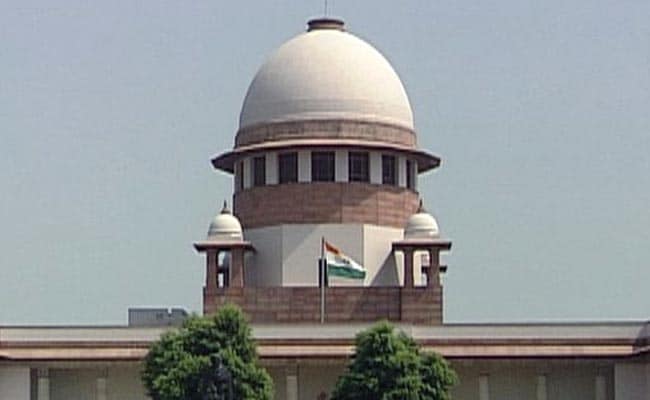
The government on Tuesday told the Supreme Court that the moratorium on repayment of loans allowed during the coronavirus crisis can be extended by two years. This came a day after the government's deadline for temporary relief on loan repayments ended. The Reserve Bank of India had allowed banks and other financial institutions to offer a six-month moratorium to all existing individual and corporate term loan borrowers until August 31.
Solicitor General Tushar Mehta, representing the government, told the Supreme Court that discussions were on with the central bank and the bankers' association to arrive at a solution on the issue of waiving interest on loan dues during the moratorium period. "There are more issues involved, GDP is down 23 per cent and economy is stressed," said the government lawyer.
"The lordship may go through it, the matter may be taken up tomorrow or day after tomorrow. The interest on interest part, we have discussed with the RBI officers," Mr Mehta said.
"I am saying with a great sense of responsibility. Harish Salve also spoke with the bankers' association. Most of the issues are addressed," the Solicitor General said.
"We have also to hear the interest in interest part also," said Justice MR Shah, one of the judges. The top court will take up the case again on Wednesday.
The Supreme Court had last week sought the government's stand on waiving interest on loan repayments during the moratorium, saying it "cannot hide" behind the RBI.
The RBI had informed the court earlier that there cannot be an interest waiver on term loans as the financial health and stability of banks would be at risk.
A bench headed by Justice Ashok Bhushan was hearing petitions filed by Gajender Sharma and lawyer Vishal Tiwari seeking to extend the moratorium period to help borrowers in deferring their EMI payment on term loans amid the pandemic.

-
Navigating Friction And Energy Realities: An Analysis Of Marco Rubio's October Visit To India

Occurring at a critical juncture marked by stalled trade negotiations and escalating geopolitical pressures over global energy supplies, the visit offers a profound window into modern US-India relations.
-
India Exports Capital. Why Not Export Trusteeship?
The big question, then, is whether India can build an institution that global borrowers, investors, banks, and lawyers can trust, even without an Indian connection.
-
France's Economy & Politics Are In Crisis | The Reason Why
Let's look at how the French economy and politics evolved under Nicolas Sarkozy, Franois Hollande and Emmanuel Macron.
-
You May Inherit The Business. You Must Earn Its Credibility.
Succession tests the founder's ability to share authority as much as it tests the next generation's readiness to assume it.
-
Signing Deals Is One Thing; Making Them Work Is Another | The Week In Whys
Sometimes, things don't turn out as planned. Indian companies have lost some bids to rivals, some projects won't produce until 2030.
-
FOMC Wall, PERM Suspension, Hospital Stocks | Talking Points This Week
A PERM suspension would directly affect green-card sponsorship rather than H-1B visas, so the near-term earnings impact could remain relatively limited. The key question is whether this marks a new phase in US scrutiny of Indian IT.
-
Everything, Everywhere, All At Once: Dalal Street's Week To Forget | Joining The Dots
Visa curbs, a Starlink spat and cancer drug caps: what connects this week's shocks for Indian markets
-
India Is Going Abroad For Critical Minerals. But It May Take Years To Pay Off | The Reason Why
Although India's steps are in the right direction, they remain modest compared with India's growing dependence.
-
When Everyone Has AI, What Gives You An Edge?
India's young workforce is entering an uncertain world of work where powerful AI tools are becoming widely accessible. The advantage will belong to those who combine deep expertise with digital fluency, and the distinctly human capabilities that technology cannot manufacture.
-
Wrong Labels, High Pesticide Residues Holding Back Agri Exports | The Reason Why
India needs stronger domestic food-safety and labelling standards, with best practices becoming part of everyday business for farmers, traders and food companies.