Like Turkey, India Turns To Central Bank For Help Before Polls
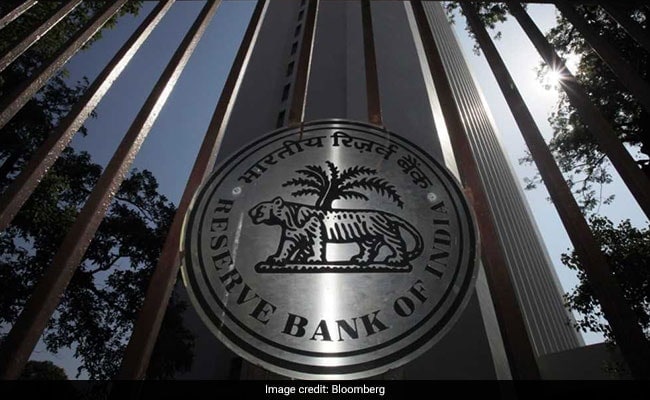
Pressure is building on the Reserve Bank of India (RBI) to pay part of its profits to the government before a crucial election due by May, providing Prime Minister Narendra Modi with cash to boost spending and voter support, while keeping the budget deficit in check.
Revenue from a goods and services tax, or GST, has for the most part fallen short of the Rs 1-lakh-crore ($14 billion) monthly target, while income from asset sales have lagged estimates. That leaves the government counting on its central bank to make up the shortfall via an interim dividend from unrealized profits.
Turkey's central bank was recently called on to do the same, agreeing to pay an advance dividend to the government before local polls in March. In India's case, the demand on the central bank comes right in the middle of its financial year that runs from July to June, and follows a contentious battle with former Governor Urjit Patel about the institution's autonomy.
The Reserve Bank of India keeps a tiny portion of its profit as contingency fund and transfers the majority to the government every year, which is then counted as fiscal revenue. Typically, the RBI makes those dividend payments after it closes its books of accounts in June. Last year, it paid an interim dividend of Rs 10,000 crore.

While new Governor Shaktikanta Das said earlier this month that no decision had been made yet on an interim dividend, speculation is gaining ground that he may cough up as much as Rs 40,000 crore to help the government make up some of the revenue shortfall for the year to March 31. The last national budget before elections is scheduled for February 1.
"Optically, a payout of any sizable interim dividend in the backdrop of leadership change at the RBI would hardly look cute," said Abhishek Upadhyay, an India economist at ICICI Sec Primary Dealership Ltd. He added that apart from an interim dividend, it is likely that "creative accounting would be used to shift some spending off balance sheet" to keep a lid on the deficit.
A Bloomberg survey of economists shows the government may widen its budget deficit target for the current fiscal year to 3.5 percent of gross domestic product from 3.3 percent. Concerns about the health of the government's finances pushed the yield on the most-traded 2028 bonds higher in four of the past five weeks.
Central bankers and economists are wary of the government's push. They argue that a central bank's finances are different from companies and there is a need to build buffers to maintain independence.
"Though technically there is nothing wrong in interim dividends, it may not be neat and nice," said R. Gandhi, a former deputy governor at the RBI. "The central bank's fortunes are negatively correlated to interest and exchange rate movements, both of which can turn at any point of time during a year."

-
Unhedged Position: Can India See An Indonesia-Style Time Correction?

The Nifty is trading below levels it first clocked in 2024. Is there, then, as I have suggested in the headline, potential that the current time correction drags on painfully for the next three-five, even ten years?
-
Navigating Friction And Energy Realities: An Analysis Of Marco Rubio's October Visit To India
Occurring at a critical juncture marked by stalled trade negotiations and escalating geopolitical pressures over global energy supplies, the visit offers a profound window into modern US-India relations.
-
India Exports Capital. Why Not Export Trusteeship?
The big question, then, is whether India can build an institution that global borrowers, investors, banks, and lawyers can trust, even without an Indian connection.
-
France's Economy & Politics Are In Crisis | The Reason Why
Let's look at how the French economy and politics evolved under Nicolas Sarkozy, Franois Hollande and Emmanuel Macron.
-
You May Inherit The Business. You Must Earn Its Credibility.
Succession tests the founder's ability to share authority as much as it tests the next generation's readiness to assume it.
-
Signing Deals Is One Thing; Making Them Work Is Another | The Week In Whys
Sometimes, things don't turn out as planned. Indian companies have lost some bids to rivals, some projects won't produce until 2030.
-
FOMC Wall, PERM Suspension, Hospital Stocks | Talking Points This Week
A PERM suspension would directly affect green-card sponsorship rather than H-1B visas, so the near-term earnings impact could remain relatively limited. The key question is whether this marks a new phase in US scrutiny of Indian IT.
-
Everything, Everywhere, All At Once: Dalal Street's Week To Forget | Joining The Dots
Visa curbs, a Starlink spat and cancer drug caps: what connects this week's shocks for Indian markets
-
India Is Going Abroad For Critical Minerals. But It May Take Years To Pay Off | The Reason Why
Although India's steps are in the right direction, they remain modest compared with India's growing dependence.
-
When Everyone Has AI, What Gives You An Edge?
India's young workforce is entering an uncertain world of work where powerful AI tools are becoming widely accessible. The advantage will belong to those who combine deep expertise with digital fluency, and the distinctly human capabilities that technology cannot manufacture.









