LIC, Biggest-Ever IPO For India, Will See Rules Being Changed: Report
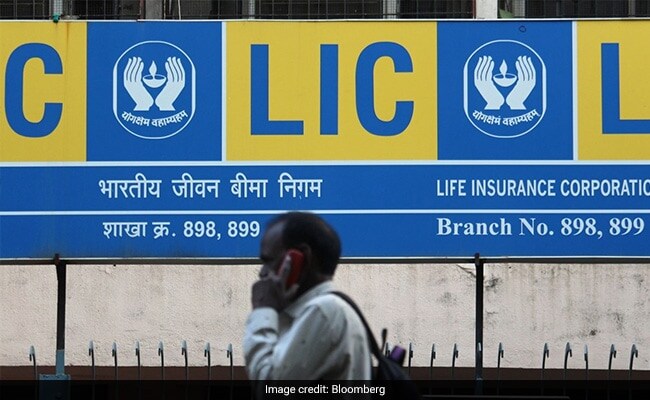
From adjusting capital-markets rules to sending phone messages and publishing newspaper advertisements, authorities and executives are leaving no stone unturned in trying to ensure Life Insurance Corp. of India's record initial public offering is a success.
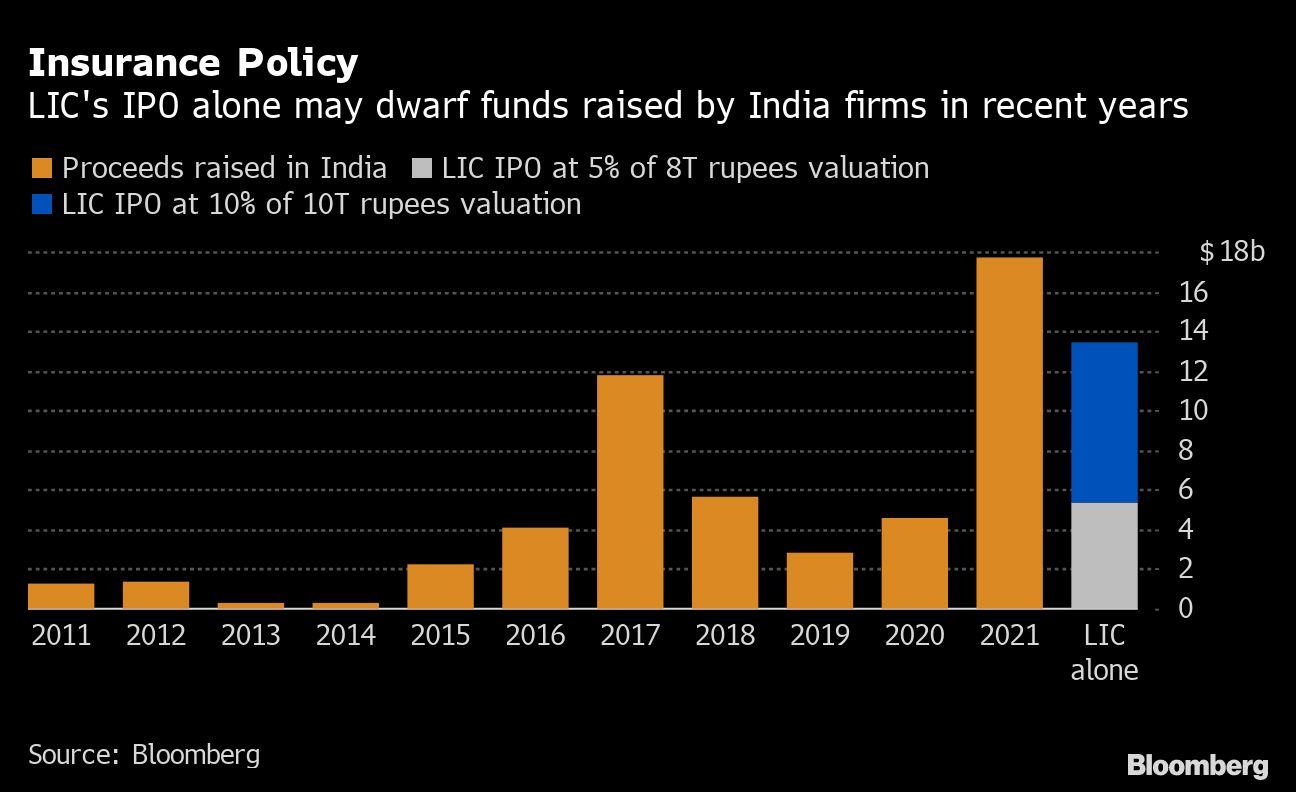
Prime Minister Narendra Modi's government has the IPO -- which could raise between Rs 40,000 crore ($5.4 billion) and Rs 1 lakh crore this quarter -- as a key item in its economic agenda, with proceeds from the state-run insurer essential to reaching a budget-deficit target.
“The size of LIC is breathtaking,” said Abhay Agarwal, fund manager at Mumbai-based Piper Serica Advisors Pvt. While it might be easy for the government to make regulatory amendments needed for the IPO, “it will require significant marketing efforts to cross the Rs 50,000 crore line,” he added.
Authorities will review and amend rules on foreign-direct investment to make it easier to lure investors from abroad, an official said this month without specifying a time-frame. Equity stakes among foreigners are allowed for most Indian insurers, but not in LIC, which is a special entity created by an act of Parliament.
The clearance for foreign stakes in the mega offering would not just permit global funds to participate, but also allow them to buy more after the exchange listing. Regulators made other moves late last month, including tightening rules governing share sales by anchor investors.
‘Be Prepared'
As it sets the stage for the offering, LIC has been sending SMSs to policyholders, and last month started publishing newspaper ads with the title, “It's best in life to be prepared.” The firm asked customers to update some of their personal details and the accounts that allow them to participate in the issue.
The Securities and Exchange Board of India is planning to recruit 120 senior executives across its legal, information technology, research, and general and official language departments, representing about 14% of its employees.
More than 110 companies sold shares for the first time in India last year to raise nearly $18 billion, a fourfold increase from 2020. While the average performance since debut has been positive, the country's biggest-ever IPO last year was a flop. Digital-payments giant Paytm has tumbled more than 45% since its $2.4 billion listing in November, with analysts pointing to its expensive valuation.
Paytm's IPO toppled the long-standing record held by Coal India Ltd., whose offering in 2010 saw the government selling a 10% stake in the firm. While the stock jumped in its trading debut, it is now down by about one-third from the listing price.
“The government will also need to learn from its past mistake of pricing public sector IPOs too high, said Piper Serica's Agarwal. “The valuation will have to leave enough on the table for investors to attract them to the IPO.”

-
High US Salaries, No Green Card Certainty: The Financial Calculation Facing Indian H-1B Families

The suspension of PERM processing at eight technology employers does not cancel existing H-1B visas. What it does is force a question many Indian families have been avoiding: is the US salary worth tying your career and family plans to one employer?
-
Swiggy vs Eternal: Food Delivery's Two Rivals Are No Longer In The Same Race
Eternal is building a private AI assistant, dark.ai. Swiggy is still working out how to make Instamart pay, with an operating loss of Rs 895 crore in the July-September quarter while Blinkit stayed profitable.
-
Where You Live Shapes How You Get To Work | The Reason Why
Two-wheelers are the most popular way to get to work in India, accounting for nearly 43% of workplace commutes.
-
Unhedged Position: Can India See An Indonesia-Style Time Correction?
The Nifty is trading below levels it first clocked in 2024. Is there, then, as I have suggested in the headline, potential that the current time correction drags on painfully for the next three-five, even ten years?
-
Navigating Friction And Energy Realities: An Analysis Of Marco Rubio's October Visit To India
Occurring at a critical juncture marked by stalled trade negotiations and escalating geopolitical pressures over global energy supplies, the visit offers a profound window into modern US-India relations.
-
India Exports Capital. Why Not Export Trusteeship?
The big question, then, is whether India can build an institution that global borrowers, investors, banks, and lawyers can trust, even without an Indian connection.
-
France's Economy & Politics Are In Crisis | The Reason Why
Let's look at how the French economy and politics evolved under Nicolas Sarkozy, Franois Hollande and Emmanuel Macron.
-
You May Inherit The Business. You Must Earn Its Credibility.
Succession tests the founder's ability to share authority as much as it tests the next generation's readiness to assume it.
-
Signing Deals Is One Thing; Making Them Work Is Another | The Week In Whys
Sometimes, things don't turn out as planned. Indian companies have lost some bids to rivals, some projects won't produce until 2030.
-
FOMC Wall, PERM Suspension, Hospital Stocks | Talking Points This Week
A PERM suspension would directly affect green-card sponsorship rather than H-1B visas, so the near-term earnings impact could remain relatively limited. The key question is whether this marks a new phase in US scrutiny of Indian IT.









